

 English
 中文简体
中文简体Content
- 1 The Short Answer: What Condensers Actually Do
- 2 The Physics Behind Why Condensers Are Non-Negotiable
- 3 Types of Condensers and Where Each One Is Used
- 4 Why the Condenser Unit Location and Airflow Matter More Than Most People Realize
- 5 How a Dirty or Degraded Condenser Affects the Whole System
- 6 The Role of Condensers in Heat Pump Systems
- 7 Condenser Sizing: Why Getting It Wrong Costs More Than the Unit Itself
- 8 Industrial and Process Condensers: Beyond HVAC
- 9 Condenser Unit Maintenance: What Actually Matters and How Often
- 10 How Condenser Technology Is Evolving
- 11 Waste Heat Recovery: Turning the Condenser Into an Asset
- 12 Signs That Your Condenser Unit Has a Problem
The Short Answer: What Condensers Actually Do
Condensers are used to release heat from a refrigerant or working fluid back into the surrounding environment, completing the thermodynamic cycle that makes cooling possible. Without a condenser, there is no way to expel the heat absorbed from an indoor or process space — the entire refrigeration loop collapses. Whether you are looking at a residential air conditioner, a commercial chiller, or an industrial refrigeration rack, the condenser is the component that makes sustained cooling physically achievable.
Put more precisely: a condenser takes high-pressure, high-temperature refrigerant vapor coming out of the compressor and cools it until it condenses back into a liquid. That liquid then travels to the expansion valve, drops in pressure and temperature, and is ready to absorb heat all over again. The cycle repeats thousands of times per day. Every degree of heat rejection efficiency at the condenser directly affects the coefficient of performance (COP) of the entire system.
The Physics Behind Why Condensers Are Non-Negotiable
The vapor-compression refrigeration cycle is governed by the second law of thermodynamics: heat flows from a region of higher temperature to a region of lower temperature. To move heat the other direction — from a cool indoor space to a hot outdoor environment — you need to do work. The compressor does that work, and the condenser is the exit point where the accumulated heat leaves the system.
Refrigerants are chosen specifically because they change phase (liquid to vapor and back) at useful temperatures and pressures. When the refrigerant condenses inside the condenser coil, it releases its latent heat of vaporization — a quantity far larger than the sensible heat it carries. For R-410A, one of the most common modern refrigerants, the latent heat of vaporization near condensing conditions is roughly 200–220 kJ/kg, meaning each kilogram of refrigerant moving through the system dumps a substantial amount of energy into the condenser.
If that heat cannot be expelled efficiently, condensing pressure rises. Rising condensing pressure forces the compressor to work harder against a higher head pressure, consuming more electricity and generating more heat in the process — a self-reinforcing negative spiral. This is why the condenser unit is not a passive afterthought but an active determinant of system performance and operating cost.
Types of Condensers and Where Each One Is Used
Not all condensers work the same way. The choice of condenser type depends on the available heat sink, the ambient conditions, the scale of the system, and the cost constraints of the installation.
Air-Cooled Condensers
The most prevalent type for residential and light-commercial applications. An air-cooled condenser unit uses one or more fans to force ambient air across a coil containing hot refrigerant. Heat transfers from the refrigerant to the air, which is then discharged outside. Standard split-system air conditioners, heat pumps, rooftop units, and most walk-in cooler systems use this configuration.
Air-cooled condenser units are straightforward to install, require no water supply, and have relatively low maintenance demands. Their main limitation is sensitivity to ambient temperature: on a 38°C (100°F) day, an air-cooled condenser struggles more than on a 20°C (68°F) day, because the temperature difference driving heat transfer is smaller. Efficiency typically drops by roughly 1–1.5% per degree Celsius of ambient temperature rise beyond the design point.
Water-Cooled Condensers
Water-cooled condensers reject heat into a water stream rather than ambient air. Because water has a much higher heat capacity and thermal conductivity than air, these condensers can operate at lower condensing temperatures and achieve higher efficiencies. Large commercial chillers in office towers, hospitals, and data centers almost always use water-cooled condensers paired with a cooling tower.
A well-designed water-cooled chiller can achieve a COP of 5.5 to 7.0 — compared to 2.5 to 4.0 for a typical air-cooled system — precisely because the condenser can maintain a lower, more stable condensing temperature year-round. The trade-off is the need for water treatment, cooling towers, and more complex piping infrastructure.
Evaporative Condensers
Evaporative condensers combine the principles of air and water cooling. Water is sprayed directly onto the condenser coil while fans draw air through. As the water evaporates, it carries away large amounts of heat, allowing the condensing temperature to approach the wet-bulb temperature of the ambient air rather than the dry-bulb temperature. In dry climates, this can represent a difference of 10–15°C, which translates directly into significant energy savings.
Industrial refrigeration facilities — cold storage warehouses, food processing plants, breweries — frequently specify evaporative condensers because the efficiency gains over the lifetime of the system far outweigh the higher initial cost and water consumption.
Shell-and-Tube Condensers
Common in large industrial and process cooling applications, shell-and-tube condensers run refrigerant vapor through a shell while cooling water flows through tubes (or vice versa). They are robust, easy to clean, and capable of handling very high refrigerant flow rates. You will find them in ammonia refrigeration systems, petrochemical plants, and power station condensers where steam must be condensed after passing through a turbine.
| Condenser Type | Heat Sink | Typical COP Range | Common Applications |
|---|---|---|---|
| Air-Cooled | Ambient air | 2.5 – 4.0 | Residential AC, small commercial |
| Water-Cooled | Chilled/tower water | 5.5 – 7.0 | Large office buildings, data centers |
| Evaporative | Wet-bulb air + water | 4.0 – 6.0 | Cold storage, food processing |
| Shell-and-Tube | Process water | Varies widely | Industrial, power generation |
Why the Condenser Unit Location and Airflow Matter More Than Most People Realize
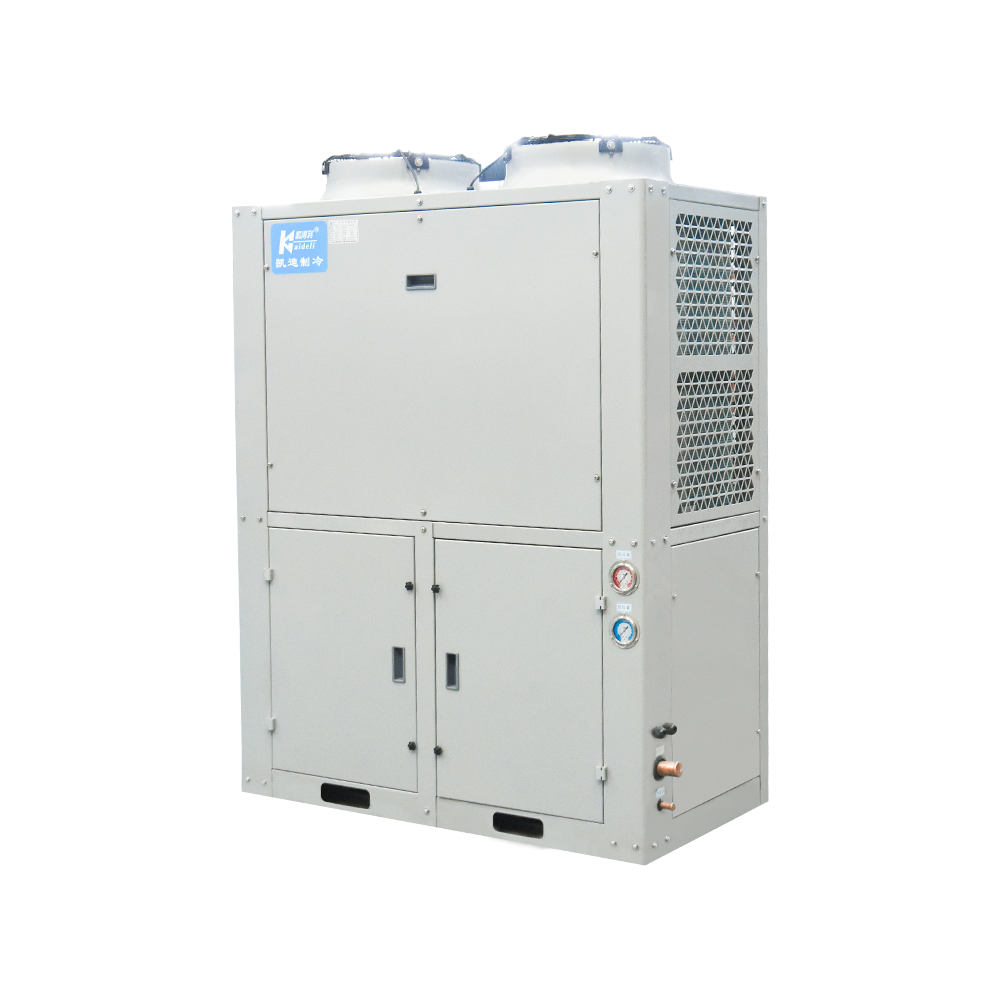
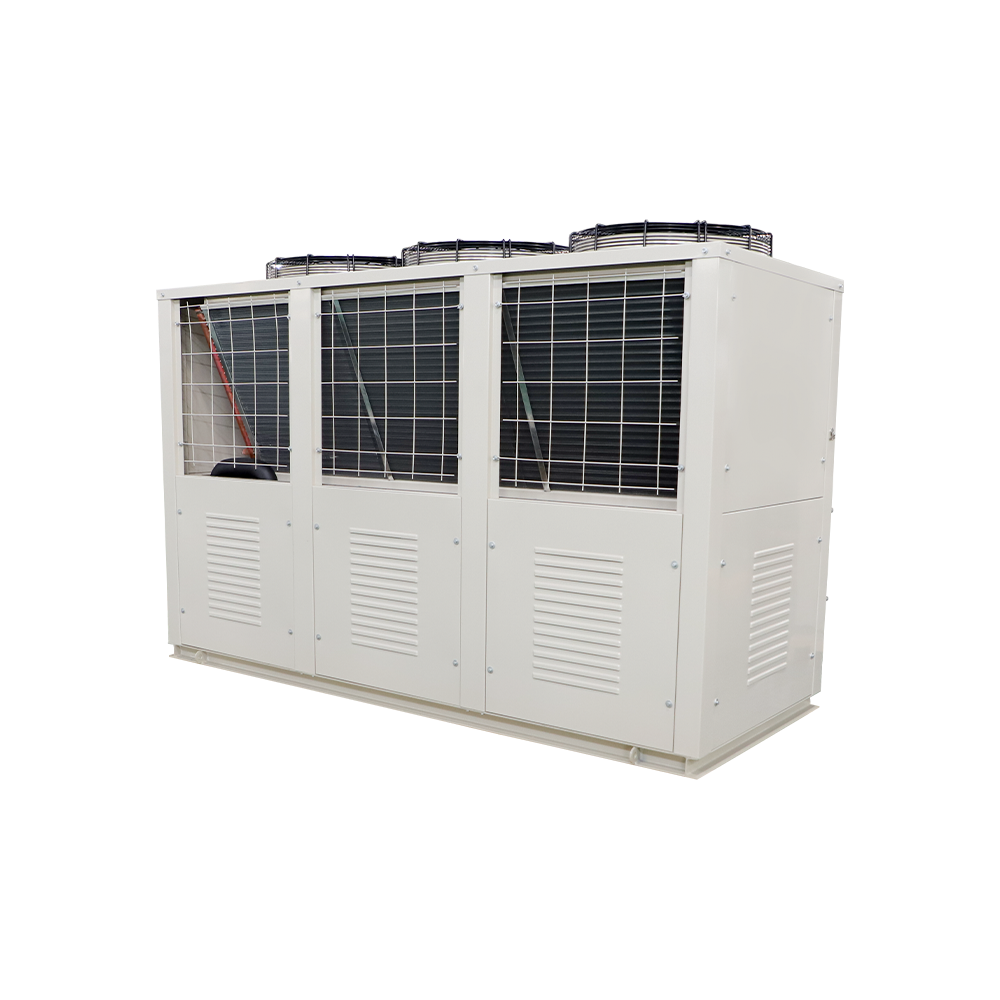
For the majority of homes and small businesses, the condenser unit is the outdoor cabinet containing the coil, compressor, and fan. Its placement is far from trivial. A condenser unit installed in a poorly ventilated alcove, surrounded by shrubs, or exposed to direct afternoon sun in a hot climate will consistently underperform — sometimes dramatically.
Consider a real-world scenario: a 5-ton (17.6 kW) residential system in a climate where summer afternoons reach 40°C. If the condenser unit is placed on the south-facing wall of the building with a fence 30 cm away restricting airflow, it may be operating against a local ambient of 46–48°C due to recirculation of its own discharged hot air. That 6–8°C penalty on condensing temperature translates to roughly 8–12% higher electricity consumption compared to an identically sized unit with unrestricted airflow — every single hour it runs.
Clearance Requirements for Condenser Units
Most manufacturers specify minimum clearances that must be maintained around the condenser unit for proper operation. While exact figures vary by model and brand, typical guidelines include:
- At least 60 cm (24 inches) on the sides and rear of the unit
- At least 120–150 cm (48–60 inches) above the fan discharge to prevent hot air recirculation
- No overhead obstruction within 1.5 m that would trap discharged air
- Preferably placed on the north or east side of the building to avoid afternoon solar radiation
Ignoring these guidelines does not just affect comfort — it shortens the life of the compressor. High head pressure caused by a poorly sited condenser unit accelerates compressor wear. Compressor replacement on a 5-ton system can cost $1,500–$3,000 in parts alone, not counting labor or refrigerant recovery charges.
How a Dirty or Degraded Condenser Affects the Whole System
The condenser coil is essentially a heat exchanger — fins and tubes designed to maximize the surface area in contact with the cooling medium (air or water). When those fins become coated with dust, cottonwood seed, pollen, or grease, heat transfer is impeded. The refrigerant stays hot longer, condensing pressure rises, and every downstream component works harder.
Studies from ASHRAE and various utility energy audit programs consistently show that a condenser coil with 30–50% fin blockage can reduce system capacity by 10–15% while simultaneously increasing power draw by 10–20%. In practical terms, a system that normally cools a space in 45 minutes may take 65 minutes after a dirty condenser season — while the electricity meter spins faster the entire time.
What Happens Step by Step When the Condenser Is Fouled
- Reduced airflow through the coil means less heat is removed per unit of time.
- Refrigerant leaving the condenser is warmer than it should be — subcooling is reduced.
- Condensing pressure (head pressure) rises to compensate, forcing the compressor to produce a higher compression ratio.
- The compressor draws more current, generates more heat, and its internal discharge temperature climbs — increasing oil degradation risk.
- High-pressure safety cutouts may trip on extremely hot days, shutting down the system entirely at the worst possible time.
- Over weeks and months, elevated discharge temperatures accelerate compressor winding insulation breakdown, ultimately leading to premature failure.
This chain of events explains why annual condenser coil cleaning is not a luxury maintenance item — it is a direct investment in operating cost reduction and equipment longevity.
The Role of Condensers in Heat Pump Systems
In a heat pump operating in heating mode, the function of the condenser and evaporator is reversed — or more precisely, the outdoor coil acts as the evaporator (absorbing heat from cold outside air) and the indoor coil acts as the condenser (releasing heat into the building). This demonstrates that the term "condenser" is functional, not fixed: it refers to whichever heat exchanger is rejecting heat at any given moment.
Modern variable-speed heat pump systems modulate the condenser's heat rejection rate by varying compressor speed, fan speed, and refrigerant flow. A well-matched condenser in a variable-speed heat pump system can achieve a Heating Seasonal Performance Factor (HSPF) of 10–14, compared to 6–8 for older single-stage systems — entirely because the condenser can operate closer to its optimal heat transfer point across a wider range of conditions.
Ground-source heat pumps take this further, using the earth itself as the heat sink for the condenser in cooling mode. Because ground temperature at depth remains relatively stable at 10–15°C regardless of surface conditions, the condenser operates at consistently low condensing temperatures, yielding COPs of 4.0–6.0 even on the hottest summer days.
Condenser Sizing: Why Getting It Wrong Costs More Than the Unit Itself
Undersizing the condenser relative to the evaporator and compressor is one of the most common and costly mistakes in HVAC system design. When the condenser cannot reject heat fast enough to match what the evaporator is absorbing, the system runs at elevated head pressure continuously — not just on peak days.
A condenser unit that is sized 10–15% larger than the minimum required provides a buffer. It runs at lower head pressure, reduces compressor discharge temperature, and can tolerate somewhat higher ambient temperatures before efficiency starts to fall off significantly. The incremental cost of upsizing a condenser unit is usually modest — perhaps $300–$800 for a residential system — while the savings in electricity and extended compressor life can easily reach several thousand dollars over a 15-year equipment lifespan.
Variables That Influence Condenser Sizing
- Design ambient temperature: The hottest expected operating temperature at the installation site, not the average. In Phoenix, Arizona, this is often set at 46°C (115°F).
- Required condensing temperature: Typically 8–15°C above the design ambient for air-cooled systems.
- Total heat of rejection (THR): The sum of the cooling capacity and the heat added by the compressor — typically 1.2 to 1.35 times the cooling capacity in tons or kilowatts.
- Refrigerant type: Different refrigerants condense at different pressures and temperatures, affecting the required coil surface area.
- Installation altitude: At higher elevations, air density is lower, reducing the heat transfer capacity of air-cooled condensers and requiring larger coil surfaces to compensate.
Industrial and Process Condensers: Beyond HVAC
The principle of condensation is not limited to comfort cooling. Industrial condensers appear across a remarkable range of applications, each chosen for its ability to efficiently remove heat or recover a vapor as a liquid.
Power Generation
In steam power plants — coal, gas, nuclear, and concentrated solar — the steam turbine exhausts low-pressure steam that must be condensed back into water for reuse in the boiler. The surface condenser in a large power plant may handle millions of kilograms of steam per hour. The condenser vacuum (operating well below atmospheric pressure) is critical: a 1% improvement in condenser vacuum at the turbine exhaust can improve the plant's overall thermal efficiency by 0.3–0.5 percentage points, which represents significant fuel savings and emissions reductions at scale.
Chemical and Petrochemical Processing
Distillation columns used in oil refining and chemical manufacturing rely on condensers to cool and condense vapors rising from the column. The reflux condenser controls the ratio of liquid returned to the column versus product withdrawn — a ratio that directly determines product purity and yield. Precise condenser operation is not a background utility function; it is a core process control variable.
Food and Beverage Production
Breweries, dairies, and food processing plants depend on condensers both for process refrigeration and for recovering vapors during concentration and evaporation processes. A brewery, for example, may use a condenser unit to recover volatile aroma compounds during wort boiling — compounds that would otherwise escape with the steam and be lost, reducing beer flavor quality.
Data Center Cooling
Modern hyperscale data centers generate enormous heat loads — a facility with 100 MW of IT load must reject roughly the same amount of heat continuously, 24 hours a day, 365 days a year. Condenser efficiency is a critical operating cost driver: a 1% improvement in PUE (Power Usage Effectiveness) at that scale translates to 1 MW of saved power, or roughly $700,000–$900,000 in annual electricity costs depending on local rates.
Condenser Unit Maintenance: What Actually Matters and How Often
Maintaining a condenser unit does not require specialized expertise for many of the most impactful tasks. A consistent maintenance routine protects the capital investment, maintains rated efficiency, and extends service life — typically from a mediocre 10–12 years to a well-maintained 18–22 years for a quality system.
Tasks That Can Be Done by the Owner
- Coil rinsing: Spray the condenser coil with a garden hose from the inside outward (to push debris out, not deeper in) at least twice per cooling season. This alone maintains airflow and heat transfer close to rated values.
- Vegetation clearance: Keep grass, weeds, and shrubs trimmed back at least 60 cm from all sides of the condenser unit.
- Debris removal: Clear leaves, seeds, and twigs from the top of the unit and from inside the cabinet after storms.
- Level check: Confirm the unit pad has not shifted. A condenser unit more than 1 cm out of level can cause oil pooling in the compressor and accelerate wear.
Tasks Requiring a Licensed Technician
- Refrigerant charge verification: Low refrigerant causes the evaporator to run too cold and the condenser to run too warm. Checking charge requires gauges and refrigerant handling certification.
- Chemical coil cleaning: When water rinsing is insufficient, alkaline or acidic foaming cleaners must be applied and neutralized properly to avoid fin corrosion.
- Fan motor and capacitor inspection: Condenser fan motors in residential units typically have run capacitors that degrade over 5–10 years. A weak capacitor causes the fan to run slowly, reducing airflow across the condenser coil.
- Head pressure measurement: Comparing measured condensing pressure to ambient temperature allows a technician to calculate the approach temperature — a direct indicator of condenser cleanliness and performance.
How Condenser Technology Is Evolving
Condenser design has advanced considerably over the past two decades, driven by energy efficiency mandates, refrigerant transitions, and the economics of operating large cooling systems.
Microchannel Coil Technology
Traditional condenser coils use round copper tubes with aluminum fins. Microchannel coils, by contrast, use flat aluminum tubes with multiple small parallel channels, brazed to corrugated aluminum fins. The result is a coil that is 20–30% lighter and contains 30–40% less refrigerant than an equivalent round-tube coil, with equal or superior heat transfer performance. Lower refrigerant charge is especially valuable as regulations tighten around high-GWP (global warming potential) refrigerants.
Variable-Speed Condenser Fans
Fixed-speed condenser fans operate at full speed regardless of ambient temperature and load. Variable-speed fans, controlled by electronically commutated motors (ECMs) or variable frequency drives (VFDs), modulate airflow to maintain optimal head pressure across varying conditions. On a mild day when ambient temperature is 15°C instead of 35°C, a variable-speed condenser fan may run at 30–50% of full speed, consuming only 10–25% of the power of a fixed-speed fan (since fan power scales with the cube of speed). The cumulative energy savings over a full year in a mixed climate can be 15–25% of total condenser fan energy.
Refrigerant Transitions and Their Impact on Condenser Design
The global phase-down of high-GWP refrigerants under the Kigali Amendment to the Montreal Protocol is driving a shift toward lower-GWP alternatives. R-32, R-454B, R-290 (propane), and CO₂ (R-744) are replacing R-410A in new equipment. Each of these refrigerants has different thermodynamic properties, condensing pressures, and heat transfer characteristics — meaning condenser units must be specifically designed or redesigned to work with them.
CO₂ systems, in particular, operate at much higher pressures (up to 130 bar in transcritical applications) and require entirely different condenser designs — often called gas coolers rather than condensers, because in transcritical CO₂ cycles the refrigerant does not actually condense but simply cools at supercritical pressure. These systems are increasingly common in commercial refrigeration in Europe and are expanding globally.
Waste Heat Recovery: Turning the Condenser Into an Asset
In most systems, the heat rejected at the condenser is simply dumped into the outdoor air — a lost resource. In heat recovery configurations, some or all of this condenser heat is captured and put to useful work, dramatically improving the overall efficiency of the facility.
A supermarket refrigeration system, for example, rejects three to four times the cooling capacity in heat at its condensers. By desuperheating the hot discharge gas before it reaches the condenser and routing that heat to a water heater, the store can meet 100% of its domestic hot water needs from refrigeration waste heat — displacing gas or electric water heating entirely.
In district energy systems, the condenser of a large central chiller plant can be connected to a heat distribution network, delivering low-grade heat (35–55°C) for space heating and domestic hot water to neighboring buildings. This combined cooling and heating model, sometimes called district energy or trigeneration, can achieve overall system efficiencies of 70–90% compared to 30–45% for conventional separate heating and cooling systems.
The economics are compelling: in a climate with significant heating and cooling loads, waste heat recovery from condensers can reduce a building's total energy bill by 20–35% with a payback period of 3–7 years depending on energy prices and system scale.
Signs That Your Condenser Unit Has a Problem
The condenser is not always the most visible part of an HVAC system, but when it fails or underperforms, the symptoms show up clearly throughout the system. Knowing what to look for can save a significant repair bill by catching issues early.
- System runs constantly without reaching setpoint: Often indicates the condenser cannot reject heat fast enough, causing high head pressure and reduced capacity.
- High-pressure safety lockout on hot days: The system shuts itself off to protect the compressor. Usually a sign of a blocked or undersized condenser coil, failed condenser fan, or low refrigerant.
- Warm air from supply registers despite the system running: The indoor coil is not getting adequately subcooled liquid refrigerant because the condenser is not doing its job properly.
- Unusual noise from the condenser unit: Rattling (loose panels or debris), grinding (failing fan motor bearing), or clicking (failing capacitor or contactor) all warrant prompt inspection.
- Electricity bills climbing without explanation: A degraded condenser forces the compressor to work harder, consuming more power for the same or reduced output. A 15–20% unexplained increase in cooling season electricity use is a red flag.
- Visible oil staining or corrosion on coil fins: Oil staining near the coil connections may indicate a refrigerant leak, while corrosion (especially formicary corrosion on copper tubes) can cause refrigerant leaks to develop.