

 English
 中文简体
中文简体Content
- 1 Is Liquid Cooling Better Than Air? The Direct Answer
- 2 The Thermal Physics Behind the Debate
- 3 What an Air Cooled Condenser Actually Does
- 4 How Liquid Cooling Systems Work
- 5 Air Cooled Condenser vs Liquid Cooling: Core Differences
- 6 Efficiency and Performance: What the Numbers Show
- 7 How Climate and Location Change the Calculation
- 8 Cost Comparison: Upfront and Operating Expenses
- 9 Maintenance and Reliability Considerations
- 10 Sizing and Selection Methodology
- 11 Installation Process and Timeline
- 12 Common Mistakes to Avoid
- 13 Where Each System Performs Best
- 14 Industry-Specific Considerations
- 15 Where the Technology Is Heading in 2026
- 16 Frequently Asked Questions
- 16.1 Does liquid cooling always use more electricity than air cooling?
- 16.2 Can an Air Cooled Condenser be retrofitted into a facility that currently uses liquid cooling?
- 16.3 Is liquid cooling safe to use near sensitive electronics?
- 16.4 How much space does an Air Cooled Condenser need compared to a liquid cooling system?
- 16.5 Which option has a longer service life?
- 16.6 Do I need to choose only one system for an entire facility?
- 16.7 How does altitude affect an Air Cooled Condenser?
- 16.8 What happens if a liquid cooling system develops a leak?
- 16.9 Is it worth switching from air to liquid cooling for a facility running below 10 kW per rack?
- 16.10 Do liquid cooling systems need specialized technicians for routine service?
- 16.11 Can an Air Cooled Condenser handle sudden spikes in heat load?
Is Liquid Cooling Better Than Air? The Direct Answer
Liquid cooling is not universally better than air cooling. Liquid cooling wins on raw thermal density, noise reduction, and heat removal per square foot, while an Air Cooled Condenser wins on simplicity, upfront cost, water conservation, and long-term maintenance ease. The right choice depends on heat load density, water availability, climate, facility layout, and how much downtime a site can tolerate during a repair. For most standard industrial, commercial refrigeration, and general data center racks running below roughly 15 kW per rack, an Air Cooled Condenser paired with a well-designed air handling loop remains the more practical and economical option. For high-density compute clusters, chip-level GPU racks, and applications pushing past 20 kW per rack, direct liquid cooling or hybrid liquid-air systems pull ahead because air simply cannot move enough heat fast enough at that density.
This guide goes far beyond a simple yes or no. It walks through the underlying thermal physics, breaks down every major component of both systems, compares real efficiency and cost figures across climate zones and load profiles, covers sizing methodology, installation timelines, common failure points, retrofit strategy, and closes with an extended FAQ section addressing the questions facility managers and engineers ask most often when weighing these two approaches against each other.
The Thermal Physics Behind the Debate
Every cooling decision ultimately comes down to one physical property: how much heat a medium can carry away per unit of volume and per unit of pumping energy spent moving it. Air and liquid sit on opposite ends of that spectrum, and understanding why explains almost everything else in this comparison.
Heat Capacity and Density
Water has a specific heat capacity of roughly 4.18 joules per gram per degree Celsius, compared to air at approximately 1.0 joule per gram per degree Celsius. Water is also roughly 800 times denser than air at sea level. Multiply those two factors together and a fixed volume of water can absorb close to 3,500 times more heat energy than the same volume of air for an identical temperature rise. That is the entire physical basis for why liquid cooling can move so much more heat through so much less material.
Why Air Still Wins at Lower Density
Physical superiority does not automatically translate into practical superiority. Moving air requires no plumbing, no fluid chemistry, no leak risk, and no pumps drawing continuous electrical load. At low to moderate heat densities, the energy needed to circulate enough air is genuinely small, and the simplicity of a dry system outweighs the raw heat capacity advantage that liquid holds on paper. This is exactly why an Air Cooled Condenser remains the default heat rejection method across the vast majority of commercial and light industrial equipment installed worldwide.
The Crossover Point
Every facility has a heat density threshold where fan power needed to move enough air starts climbing faster than the heat being removed, a relationship engineers describe as a cubic rather than linear increase in fan energy versus airflow volume. Once a rack or process step crosses that threshold, typically somewhere between 15 and 25 kW depending on rack geometry and airflow design, the physics of air movement start working against the facility rather than for it, and liquid cooling becomes the more energy-rational choice.
What an Air Cooled Condenser Actually Does
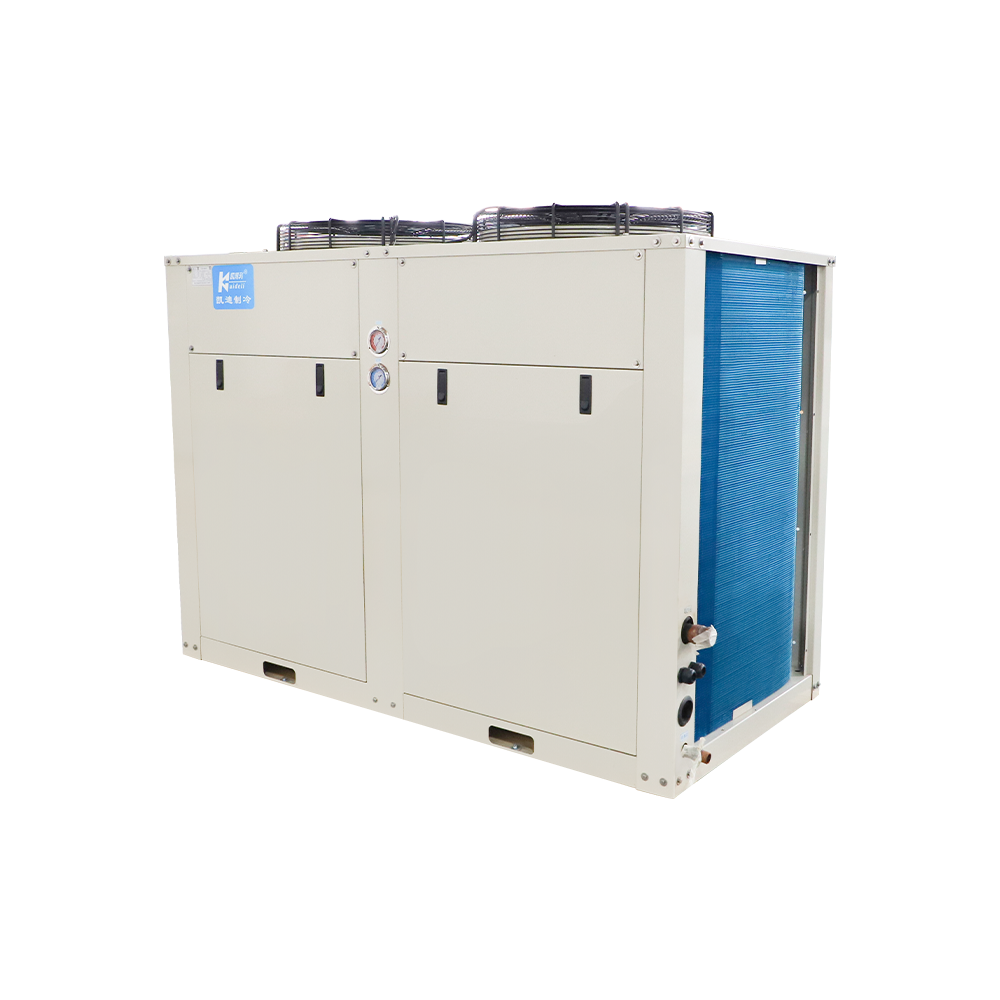
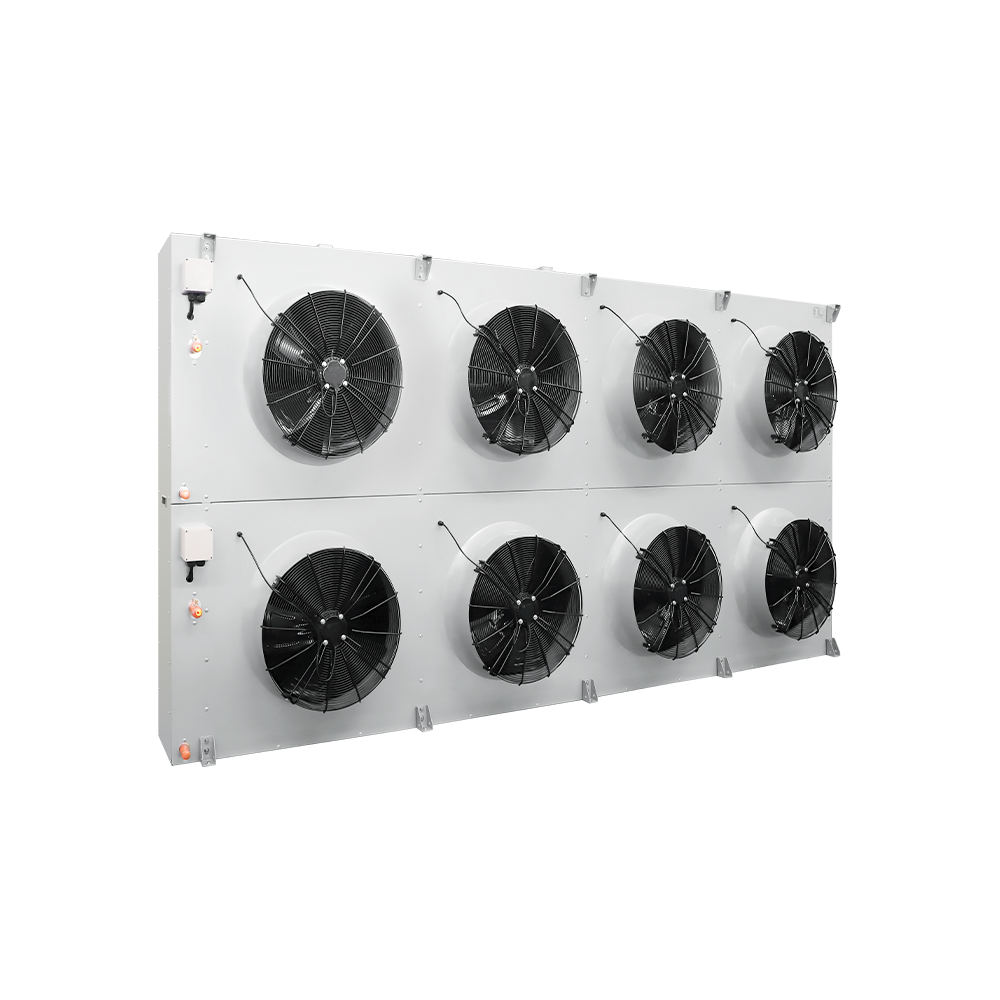
An Air Cooled Condenser rejects heat from a refrigerant or process fluid by pushing ambient air across a finned coil using electric fans, condensing the vapor back into liquid without consuming any process water. This makes it the standard heat rejection method for rooftop HVAC units, packaged refrigeration systems, small and mid-size data halls, and industrial process cooling where a water source is limited, expensive, or subject to scaling and biological growth control requirements.
Core Components of a Typical Unit
- Finned tube or microchannel coil that maximizes surface area for heat transfer
- Axial or centrifugal fans that force ambient air across the coil
- A refrigerant distribution header feeding multiple coil circuits evenly
- A structural frame rated for outdoor exposure, vibration, and wind load
- Variable frequency drives on fan motors to modulate airflow with load and ambient temperature
- Corrosion-resistant coatings on coils installed in coastal or high-humidity environments
How Coil Geometry Affects Performance
Coil design has a direct effect on how close an Air Cooled Condenser can get its approach temperature to the surrounding ambient air. Microchannel coils pack more surface area into a smaller footprint than traditional round-tube designs, which improves heat transfer per unit of face area but also increases sensitivity to fouling from dust, pollen, and airborne debris. Round-tube plate-fin coils are more tolerant of dirty environments and easier to clean in the field, which is why many industrial sites still specify them despite the footprint tradeoff.
Sound and Airflow Considerations
Because an Air Cooled Condenser depends entirely on moving large air volumes, fan noise becomes a real design constraint, particularly for rooftop units near occupied space or residential property lines. Low-noise fan blade designs and variable speed control have narrowed this gap significantly in the last several years, but noise remains one of the clearest practical disadvantages compared to a sealed liquid loop.
Because an Air Cooled Condenser has no open water loop, it also avoids the water treatment chemistry, drift losses, and biological growth risks that come with evaporative or liquid-based rejection. The tradeoff is that its performance is tied directly to the dry bulb temperature of the surrounding air, which is why sizing calculations always reference the hottest expected ambient condition for the site, not the yearly average.
How Liquid Cooling Systems Work
Liquid cooling moves heat away from a hot component using a fluid, typically water, a water-glycol mix, or a dielectric fluid, that has a far higher heat capacity per volume than air. There are three common architectures in active use today, each suited to a different density range and risk tolerance.
The Three Main Architectures
- Cold plate liquid cooling: fluid runs through metal plates mounted directly on CPUs, GPUs, or process equipment, capturing heat at the source before it ever reaches the surrounding air. This is currently the most widely deployed liquid architecture in dense compute environments because it targets only the hottest components while leaving the rest of the rack on conventional air cooling.
- Rear door heat exchangers: a liquid-filled coil sits on the back of a server rack and captures exhaust heat before it enters the room, letting the rest of the facility stay on a conventional air loop. This approach requires the least modification to existing rack hardware and is often chosen for retrofits.
- Immersion cooling: entire boards are submerged in a dielectric fluid that carries heat away without any contact with electrically live components, used mainly in the densest compute deployments where even cold plates cannot keep pace with the heat generated.
Single-Phase vs Two-Phase Fluid Behavior
Single-phase liquid cooling keeps the working fluid entirely in liquid form throughout the loop, relying purely on temperature rise to carry heat away. Two-phase systems allow the fluid to boil at the hot surface and condense elsewhere in the loop, capturing additional latent heat energy during the phase change. Two-phase designs can remove more heat per unit of fluid flow but require tighter pressure and fluid purity control, which raises both design complexity and long-term maintenance requirements.
Where the Heat Ultimately Goes
Every one of these designs still needs to reject the collected heat somewhere, usually through a dry cooler, a cooling tower, or in many hybrid facilities, an Air Cooled Condenser or Air Cooled Condenser array sitting outside the building. Liquid cooling does not eliminate the need for outdoor heat rejection; it simply changes how heat gets from the source to that rejection point, and in most modern hybrid designs an Air Cooled Condenser is still the final stage where heat actually leaves the building.
Air Cooled Condenser vs Liquid Cooling: Core Differences
The table below lines up the two approaches across the factors that actually drive a purchasing decision.
| Factor | Air Cooled Condenser | Liquid Cooling |
|---|---|---|
| Water consumption | None | Low to moderate in closed loop, higher in open evaporative rejection |
| Practical heat density limit per rack | Up to roughly 15-20 kW | 50 kW and above with cold plates or immersion |
| Noise level | Higher, driven by fan count and speed | Lower, fewer or smaller fans needed |
| Upfront installation cost | Lower | Higher, including plumbing and leak detection |
| Performance in high ambient heat | Drops as dry bulb temperature rises | More stable, less sensitive to outdoor conditions |
| Maintenance complexity | Lower, mostly coil cleaning and fan service | Higher, includes fluid quality checks and leak monitoring |
| Footprint per unit of heat rejected | Larger | Smaller at the rack level |
| Typical service life | 15 to 20 years with routine maintenance | 10 to 15 years, shorter for exposed fittings and pumps |
| Retrofit difficulty into an existing site | Low, mostly ductwork and electrical changes | High, requires plumbing runs and structural checks |
Efficiency and Performance: What the Numbers Show
Heat capacity is the reason liquid pulls ahead at high density. Water carries roughly 3,500 times more heat per unit volume than air for the same temperature rise, which is why a liquid loop the size of a garden hose can remove the same heat as ductwork many times larger. That physical advantage is real and measurable in every thermal engineering reference, but it only matters once heat density gets high enough that air simply cannot be moved fast enough to compensate.
Where an Air Cooled Condenser Still Wins on Efficiency
At lower heat densities, an Air Cooled Condenser reaches strong efficiency numbers without any of the pumping energy, fluid monitoring, or leak risk that a liquid loop requires. Modern microchannel Air Cooled Condenser units commonly reach approach temperatures within 8 to 12 degrees Fahrenheit of ambient dry bulb, and variable speed fan control can cut fan energy use by 30 to 50 percent compared to fixed speed units during partial load hours, based on manufacturer performance testing published across the HVAC and industrial refrigeration sector in 2025 and 2026 product literature.
Where Liquid Cooling Pulls Ahead
Once rack density crosses roughly 20 kW, fan power needed to push enough air through a rack rises sharply, and at some point the fans themselves become one of the largest energy draws in the room. Facilities running dense GPU clusters for AI training report needing 30 to 50 percent less total cooling energy after switching to direct liquid cooling at the chip level, because the fluid removes heat right at the source instead of relying on bulk air movement across the whole room.
Measuring Efficiency with PUE and WUE
Data center operators commonly track two metrics when comparing cooling strategies. Power Usage Effectiveness, or PUE, measures total facility energy against energy delivered to compute equipment, and a lower number is better. Water Usage Effectiveness, or WUE, measures liters of water consumed per kilowatt hour of IT energy delivered. Facilities running a pure Air Cooled Condenser design typically report a WUE at or near zero, while facilities relying on evaporative cooling towers, whether feeding an air loop or a liquid loop, report meaningfully higher WUE figures. PUE trends have generally favored liquid cooling at high density and favored air cooling at low to moderate density, reinforcing that neither metric declares an outright universal winner.
Partial Load Behavior
Most facilities do not run at full design load around the clock, which makes partial load efficiency just as important as peak performance. Air Cooled Condenser systems with variable frequency fan drives scale down smoothly as load drops, closely tracking actual heat rejection needs. Liquid cooling systems also scale down well through variable speed pumps, but the fixed overhead of running fluid monitoring and leak detection systems continues regardless of load, which slightly narrows the efficiency advantage liquid holds at very low utilization periods.
How Climate and Location Change the Calculation
Geography plays a larger role in this decision than most facility planning documents give it credit for. The same equipment can perform very differently depending on ambient conditions at the installation site.
Hot, Dry Climates
In hot, dry regions, an Air Cooled Condenser has to work harder because dry bulb temperatures regularly climb into ranges that shrink the temperature difference driving heat rejection. Facilities in these regions often oversize condenser coils or add supplemental evaporative pre-cooling of the incoming air stream to maintain performance during peak summer conditions.
Hot, Humid Climates
Humidity itself does not directly limit an Air Cooled Condenser the way it limits evaporative systems, since the condenser relies on dry bulb temperature rather than wet bulb temperature. This is actually one of the underappreciated advantages of a purely air-cooled dry system in humid coastal regions where evaporative cooling towers lose much of their effectiveness.
Cold Climates
Cold ambient air is a clear advantage for an Air Cooled Condenser, often allowing it to run at reduced fan speed for a large portion of the year and delivering some of the best efficiency numbers seen anywhere in the industry. Liquid cooling systems in cold climates need additional design attention to prevent freezing in exposed piping runs, typically addressed with glycol mixtures or heat trace on outdoor sections.
Water-Stressed Regions
Regions under drought restrictions or facing rising water tariffs increasingly favor dry heat rejection outright. An Air Cooled Condenser consuming zero process water becomes not just an efficiency choice but a regulatory and reputational one, since many municipalities have begun restricting new evaporative cooling installations or requiring water use permits that add cost and delay to project timelines.
Cost Comparison: Upfront and Operating Expenses
Cost comparisons need to separate three buckets: equipment purchase, installation labor, and ongoing operating expense. An Air Cooled Condenser generally wins on the first two, while the winner on the third depends heavily on local electricity and water rates.
| Cost Category | Air Cooled Condenser | Liquid Cooling System |
|---|---|---|
| Equipment purchase | Lower | 30 to 60 percent higher depending on architecture |
| Installation labor | Lower, mostly ductwork and electrical | Higher, plumbing, pumps, and leak sensors add time |
| Water bill impact | None | Low in closed loop designs |
| Electricity cost at low density | Lower | Comparable or slightly higher |
| Electricity cost at high density | Rises sharply, fan energy dominates | Lower per unit of heat removed |
| Annual maintenance contract cost | Lower | Higher, specialized technicians often required |
Total Cost of Ownership Over Ten Years
Looking only at the purchase price misses most of the real financial picture. Over a ten-year ownership window, an Air Cooled Condenser tends to hold its cost advantage at low to moderate density because lower purchase price, simpler installation, and lower maintenance costs compound year after year. At high density, the picture flips: liquid cooling's lower electricity draw per unit of heat removed, combined with the ability to pack far more compute or process capacity into the same footprint, often produces a lower total cost of ownership despite the higher initial investment, particularly in facilities paying commercial or industrial electricity rates above regional averages.
Financing and Phased Deployment
Facilities expecting future density growth increasingly choose a phased deployment strategy, installing liquid-ready plumbing infrastructure during initial construction while running air cooling until density actually requires the switch. This spreads capital expense over time and avoids paying for capacity that will not be used for years, without triggering a full retrofit disruption later.
Maintenance and Reliability Considerations
Reliability comes down to how many things can fail and how visible that failure is before it causes damage. An Air Cooled Condenser has fewer failure points: fan motors, coil fouling, and refrigerant charge are the main items a technician checks on a routine visit.
Air Cooled Condenser Maintenance Checklist
- Clean coil fins quarterly to remove dust, pollen, and debris buildup
- Check fan motor bearings and belt tension every service interval
- Verify refrigerant charge and check for slow leaks at fittings
- Inspect coil fins for bent or crushed sections that block airflow
- Test variable frequency drives and control sensors for accurate readings
- Check structural mounting and vibration isolation pads for wear
Liquid Cooling Maintenance Checklist
- Test fluid chemistry regularly to prevent scaling and corrosion inside the loop
- Monitor leak detection sensors at every cold plate and manifold connection
- Check pump performance and replace worn seals before they fail
- Inspect quick-disconnect fittings for wear during every hardware swap
- Verify fluid levels and top off in closed loop systems on a scheduled basis
- Replace filters on filtration loops that protect cold plates from particulate buildup
Common Failure Modes to Watch For
An Air Cooled Condenser most commonly fails through gradual coil fouling that reduces airflow and raises approach temperature over months rather than suddenly, giving maintenance teams ample warning through rising discharge pressure readings. Liquid cooling systems more often fail through slow, hard-to-detect leaks at fitting connections, which is why leak detection sensor placement and sensitivity matter so much more in a liquid design than in a dry one.
A leak inside a server room or industrial control cabinet carries far more consequence than a fan failure on an Air Cooled Condenser sitting outdoors, which is one reason many facilities keep liquid cooling limited to the specific racks or machines that truly need it rather than converting an entire building.
Staffing and Technician Availability
An Air Cooled Condenser can generally be serviced by a general HVAC or refrigeration technician with standard training. Liquid cooling systems, particularly cold plate and immersion designs, often require technicians with specific training on fluid chemistry, dielectric fluid handling, and manufacturer-specific quick-disconnect hardware, which can limit service options in regions where that expertise is not yet widely available.
Water Usage and Environmental Considerations
Water scarcity has pushed many operators back toward dry heat rejection. An Air Cooled Condenser uses zero process water, which matters directly in regions facing drought restrictions or high water tariffs. Closed loop liquid cooling systems use very little water once filled, since the same fluid recirculates, but any design that relies on evaporative cooling towers to reject the collected heat still consumes water continuously through evaporation and blowdown.
Facilities in water-stressed regions increasingly specify a dry Air Cooled Condenser as the final heat rejection stage even when the internal cooling architecture uses liquid at the rack level, combining the density benefits of liquid cooling indoors with zero water consumption outdoors.
Refrigerant choice also factors into the environmental conversation. Newer Air Cooled Condenser units increasingly ship with lower global warming potential refrigerants, reducing the environmental impact of any refrigerant that eventually leaks or is released during servicing, a trend that has accelerated across the HVAC and refrigeration industry through 2025 and into 2026.
Sizing and Selection Methodology
Choosing the wrong size for either system creates problems that show up months or years later, usually as higher energy bills or reduced equipment lifespan rather than immediate failure.
Sizing an Air Cooled Condenser
Correct sizing starts with the maximum expected heat rejection load, then applies a design ambient temperature based on the hottest reasonably expected condition for the specific location rather than an annual average. Undersizing shows up as elevated head pressure and reduced system capacity during the hottest days of the year, exactly when cooling capacity matters most. Oversizing wastes capital and can cause short-cycling of fans at partial load if variable speed control is not specified.
Sizing a Liquid Cooling System
Liquid cooling sizing needs to account for flow rate, allowable temperature rise across the loop, and the pressure drop through cold plates or heat exchangers. Undersizing flow rate can allow hot spots to develop on the highest-power components even when average loop temperature looks acceptable, which is why many designs size to the peak thermal design power of the hottest single component rather than the average across the rack.
Redundancy Planning
Both systems benefit from N+1 redundancy in critical applications, meaning one additional unit or circuit beyond the minimum required capacity. For an Air Cooled Condenser this often means an extra fan circuit or a second unit entirely. For liquid cooling it typically means redundant pumps and, in some designs, dual independent fluid loops so a single leak or pump failure does not take down cooling for the entire rack.
Installation Process and Timeline
Installing an Air Cooled Condenser
A typical Air Cooled Condenser installation involves setting the unit on a rooftop curb or ground-level pad, running refrigerant lines to the indoor equipment, connecting electrical service, and commissioning the fan control system. For a mid-size commercial unit, installation commonly takes anywhere from a few days to two to three weeks depending on crane access, roof structural work, and electrical service upgrades.
Installing a Liquid Cooling System
Liquid cooling installation adds plumbing runs, pressure testing, fluid fill and chemical treatment, leak detection sensor placement and calibration, and integration with building management systems. For a rack-level cold plate retrofit into an existing room, installation timelines commonly run four to eight weeks, and full immersion cooling deployments for a new build can take considerably longer due to the specialized tank infrastructure and fluid handling requirements involved.
Downtime During Installation
Retrofitting an Air Cooled Condenser onto an existing system generally requires only a brief refrigerant charge interruption. Retrofitting liquid cooling into an occupied facility is more disruptive, since it often requires taking racks offline to install cold plates or reroute plumbing, which is why many organizations schedule liquid cooling retrofits during planned maintenance windows or alongside a hardware refresh cycle rather than as a standalone project.
Common Mistakes to Avoid
Mistakes with Air Cooled Condenser Selection
- Sizing to average ambient temperature instead of the design peak for the site
- Placing the unit where recirculated hot exhaust air reduces effective intake temperature
- Skipping variable frequency fan drives to save upfront cost, then paying for it in energy bills
- Neglecting coil cleaning schedules until performance has already degraded noticeably
Mistakes with Liquid Cooling Selection
- Converting an entire facility to liquid cooling when only a handful of racks actually need it
- Underinvesting in leak detection sensitivity and placement
- Choosing fluid chemistry without accounting for compatibility with existing metal and gasket materials
- Failing to train on-site staff before the system goes live, leading to slow response during a fault
Where Each System Performs Best
Air Cooled Condenser Is the Better Fit When
- Heat density stays below roughly 15 to 20 kW per rack or equivalent load
- Water access is limited, expensive, or subject to strict conservation rules
- The site needs a simple system that a general maintenance team can service
- Budget favors lower upfront cost over marginal efficiency gains
- The climate is cold to moderate for most of the year
Liquid Cooling Is the Better Fit When
- Heat density regularly exceeds 20 to 30 kW per rack, common in AI training clusters
- Noise levels must stay low, such as in occupied commercial spaces
- Floor space is limited and a smaller footprint per kW matters
- Long-term density growth is expected and a future retrofit would be disruptive
- Specialized technicians are available locally to support fluid chemistry and leak monitoring
Industry-Specific Considerations
Data Centers and Compute Facilities
Data centers have driven most of the recent growth in liquid cooling adoption, largely because GPU-based AI training racks now regularly exceed heat densities that would require impractical amounts of airflow to manage with air alone. Even so, the majority of storage and general-purpose compute racks in most data centers remain on air cooling, with an Air Cooled Condenser or Air Cooled Condenser array often still handling final outdoor heat rejection for the entire building regardless of what happens at the rack level indoors.
Commercial HVAC
Commercial building HVAC has stayed firmly in Air Cooled Condenser territory, since heat loads in office, retail, and light commercial spaces rarely approach the density levels that would justify liquid cooling's added complexity and cost.
Industrial Process Cooling
Industrial applications like plastics processing, chemical manufacturing, and metal treatment frequently use an Air Cooled Condenser for closed-loop process fluid cooling specifically because it avoids introducing an open water system into an environment where water treatment and contamination control would add ongoing cost and regulatory complexity.
Commercial Refrigeration
Supermarket and cold storage refrigeration systems rely heavily on Air Cooled Condenser units precisely because they need to operate reliably across a wide range of outdoor conditions without depending on a continuous water supply, particularly in regions where water restrictions have become more common in recent years.
Where the Technology Is Heading in 2026
Hybrid designs are becoming the default rather than the exception. Many new data center and industrial builds now pair rack-level liquid cooling for the densest equipment with a rooftop or ground-mounted Air Cooled Condenser array for final heat rejection, capturing the density benefit of liquid without adding new water consumption to the site. Microchannel coil technology has also continued to shrink the footprint of Air Cooled Condenser units while improving heat transfer per square foot, narrowing some of the space disadvantage that liquid cooling used to hold outright.
On the liquid side, dielectric immersion fluids have become more widely available with improved thermal stability, and quick-disconnect fittings have gotten more reliable, cutting the time needed to service a leaking connection without draining an entire loop. Manufacturers have also started offering standardized, factory-integrated cold plate kits designed to drop into existing rack form factors, lowering the retrofit barrier that previously kept many facilities on air cooling longer than their density levels would otherwise justify.
On the air side, fan blade aerodynamics continue to improve, with newer designs cutting noise levels at the same airflow volume compared to units from just a few years earlier. Coil coatings resistant to salt air and industrial pollutants have also extended usable service life for an Air Cooled Condenser installed in coastal or heavy-industry environments, addressing one of the more common causes of early coil replacement.
Frequently Asked Questions
Does liquid cooling always use more electricity than air cooling?
No. At low to moderate heat density, an Air Cooled Condenser paired with efficient fan control often uses less total electricity. Liquid cooling pulls ahead on electricity only once heat density gets high enough that air-moving fan power becomes the dominant cost.
Can an Air Cooled Condenser be retrofitted into a facility that currently uses liquid cooling?
Yes, in most hybrid designs the Air Cooled Condenser sits at the outdoor heat rejection stage regardless of what cooling method is used indoors, so it can often be added or upgraded without touching the indoor liquid loop.
Is liquid cooling safe to use near sensitive electronics?
Modern cold plate and immersion systems are engineered specifically for direct contact with electronics and use dielectric or carefully controlled fluids with leak detection built in. The main risk comes from poor installation or worn fittings rather than the cooling method itself.
How much space does an Air Cooled Condenser need compared to a liquid cooling system?
An Air Cooled Condenser generally needs more outdoor footprint per unit of heat rejected than an equivalent liquid cooling setup needs indoors, since it depends on moving large volumes of air rather than a compact fluid loop.
Which option has a longer service life?
An Air Cooled Condenser typically has a longer practical service life because it has fewer components exposed to fluid chemistry issues like scaling or corrosion, though both systems can last well over a decade with proper maintenance.
Do I need to choose only one system for an entire facility?
No. Most modern facilities mix both, using liquid cooling only where heat density truly requires it and relying on air cooling, often through an Air Cooled Condenser, for the rest of the building and for final outdoor heat rejection.
How does altitude affect an Air Cooled Condenser?
Lower air density at high altitude reduces the mass of air moved per fan revolution, which can reduce heat rejection capacity if the unit was not selected with altitude correction factored into the sizing calculation.
What happens if a liquid cooling system develops a leak?
Properly designed systems include leak detection sensors that trigger an alarm and, in many designs, automatically isolate the affected loop segment before fluid reaches sensitive electronics, which is why sensor placement and response protocols matter as much as the hardware itself.
Is it worth switching from air to liquid cooling for a facility running below 10 kW per rack?
Generally not. At that density, an Air Cooled Condenser paired with standard air cooling already performs efficiently, and the added cost and complexity of liquid cooling rarely pays back within a reasonable timeframe.
Do liquid cooling systems need specialized technicians for routine service?
Yes, in most cases. Fluid chemistry checks, leak sensor calibration, and quick-disconnect fitting inspection typically require training beyond what a general HVAC technician receives, which is a real staffing consideration for facilities without in-house expertise.
Can an Air Cooled Condenser handle sudden spikes in heat load?
Within its rated capacity, yes, particularly units with variable frequency fan drives that can ramp airflow quickly. Sustained loads beyond the unit's rated design capacity will still cause reduced performance regardless of fan response speed.