

 English
 中文简体
中文简体Content
- 1 What A Condensing Unit Does Inside A Warehouse Cooling System
- 2 Comparing The Main Types Of Warehouse Cooling Systems
- 3 How To Calculate Cooling Load Before Choosing A Condensing Unit
- 4 Refrigerants And Efficiency Ratings That Matter In 2026
- 5 Placement, Airflow, And Insulation Practices That Improve Performance
- 6 A Practical Maintenance Schedule For Warehouse Condensing Units
- 7 Common Warehouse Cooling Problems And Their Root Causes
- 8 Cost Considerations And Long-Term Value
- 9 Adjusting Warehouse Cooling Strategy For Climate And Season
- 10 Frequently Asked Questions
- 10.1 How many tons of cooling does a typical warehouse need?
- 10.2 Can one condensing unit serve an entire warehouse?
- 10.3 How often should a warehouse condensing unit be serviced?
- 10.4 What is the difference between an air-cooled and water-cooled condensing unit?
- 10.5 Why does my warehouse have hot spots even though the condensing unit seems to be working fine?
- 10.6 Does switching to a lower-GWP refrigerant improve cooling performance?
- 10.7 What is the most cost-effective way to reduce warehouse cooling load before adding more capacity?
Warehouse cooling solutions built around a properly sized condensing unit are the single most reliable way to control temperature, protect stored goods, and cut long-term energy costs in a large storage facility. A condensing unit works together with an evaporator coil to remove heat from warehouse air, and getting the unit type, capacity, and refrigerant right from the start determines whether a facility stays within safe temperature bands during peak summer loads or struggles with hot spots, compressor strain, and rising utility bills.
This guide walks through how condensing units function inside a warehouse cooling system, how to size and select the right configuration, which refrigerants and efficiency ratings matter today, and how to keep the system running with minimal downtime. Practical tables, real-world sizing logic, and a detailed FAQ are included so the guide can be used as a working reference rather than a general overview.
What A Condensing Unit Does Inside A Warehouse Cooling System
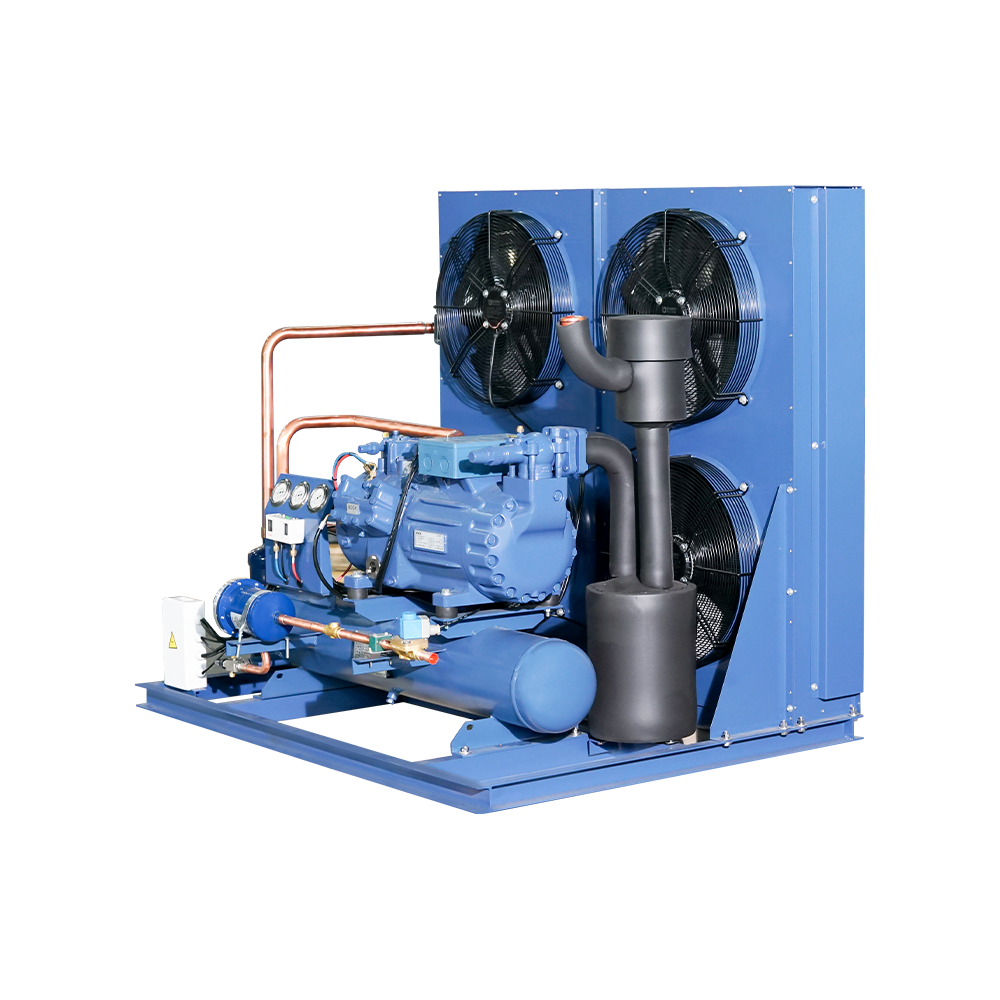
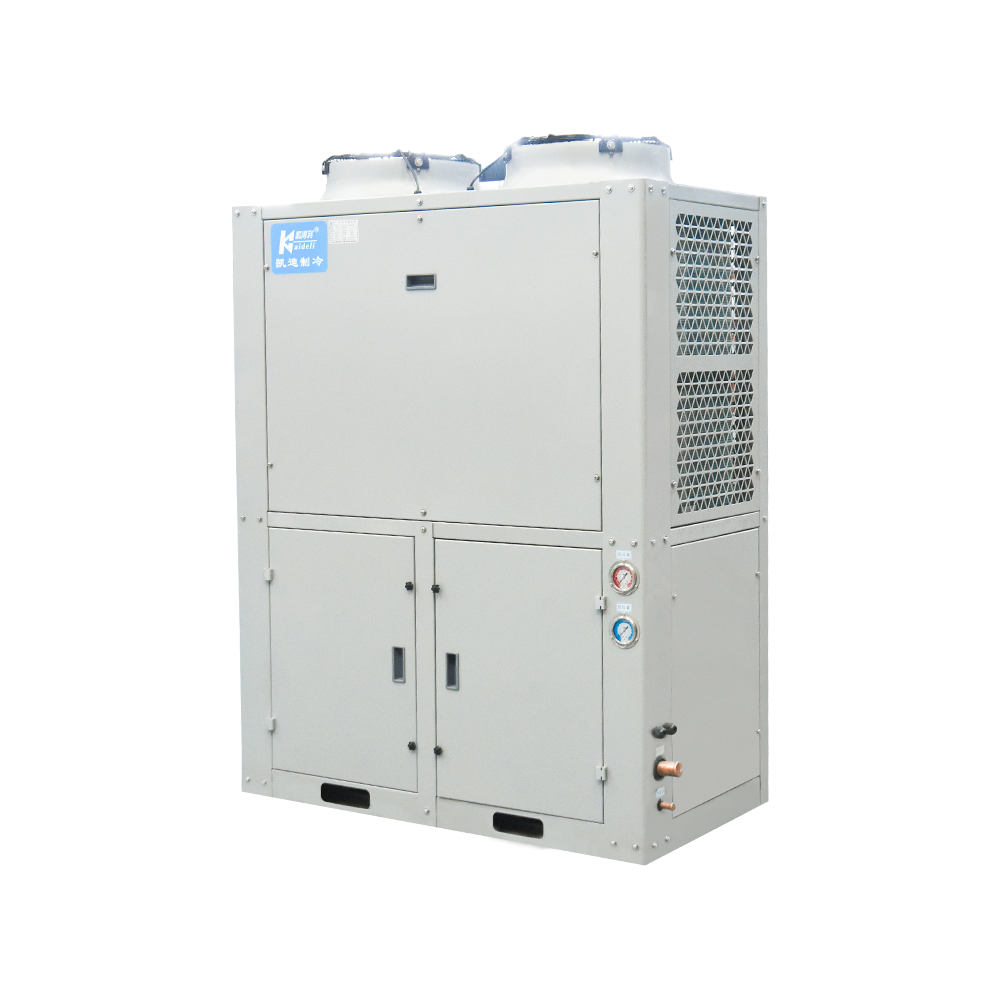
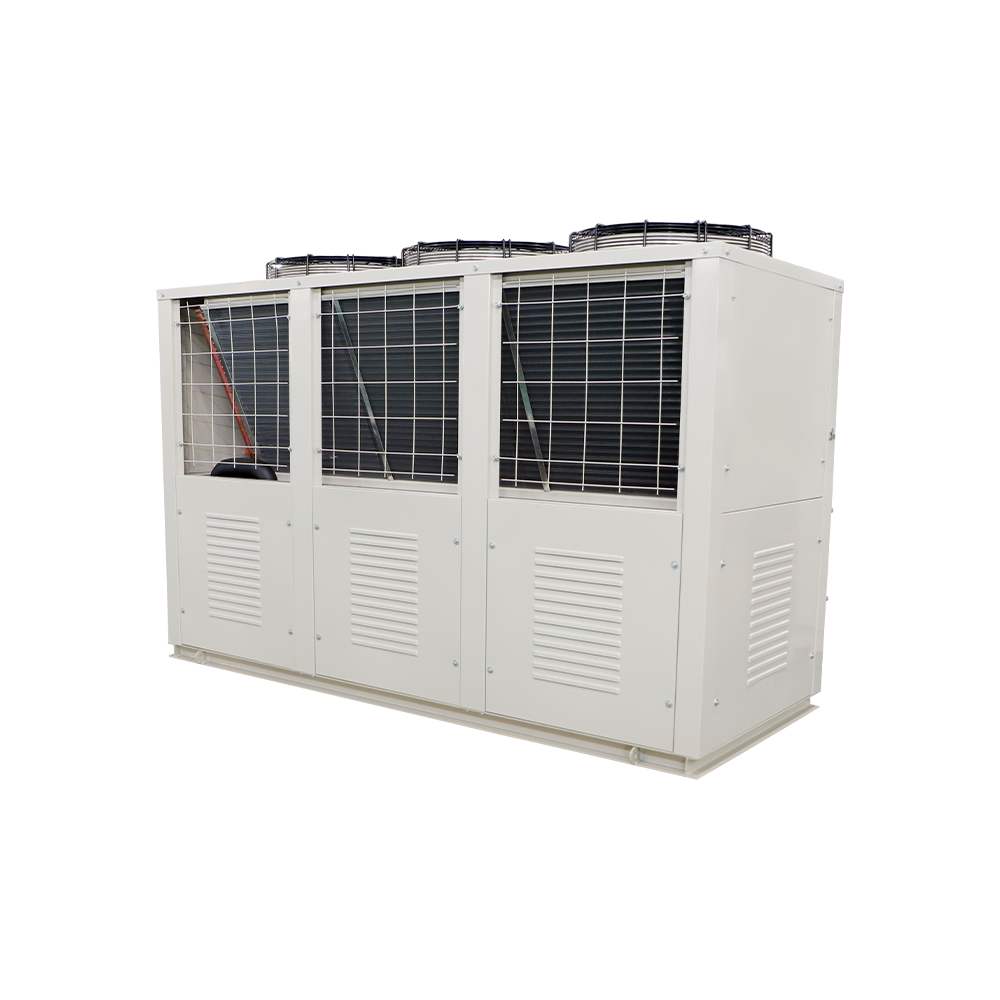
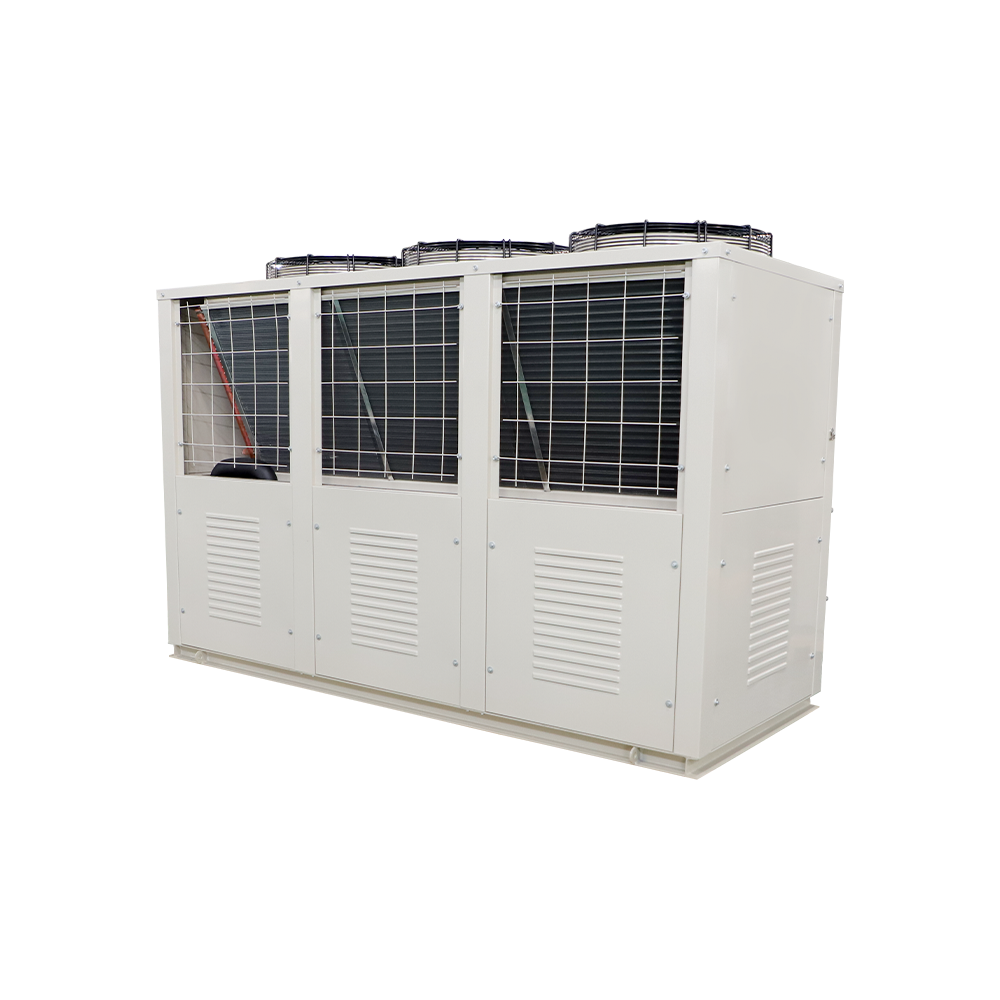
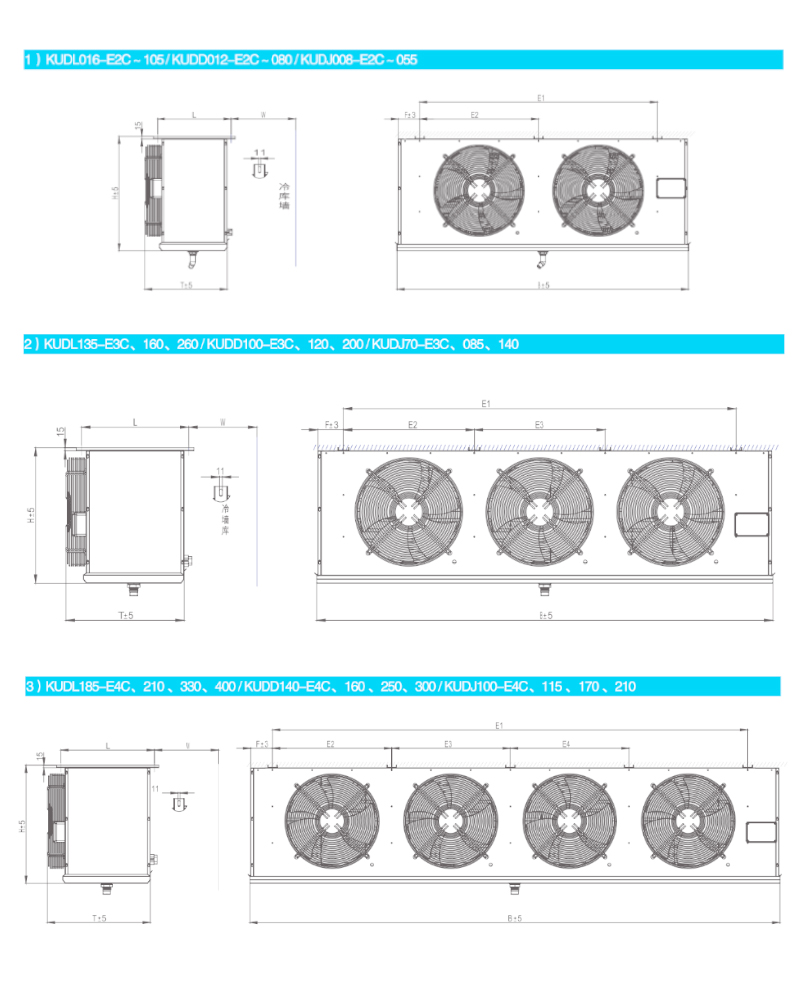
A condensing unit is the outdoor or mechanical-room component of a split cooling system that houses the compressor, the condenser coil, and a fan. Its job is to take the heat absorbed by the indoor evaporator coil and reject it to the outside air. In a warehouse setting, one or several condensing units are typically paired with rooftop or wall-mounted evaporators, ducted air handlers, or direct expansion coils feeding a warehouse-wide duct network.
The refrigerant cycle inside a condensing unit follows four repeating steps:
- Low-pressure refrigerant vapor from the evaporator enters the compressor and is compressed into a hot, high-pressure gas.
- The hot gas passes through the condenser coil, where a fan pushes ambient air across the coil to remove heat and turn the gas back into a liquid.
- The liquid refrigerant travels through a metering device that drops its pressure before it reaches the evaporator.
- Inside the evaporator, the low-pressure liquid absorbs heat from warehouse air and turns back into a vapor, completing the cycle.
Because warehouses have large open volumes, high ceilings, frequent door openings, and uneven heat sources like forklifts, lighting, or packing equipment, the condensing unit has to be matched not just to floor area but to the actual thermal profile of the building. Undersizing leads to a unit that runs constantly without ever reaching setpoint, while oversizing causes short-cycling, poor humidity control, and unnecessary energy use.
Comparing The Main Types Of Warehouse Cooling Systems
Most warehouses choose between four broad categories of cooling equipment, often combining more than one depending on zoning needs. The table below compares them on the factors that matter most for a storage or distribution facility.
| System Type | Best Suited For | Relative Energy Use | Humidity Control |
|---|---|---|---|
| Split system with air-cooled condensing unit | Mixed-use warehouses, mezzanine offices, temperature-sensitive storage zones | Moderate | Good |
| Packaged rooftop unit | Single-story warehouses with open floor plans | Moderate to high | Good |
| Evaporative (swamp) cooling | Dry climates, non-refrigerated bulk storage | Low | Poor, raises humidity |
| Central chiller with air handlers | Very large or multi-zone distribution centers | Low per ton at scale | Excellent |
Air-cooled condensing units remain the most common choice for small-to-mid-size warehouses because they are modular, easy to service, and can be added zone by zone as storage needs grow. Larger distribution centers with strict temperature bands often move toward chilled water plants once the facility exceeds roughly 150,000 to 200,000 square feet, since the per-ton efficiency of a central plant improves at that scale.
How To Calculate Cooling Load Before Choosing A Condensing Unit
Sizing a condensing unit correctly starts with a heat load calculation rather than a floor-area rule of thumb. The main heat sources in a warehouse fall into five categories, each of which adds to the total tonnage the condensing unit must handle.
Structural Heat Gain
Roof and wall insulation values, window area, and building orientation determine how much heat enters through the envelope. A warehouse with an insulated metal roof and reflective coating can see structural heat gain reduced by a meaningful margin compared to an uninsulated roof deck, which directly lowers the tonnage required.
Occupancy And Equipment Load
Workers, forklifts, conveyor motors, packing stations, and lighting all add sensible heat. A warehouse running two shifts with active material handling equipment generates noticeably more internal heat than a low-traffic bulk storage building of the same size.
Infiltration From Dock Doors
Loading dock doors that open frequently allow outside air to mix with conditioned space. Facilities with high dock-door traffic often need 10 to 20 percent additional cooling capacity built into the design to account for infiltration losses. Dock seals, high-speed doors, and air curtains reduce this load significantly and are worth planning alongside the condensing unit selection itself.
Stored Product Load
Products that arrive warm, generate their own heat, or require rapid pull-down to a target temperature add a load beyond steady-state building cooling. This is especially relevant for facilities storing perishable goods, electronics, or temperature-sensitive components.
| Load Category | Typical Share Of Total Load | Primary Mitigation |
|---|---|---|
| Roof and wall heat gain | 30 to 45 percent | Reflective roof coating, added insulation |
| Dock door infiltration | 10 to 20 percent | Dock seals, air curtains, fast-acting doors |
| Lighting and equipment | 15 to 25 percent | LED retrofits, scheduled equipment cycling |
| Occupancy | 5 to 10 percent | Zoned cooling by shift pattern |
| Stored product pull-down | Variable, project-specific | Dedicated pull-down capacity separate from steady-state load |
These figures are illustrative planning ranges used in general HVAC design practice rather than fixed values, and a qualified mechanical engineer should confirm final tonnage using a room-by-room load calculation for any specific building.
Refrigerants And Efficiency Ratings That Matter In 2026
Condensing unit performance is judged on two things: how efficiently it moves heat, and which refrigerant it uses. Both have shifted substantially in recent equipment generations.
Efficiency Metrics To Compare
Two ratings are used most often when comparing condensing units for warehouse duty:
- SEER2 (Seasonal Energy Efficiency Ratio): measures cooling output over a typical season divided by energy consumed; higher is more efficient.
- EER2 (Energy Efficiency Ratio): measures efficiency at a single, high outdoor temperature point, which is a more realistic indicator of how a unit performs during peak summer conditions common in warehouse cooling.
For warehouses that run cooling heavily during the hottest part of the day, EER2 is often the more useful number to compare between condensing units, since it reflects real peak-load performance rather than an averaged seasonal figure.
The Move Toward Lower-GWP Refrigerants
The refrigerant industry has been transitioning away from higher global-warming-potential blends toward next-generation refrigerants such as R-454B and R-32, which carry a substantially lower environmental impact while maintaining comparable cooling performance to older refrigerant blends. Newer condensing units built for these refrigerants typically use redesigned compressors and coils optimized for the different pressure and heat-transfer characteristics of the replacement gases.
When specifying a condensing unit for a new or retrofit warehouse project, confirming which refrigerant the unit is designed for is one of the most important steps, since mixing refrigerant types or retrofitting an older unit without proper conversion can reduce efficiency and shorten compressor life.
Placement, Airflow, And Insulation Practices That Improve Performance
Even a correctly sized condensing unit underperforms if it is poorly placed or paired with weak building envelope design. The following practices consistently improve real-world cooling performance in warehouse settings.
Give The Condenser Coil Room To Breathe
Outdoor condensing units need unobstructed airflow on at least three sides, with manufacturer-specified clearance maintained from walls, fencing, or stacked pallets. Units placed in enclosed alcoves or shaded by nearby structures without adequate clearance can experience elevated head pressure and reduced capacity.
Orient Air Distribution Around Storage Racking
Tall pallet racking blocks natural air mixing, which can create stratified hot zones near the ceiling and cooler zones at floor level. Destratification fans or strategically placed diffusers help even out temperature across the vertical profile of a warehouse rather than relying on the condensing unit alone to overcome poor air distribution.
Seal The Building Envelope
Gaps around dock doors, skylights, and utility penetrations let conditioned air escape and outside heat enter. Sealing these points reduces the working load on the condensing unit and is typically far less expensive than adding cooling capacity to compensate for envelope losses.
| Practice | Effect If Ignored |
|---|---|
| Maintain clearance around outdoor unit | Elevated head pressure, reduced tonnage, higher energy use |
| Use destratification fans in tall storage areas | Uneven temperature across rack height, thermostat short-cycling |
| Seal dock doors and envelope gaps | Continuous infiltration load, condensing unit runs longer than necessary |
| Elevate outdoor unit above flood or snow line | Water or debris intrusion, coil corrosion over time |
A Practical Maintenance Schedule For Warehouse Condensing Units
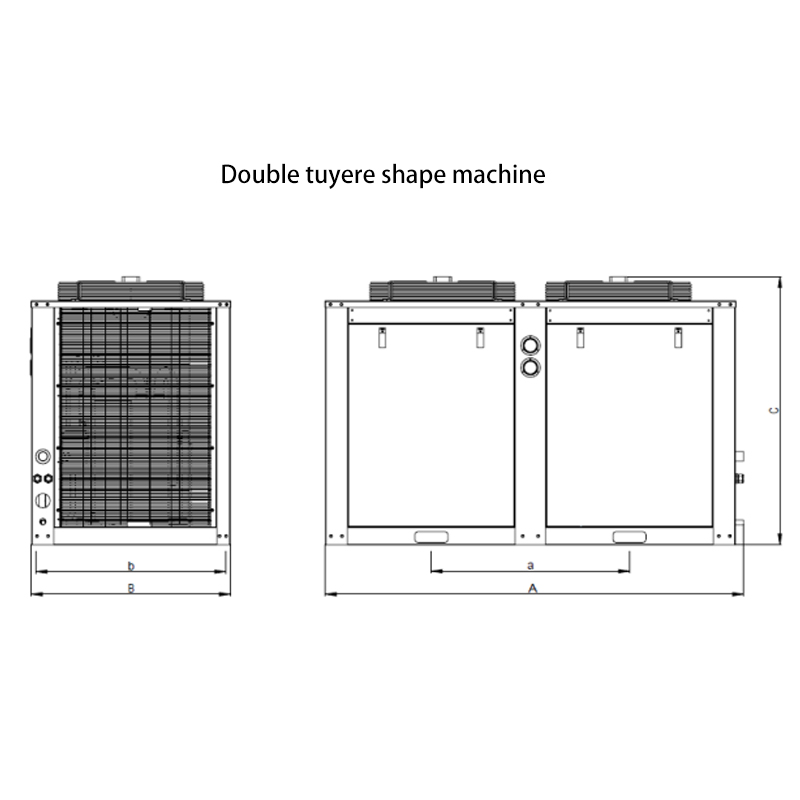
Condensing units are mechanical equipment operating in dusty, high-throughput environments, and a defined maintenance rhythm extends service life and protects efficiency far more effectively than reactive repairs.
| Interval | Task |
|---|---|
| Monthly | Visual inspection for debris, leaves, or dust buildup around the condenser coil |
| Quarterly | Coil cleaning, fan motor inspection, refrigerant pressure check |
| Semi-annually | Electrical connection tightening, contactor and capacitor testing, condensate line check |
| Annually | Full performance test, compressor amperage draw comparison against baseline, insulation and ductwork review |
Tracking compressor amperage draw over time is one of the most useful early-warning indicators available, since a gradual increase often signals a failing capacitor, a dirty coil, or declining refrigerant charge well before the unit fails outright.
Common Warehouse Cooling Problems And Their Root Causes
Most cooling complaints in a warehouse trace back to a small set of recurring issues. Identifying the pattern quickly prevents unnecessary equipment replacement.
| Symptom | Likely Cause |
|---|---|
| Warehouse never reaches setpoint on hot afternoons | Undersized condensing unit relative to peak load, or dock doors left open during operation |
| Unit cycles on and off rapidly | Oversized unit, thermostat placed near a heat source, or restricted airflow |
| Hot spots near the ceiling but comfortable at floor level | Poor air mixing and thermal stratification in high-bay storage |
| Rising energy bills without a change in usage pattern | Dirty condenser coil, low refrigerant charge, or aging compressor efficiency loss |
| Ice forming on the evaporator coil | Restricted airflow across the coil or low refrigerant charge |
Cost Considerations And Long-Term Value
Budget planning for warehouse cooling should weigh upfront equipment cost against operating cost over the system's service life, since a lower-priced condensing unit with poor efficiency can cost considerably more once electricity use is factored in over ten or more years of operation.
Upfront Versus Operating Cost
Larger-capacity condensing units and higher-efficiency compressors generally carry a higher purchase price but reduce the run-hours needed to hold temperature, which lowers the electricity portion of total cost of ownership. For facilities running cooling for extended hours across most of the year, the operating-cost side of the equation typically outweighs the upfront price difference within a modest number of years.
Zoning Reduces Waste
Warehouses that cool the entire building uniformly, including bulk storage areas with minimal occupancy, often spend more than necessary. Zoning cooling so that office areas, packing stations, and high-traffic zones receive tighter temperature control while bulk storage runs a wider setpoint band can meaningfully reduce total run-hours across the system.
| Cost Factor | Why It Matters |
|---|---|
| Compressor efficiency rating | Determines electricity cost per hour of runtime over the equipment's life |
| Ductwork and distribution design | Poor distribution forces the condensing unit to run longer to reach the same comfort level |
| Number of zones and controls | More granular zoning reduces unnecessary cooling of low-occupancy areas |
| Maintenance program consistency | Well-maintained units retain rated efficiency far longer than neglected ones |
Adjusting Warehouse Cooling Strategy For Climate And Season
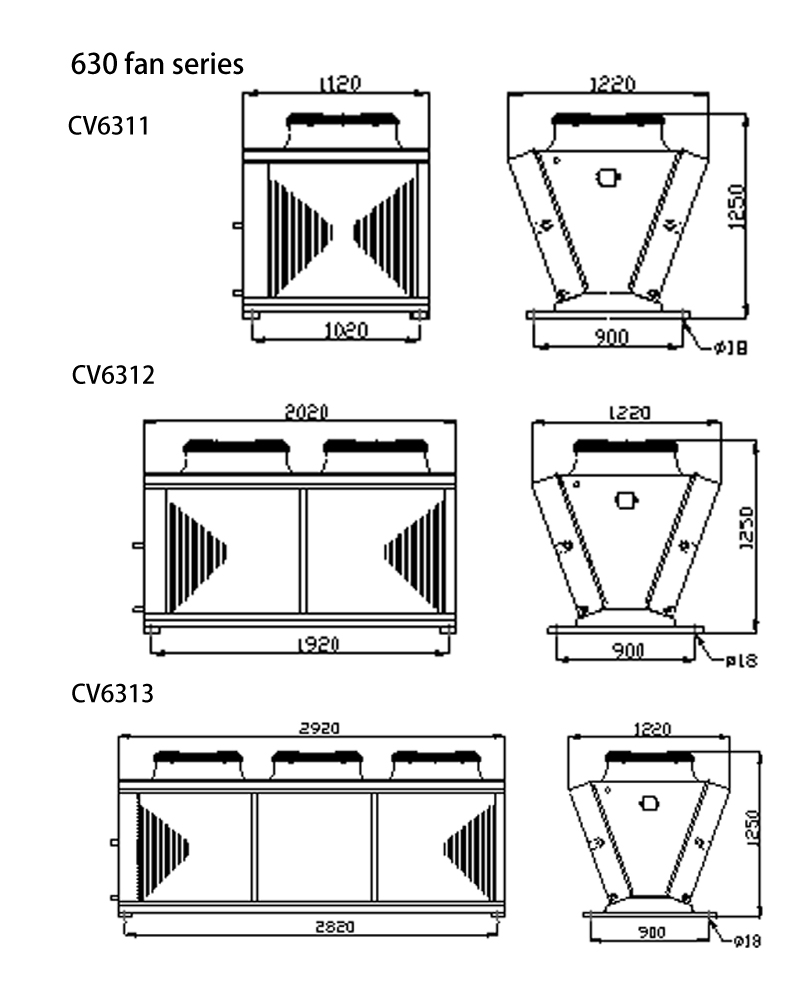
A condensing unit sized for a coastal, mild climate will underperform if installed in a hot, dry inland region without adjustment, and the reverse is also true. Ambient design temperature, humidity levels, and seasonal swing all shift how a system should be specified.
- Hot, dry climates: condensing units face higher ambient temperatures at the condenser coil, which reduces available capacity at peak hours; sizing should account for the local summer design temperature rather than an average.
- Hot, humid climates: latent load (moisture removal) becomes a larger share of total load, so the system needs adequate dehumidification capability, not just sensible cooling capacity.
- Mixed or seasonal climates: variable-capacity or multi-stage condensing units help match output to a wider range of outdoor conditions without excessive cycling during shoulder seasons.
Reviewing at least ten years of local weather data when specifying peak design conditions helps avoid a system that performs well in an average year but struggles during an unusually hot stretch, which is when warehouse cooling failures are most costly in terms of stored product risk.
Frequently Asked Questions
How many tons of cooling does a typical warehouse need?
There is no single ratio that applies to every warehouse, since roof insulation, dock door count, lighting load, and product storage all shift the number substantially. A proper heat load calculation, rather than a square-footage rule of thumb, is the only reliable way to determine required tonnage for a specific building.
Can one condensing unit serve an entire warehouse?
It can for smaller facilities, but most mid-size and large warehouses use multiple condensing units serving separate zones. This approach improves redundancy, since a single unit failure only affects one zone, and allows different areas of the warehouse to run at different setpoints based on actual use.
How often should a warehouse condensing unit be serviced?
A structured schedule with monthly visual checks, quarterly coil cleaning, and a full annual performance test is a reasonable baseline for most warehouse installations, with adjustments for dustier environments or units running near-continuous duty cycles.
What is the difference between an air-cooled and water-cooled condensing unit?
An air-cooled unit rejects heat directly to outdoor air using a fan and coil, while a water-cooled unit rejects heat to a water loop, typically connected to a cooling tower. Air-cooled units are simpler to install and maintain, while water-cooled systems can offer better efficiency at very large scale but require additional water treatment and tower maintenance.
Why does my warehouse have hot spots even though the condensing unit seems to be working fine?
Hot spots are most often an air distribution problem rather than a capacity problem. Tall racking, poor duct layout, or a lack of destratification fans can leave the condensing unit's output unevenly distributed even when the equipment itself is functioning correctly.
Does switching to a lower-GWP refrigerant improve cooling performance?
Newer refrigerants such as R-454B and R-32 are designed to match or approach the cooling performance of the refrigerants they replace, so the primary benefit is a reduced environmental impact rather than a dramatic performance gain, though newer condensing units built for these refrigerants often include efficiency improvements as part of the redesign.
What is the most cost-effective way to reduce warehouse cooling load before adding more capacity?
Sealing dock door gaps, adding dock seals or air curtains, upgrading to reflective roof coatings, and switching to LED lighting typically reduce cooling load at a fraction of the cost of adding condensing unit capacity, and are worth addressing before assuming more tonnage is required.