

 English
 中文简体
中文简体Content
- 1 Car AC Condenser vs Compressor: The Direct Answer
- 2 What Is a Car AC Compressor and What Does It Actually Do
- 3 What Is an Air Cooled Condenser and Where It Sits in the System
- 4 Air Cooled Condenser vs Compressor: Core Functional Differences
- 5 How the Compressor and Air Cooled Condenser Work Together in the Refrigeration Cycle
- 6 Common Failure Symptoms That Point to the Compressor
- 7 Common Failure Symptoms That Point to the Air Cooled Condenser
- 8 Quick Diagnostic Table: Matching Symptoms to the Likely Component
- 9 Maintenance Practices That Extend the Life of Both Components
- 10 Replacement Considerations and Cost Factors
- 11 Choosing the Right Air Cooled Condenser for a Replacement
- 12 Frequently Asked Questions
- 12.1 Can a car run with a bad Air Cooled Condenser but a good compressor?
- 12.2 Does a damaged condenser always mean a full replacement?
- 12.3 Why does the compressor make noise only when the AC is on?
- 12.4 How often should the Air Cooled Condenser be inspected?
- 12.5 Is it normal for the compressor to cycle on and off?
- 12.6 Can driving with a failing compressor damage the condenser?
- 12.7 What is the difference between an Air Cooled Condenser and a radiator?
- 12.8 Will low refrigerant damage the compressor even if the condenser is fine?
Car AC Condenser vs Compressor: The Direct Answer
The compressor is the pump that pressurizes refrigerant, and the condenser is the radiator-like unit that cools that pressurized refrigerant back into a liquid. They are two completely different parts with two completely different jobs, and a failure in one is often mistaken for a failure in the other because the symptoms overlap: weak cold air, a system that blows warm on hot days, or a compressor clutch that will not engage.
In most modern vehicles, the Air Cooled Condenser sits at the very front of the car, directly behind the grille and in front of the radiator, where moving air passes through its fins to pull heat out of the refrigerant. The compressor, by contrast, is mounted on the engine block and is driven by a belt or, in electric and hybrid vehicles, by its own electric motor. If the air blowing from the vents is only slightly cool, the compressor is usually the first suspect. If the air is not cold at all and the system pressures are unusually high, the Air Cooled Condenser is often the root cause because it cannot shed heat properly.
The rest of this guide breaks down exactly how each part works, how to tell them apart when something goes wrong, and what actually needs replacing versus what can be cleaned or repaired.
What Is a Car AC Compressor and What Does It Actually Do
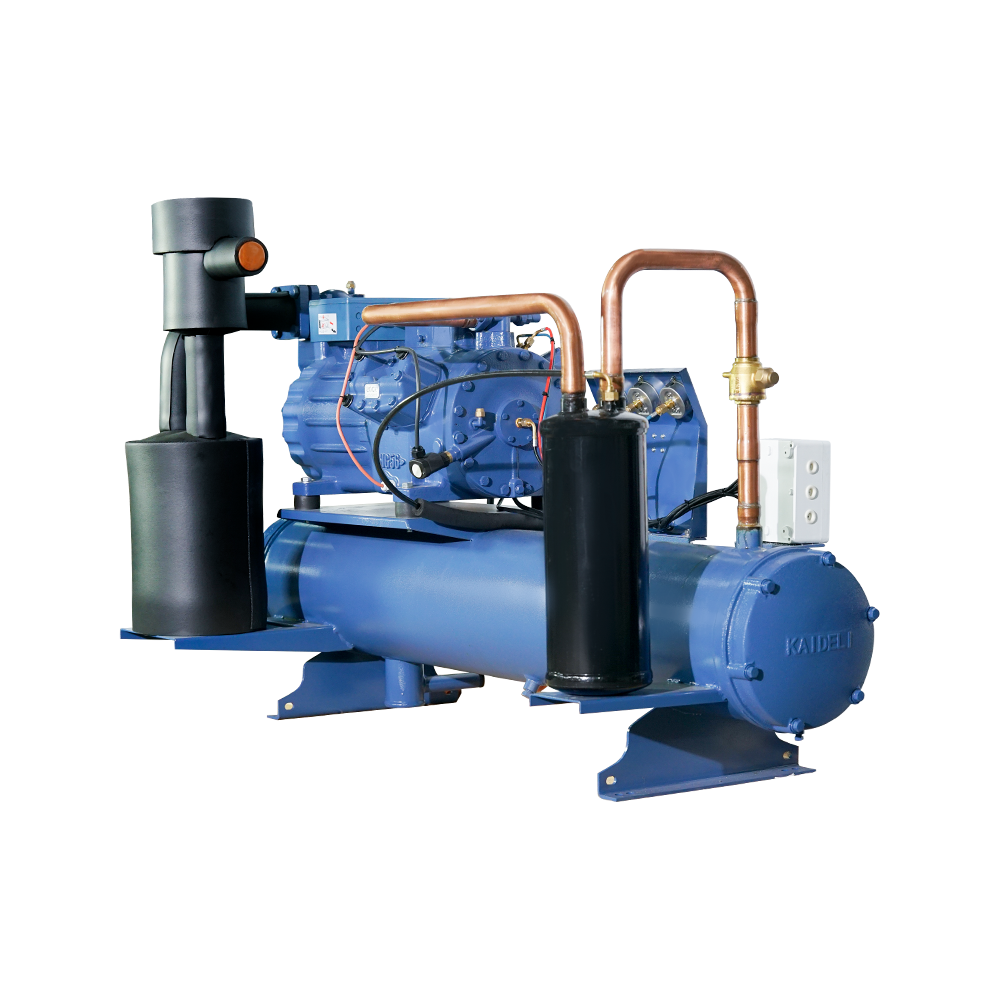
The compressor is the mechanical heart of the air conditioning loop. Its job is simple to describe but demanding to execute: pull in low-pressure refrigerant gas from the evaporator, squeeze it into a high-pressure, high-temperature gas, and push it forward into the condenser. Without this pressure increase, refrigerant would never reach a temperature high enough to release heat into the outside air, and the entire cooling cycle would collapse.
Core parts of a typical automotive compressor
- Electromagnetic clutch - engages and disengages the compressor from the drive belt or pulley
- Pistons or a scroll mechanism - the physical compression element, depending on design
- Shaft seal - the most common leak point over the life of a compressor
- Internal oil reservoir - lubricates moving parts and circulates with the refrigerant
Two broad compressor families exist on the road today. Fixed-displacement compressors run at a constant output whenever engaged, cycling on and off through the clutch. Variable-displacement compressors adjust their internal stroke to match cooling demand, which reduces engine load and improves fuel efficiency. Electric-drive compressors, found in hybrids and EVs, remove the belt entirely and run off the high-voltage battery, allowing the AC system to function even while the engine is off.
Why the compressor fails
Compressor failure is rarely random. It is almost always the downstream result of low refrigerant, contaminated refrigerant, or a lack of lubrication. Running a compressor with too little refrigerant starves it of the oil that travels dissolved in the refrigerant charge, and metal-on-metal wear follows quickly. This is why a slow leak elsewhere in the system, including a leaking Air Cooled Condenser, is one of the leading indirect causes of compressor failure.
What Is an Air Cooled Condenser and Where It Sits in the System
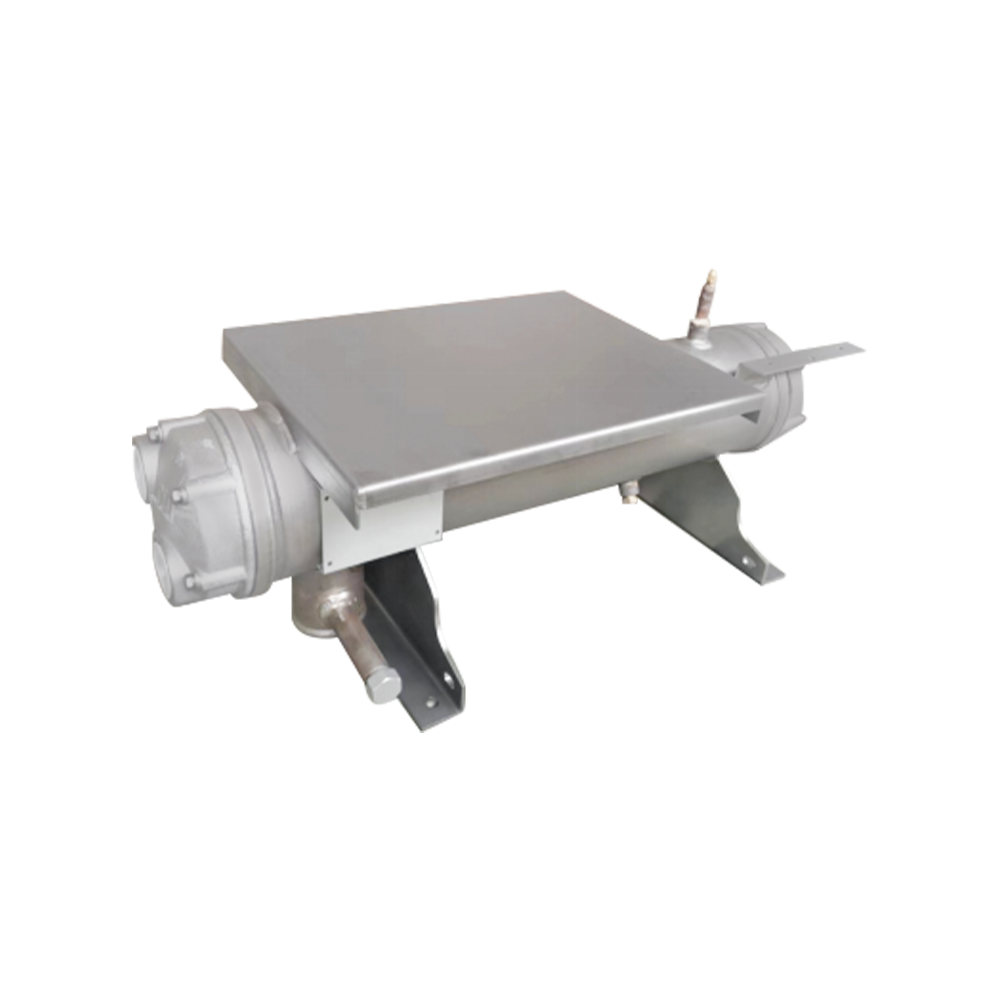
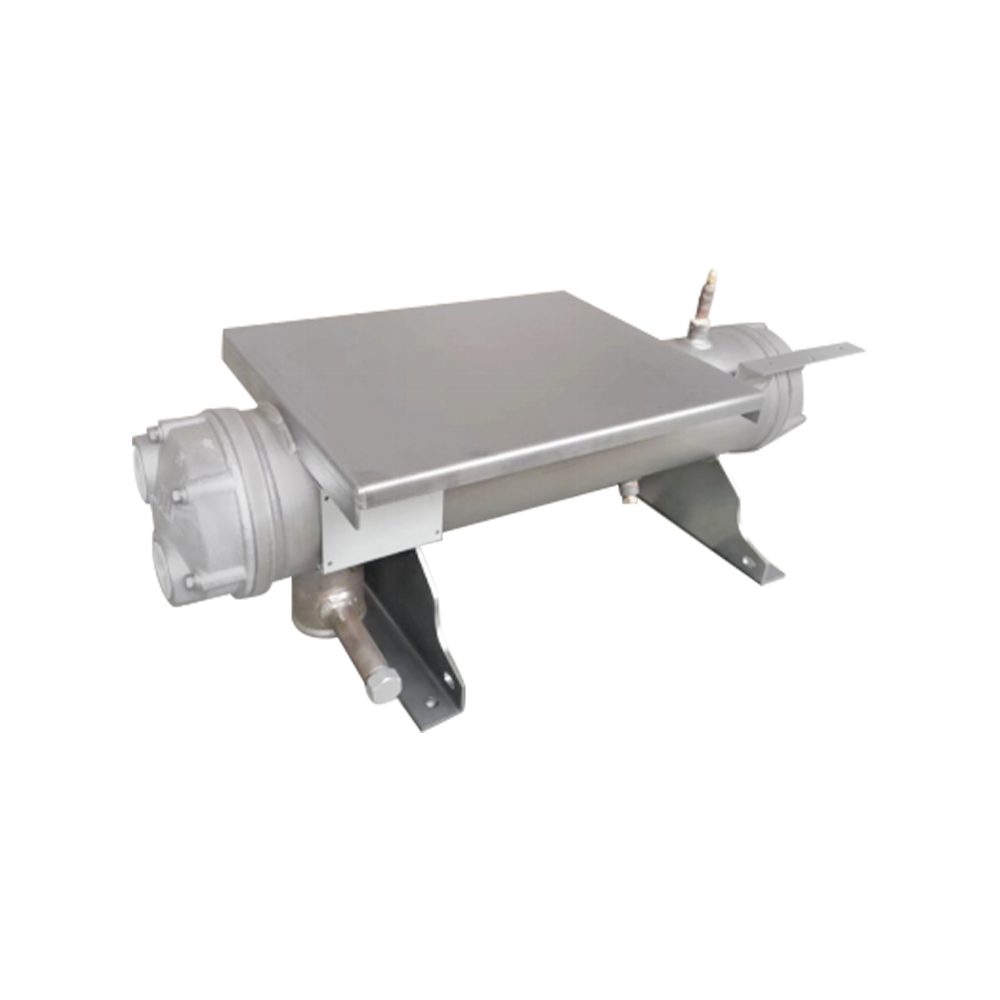
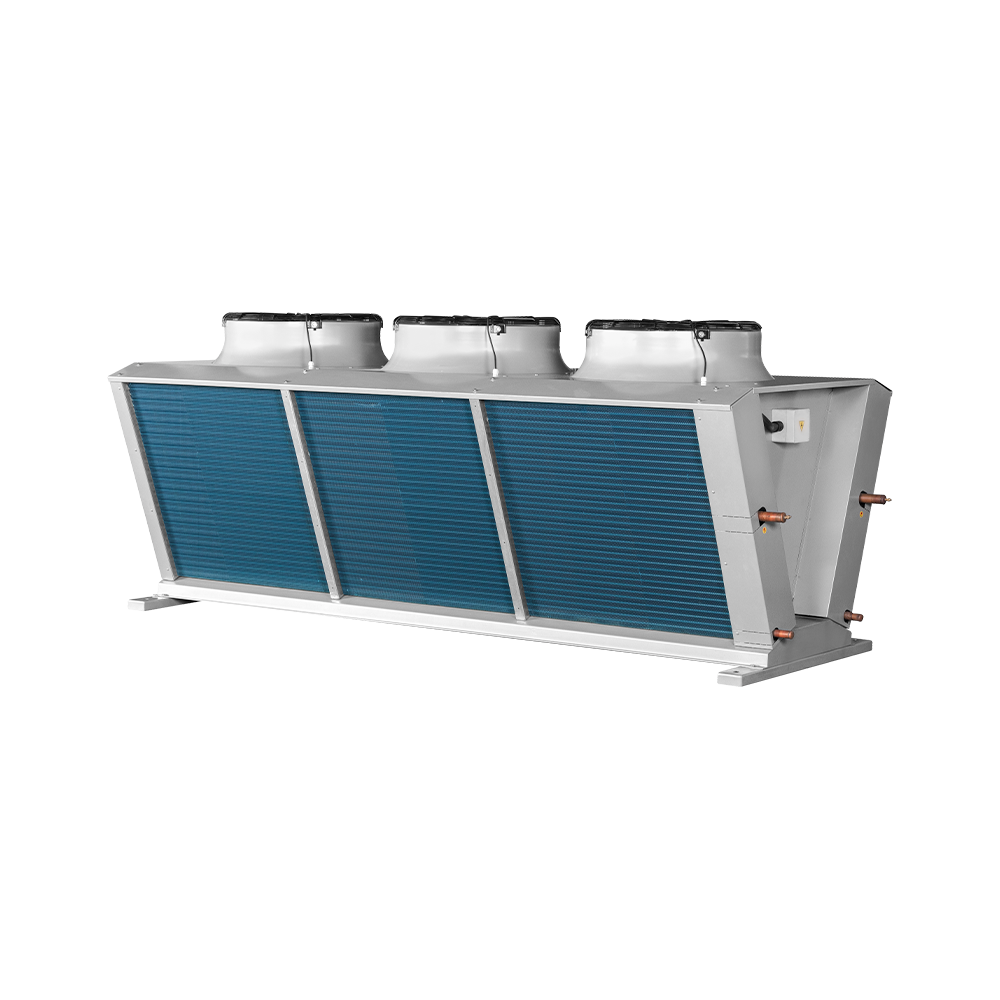
An Air Cooled Condenser is a heat exchanger built from flattened aluminum tubing and thin cooling fins, arranged so that outside air passing through the fins absorbs heat from the hot, high-pressure refrigerant flowing inside the tubes. As the refrigerant loses heat, it changes state from a superheated gas back into a warm liquid, which is exactly the condition it needs to be in before it reaches the expansion valve or orifice tube.
Construction styles you will encounter
| Core Type | Typical Use | Notable Trait |
|---|---|---|
| Tube and fin | Older and budget platforms | Simple, durable, heavier |
| Parallel flow (microchannel) | Most modern passenger cars | Lighter, more surface area, more efficient |
| Serpentine | Some commercial and older designs | Continuous single tube path |
Why airflow matters more than anything else
Because an Air Cooled Condenser relies entirely on moving air rather than a separate coolant loop, its performance depends heavily on unrestricted airflow. Bent fins, a layer of road debris, bug residue, or a failed cooling fan can all reduce heat rejection dramatically even when the condenser itself has no leaks or mechanical faults. A condenser that looks physically intact can still perform poorly if airflow through its fins is blocked.
Air Cooled Condenser vs Compressor: Core Functional Differences
The clearest way to separate these two components is by function, location, and failure behavior. The table below lines them up side by side.
| Attribute | Compressor | Air Cooled Condenser |
|---|---|---|
| Primary function | Raises refrigerant pressure and temperature | Removes heat and condenses refrigerant to liquid |
| Location | Mounted on the engine | Front of the vehicle, ahead of the radiator |
| Moving parts | Yes, pistons or scroll, plus a clutch | No, it is a static heat exchanger |
| Common failure mode | Seizure, clutch failure, internal wear | Physical damage, corrosion, blocked fins |
| Effect on refrigerant | Compresses gas | Cools gas into liquid |
| Noise when failing | Grinding, clicking, squealing clutch | Usually silent, no direct noise |
How the Compressor and Air Cooled Condenser Work Together in the Refrigeration Cycle
Neither component can do its job alone. The full cooling cycle depends on a handoff between four main parts, and understanding that sequence makes it much easier to diagnose which one has failed.
- Compression: the compressor pulls in low-pressure refrigerant vapor from the evaporator and compresses it into a hot, high-pressure gas.
- Condensation: that hot gas travels into the Air Cooled Condenser, where airflow strips out heat and the refrigerant condenses into a warm, high-pressure liquid.
- Expansion: the liquid passes through an expansion valve or orifice tube, dropping sharply in pressure and temperature.
- Evaporation: the cold refrigerant absorbs heat from cabin air inside the evaporator, producing the cold air felt at the vents, then returns to the compressor as a low-pressure gas to repeat the cycle.
Because these four stages are connected in a closed loop, a weak or blocked Air Cooled Condenser raises system-wide pressure, forces the compressor to work harder, and shortens compressor life over time. Likewise, a compressor that cannot build enough pressure will never fully condense refrigerant in the condenser, regardless of how clean the condenser fins are.
Common Failure Symptoms That Point to the Compressor
Compressor problems tend to announce themselves through sound, smell, or a total loss of cooling rather than a gradual decline.
Warning signs
- A loud grinding, rattling, or squealing noise coming from the front of the engine when the AC is switched on
- The compressor clutch will not engage at all, so the pulley spins freely without turning the compressor shaft
- Visible oily residue around the compressor body or its fittings, indicating a leaking shaft seal
- The AC drive belt shows glazing or unusual wear only near the compressor pulley
- A burning smell after the AC has been running for several minutes, which can indicate an overheating clutch or seized internal components
Common Failure Symptoms That Point to the Air Cooled Condenser
Condenser problems are usually quieter and more visual. Because the part sits exposed at the front of the vehicle, physical damage is often the first clue.
Warning signs
- Visible dents, bent fins, or impact damage from road debris, stones, or a minor front-end collision
- A layer of dirt, insects, leaves, or dust packed into the fin surface, restricting airflow
- Oily streaks on the fins or tubing, which usually means a refrigerant leak at a seam or fitting
- AC pressures reading abnormally high on both the high side and low side during a gauge test
- Cooling that is noticeably worse in slow traffic or while idling than at highway speed, since ram air is reduced and the cooling fan has to do all the work
Quick Diagnostic Table: Matching Symptoms to the Likely Component
| Symptom Observed | Most Likely Component |
|---|---|
| Grinding or squealing noise from the engine bay | Compressor |
| Warm air with unusually high system pressure | Air Cooled Condenser |
| Clutch will not engage at all | Compressor |
| Visible dents or bent fins at the front of the car | Air Cooled Condenser |
| Cooling worse at idle than while driving | Air Cooled Condenser or cooling fan |
| Oil residue on hose fittings near the engine | Compressor seal |
This table is only a starting point. A trained technician should always confirm the diagnosis with a manifold gauge set before any part is ordered or replaced, since low refrigerant charge, a failing expansion valve, or a clogged cabin filter can produce overlapping symptoms.
Maintenance Practices That Extend the Life of Both Components
Protecting the Air Cooled Condenser
Because the condenser sits exposed at the front of the vehicle, keeping its fins clean and straight is one of the simplest ways to protect overall AC performance. A gentle rinse with a garden hose from the engine side outward, avoiding high-pressure washers that can bend the delicate fins, clears out packed debris. A soft fin comb can straighten minor bends without needing to remove the unit.
Protecting the compressor
Running the AC system for a few minutes at least once every one to two weeks, even in cooler months, keeps the internal seals lubricated and prevents them from drying out and cracking. Addressing small refrigerant leaks quickly, rather than repeatedly recharging the system, prevents the compressor from running dry of both refrigerant and the oil that travels with it.
System-wide habits worth adopting
- Replace the cabin air filter on schedule so restricted airflow at the evaporator does not force the compressor to run longer than necessary
- Have the system checked with a manifold gauge set annually, even without obvious symptoms
- Keep the front grille and bumper area free of built-up mud or debris that blocks airflow to the condenser
- Address any strange noise from the compressor immediately rather than waiting for total failure
Replacement Considerations and Cost Factors
Replacement cost and complexity differ significantly between the two parts, largely because of accessibility and the amount of labor involved.
Air Cooled Condenser replacement
Replacing an Air Cooled Condenser typically involves discharging the system, removing the front bumper or grille assembly on many vehicles, unbolting the old unit, and installing the new one before evacuating and recharging the system. Labor time is moderate, and the part itself is usually less expensive than a compressor, though microchannel designs on newer vehicles can cost more due to tighter tolerances and vehicle-specific fitment.
Compressor replacement
Compressor replacement is generally the more expensive repair because the part itself carries a higher cost and the labor often includes flushing the entire system to remove metal debris left behind by a failed unit, replacing the receiver-drier or accumulator, and refilling with the correct refrigerant and oil charge. Skipping the system flush after a compressor failure is one of the most common causes of a repeat failure within months.
A note on buying the right part
Whether replacing a condenser or a compressor, matching the exact refrigerant type, connector style, and mounting configuration to the original equipment specification avoids fitment issues and repeat labor. A mismatched Air Cooled Condenser with the wrong port orientation or tube thickness can cause a slow leak within weeks of installation.
Choosing the Right Air Cooled Condenser for a Replacement
Not every condenser sold for a given vehicle platform is built to the same standard. A few factors separate a durable replacement from one likely to fail early.
- Core material and tube wall thickness - thicker aluminum tubing resists stone impact damage better than thin-wall economy cores
- Fin density - higher fin counts per inch improve heat rejection but also demand cleaner operating conditions to avoid clogging
- Port and fitting match - O-ring size, thread pitch, and mounting bracket position must match the original part exactly
- Pressure testing before shipment - a unit that has been leak tested under pressure reduces the risk of installing a defective part
- Coating on the fins - some manufacturers apply a corrosion-resistant coating that extends service life in regions with road salt exposure
Frequently Asked Questions
Can a car run with a bad Air Cooled Condenser but a good compressor?
Yes, the compressor can keep running mechanically even when the condenser is damaged, but cooling performance will drop sharply because the refrigerant never fully condenses. Continuing to run the AC in this condition for an extended period puts extra strain on the compressor and can shorten its life.
Does a damaged condenser always mean a full replacement?
Not always. Minor fin damage can sometimes be straightened, and small debris blockages can be cleaned out. However, any physical breach in the tubing that causes a refrigerant leak requires replacement, since the aluminum tubing cannot be reliably repaired in the field.
Why does the compressor make noise only when the AC is on?
The compressor clutch only engages the internal pumping mechanism when the AC is switched on, so any grinding, clicking, or squealing tied specifically to that moment usually points to worn clutch bearings, low refrigerant causing erratic cycling, or internal wear inside the compressor itself.
How often should the Air Cooled Condenser be inspected?
A visual check during routine service, roughly every six months or at each oil change interval, is enough to catch debris buildup or early corrosion before it affects performance. Vehicles driven frequently on unpaved or gravel roads benefit from more frequent checks due to higher exposure to flying debris.
Is it normal for the compressor to cycle on and off?
Yes, on fixed-displacement systems this is normal behavior as the clutch engages and disengages to maintain target cabin temperature and pressure. Rapid, erratic cycling that happens much faster than usual, however, often indicates low refrigerant charge or a failing pressure switch.
Can driving with a failing compressor damage the condenser?
It can. A compressor that is breaking down internally often sheds small metal particles into the refrigerant, and those particles travel through the entire system, including the condenser tubing, where they can cause internal blockages or scoring. This is why a full system flush is recommended after any compressor failure.
What is the difference between an Air Cooled Condenser and a radiator?
Both are heat exchangers mounted at the front of the vehicle, but they cool different fluids for different purposes. The radiator cools engine coolant to regulate engine temperature, while the Air Cooled Condenser cools refrigerant as part of the AC cycle. On most vehicles they are mounted right next to each other, with the condenser positioned in front so it receives the coolest incoming air first.
Will low refrigerant damage the compressor even if the condenser is fine?
Yes. Refrigerant carries the lubricating oil that keeps internal compressor components moving smoothly, so a low charge starves the compressor of lubrication regardless of how well the condenser is functioning. This is one of the most common preventable causes of premature compressor failure.