

 English
 中文简体
中文简体Content
- 1 The Short Answer: Condensing Is Not Cooling — But It Makes Cooling Possible
- 2 How the Refrigeration Cycle Works: From Heat Absorption to Heat Release
- 3 What a Condenser Unit Actually Does — Component by Component
- 4 Why Outdoor Temperature Has Such a Large Impact on Condensing Performance
- 5 Common Signs That Your Condenser Unit Is Not Condensing Properly
- 6 The Role of Refrigerant Type in the Condensing Process
- 7 Condenser Unit Placement and Its Effect on Condensing Efficiency
- 8 Maintaining Your Condenser Unit for Reliable Condensing Performance
- 9 Heat Pumps: When the Condenser Unit Becomes the Evaporator
- 10 Condensing in Commercial and Industrial Systems: The Same Principle, Different Scale
- 11 Frequently Asked Questions About Condensing and Condenser Units
The Short Answer: Condensing Is Not Cooling — But It Makes Cooling Possible
Condensing does not mean cooling in the conventional sense. In fact, condensation is a process that releases heat rather than absorbing it. When a refrigerant vapor condenses into a liquid inside a condenser unit, it dumps the heat it has collected from inside your home into the outdoor air. The result is a cooled refrigerant that can cycle back indoors to absorb more heat — and that cycle is what ultimately lowers the temperature inside your living space.
This distinction matters more than most homeowners realize. Misunderstanding what condensing does — and what it doesn't do — leads to poor maintenance decisions, incorrect troubleshooting, and a lot of unnecessary repair bills. The condenser unit sitting outside your house is not producing cold air. It is, quite literally, expelling heat. Understanding that reverses a very common misconception and helps you treat your equipment correctly.
With that foundational answer in place, the rest of this article goes deeper: how the condensing process works at a mechanical level, what happens when it goes wrong, how outdoor conditions affect it, and what you can do to keep it running at peak efficiency.

How the Refrigeration Cycle Works: From Heat Absorption to Heat Release
To understand condensing, you first need to understand where it fits in the larger refrigeration cycle. A standard split-system air conditioner moves heat using a refrigerant — a chemical compound engineered to change state (from liquid to gas and back again) at specific, useful temperatures.
The cycle has four distinct stages:
- Evaporation: Inside the indoor unit (the evaporator), liquid refrigerant at low pressure absorbs heat from the warm indoor air and evaporates into a gas. This is the stage where your home actually gets cooled — the refrigerant is pulling heat out of the air, not injecting cold into it.
- Compression: The gaseous refrigerant travels to the compressor, which pressurizes it significantly. This raises the refrigerant's temperature well above the outdoor ambient temperature — sometimes to 130°F (54°C) or higher — making it possible to reject that heat outdoors.
- Condensation: The hot, high-pressure gas moves into the condenser coil inside the condenser unit. As outdoor air is blown across the coil by the condenser fan, the refrigerant releases its heat and condenses back into a liquid.
- Expansion: The now-liquid refrigerant passes through an expansion valve, which drops its pressure and temperature rapidly. It re-enters the evaporator ready to absorb heat again, and the cycle repeats.
Notice that condensation — step three — is explicitly about releasing heat to the outdoors. It is the opposite of what happens at the evaporator. The condenser unit handles the heat-rejection side of the equation. Without successful condensation, the refrigerant cannot return to its liquid state and the entire cooling cycle breaks down.
What a Condenser Unit Actually Does — Component by Component
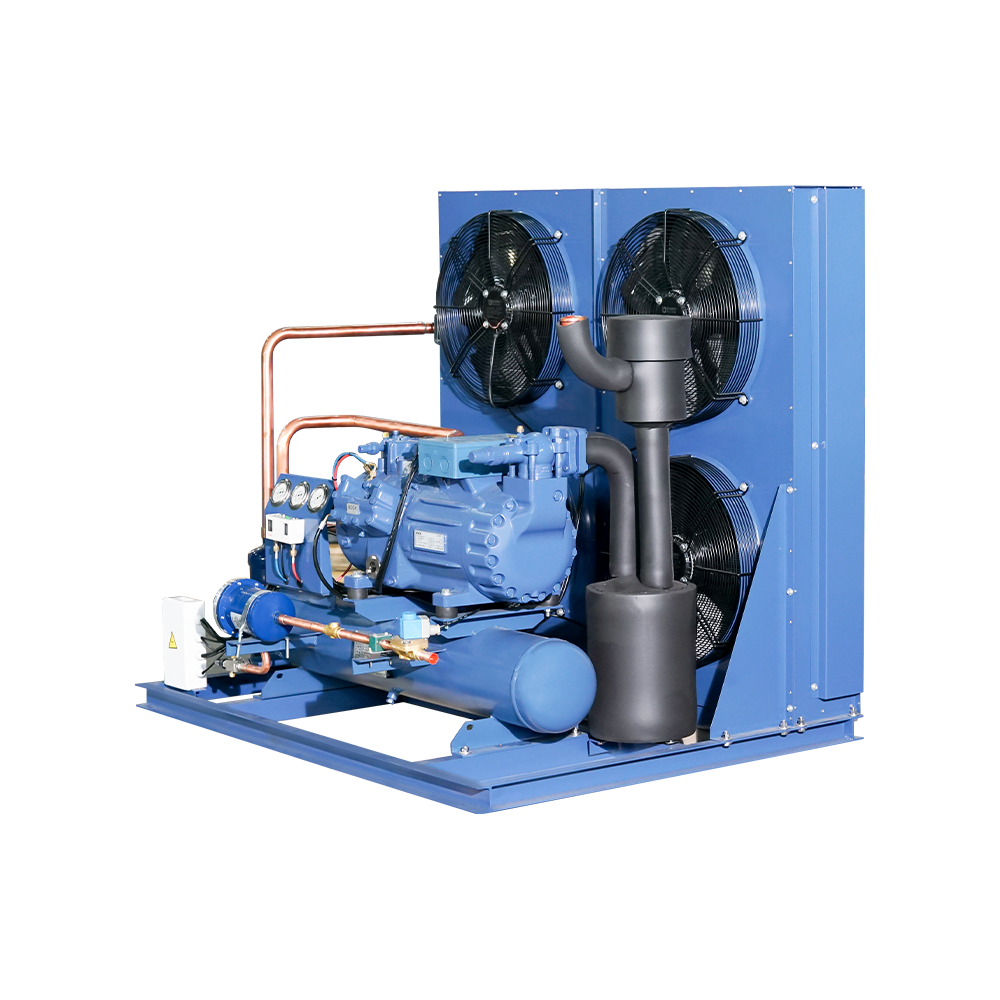
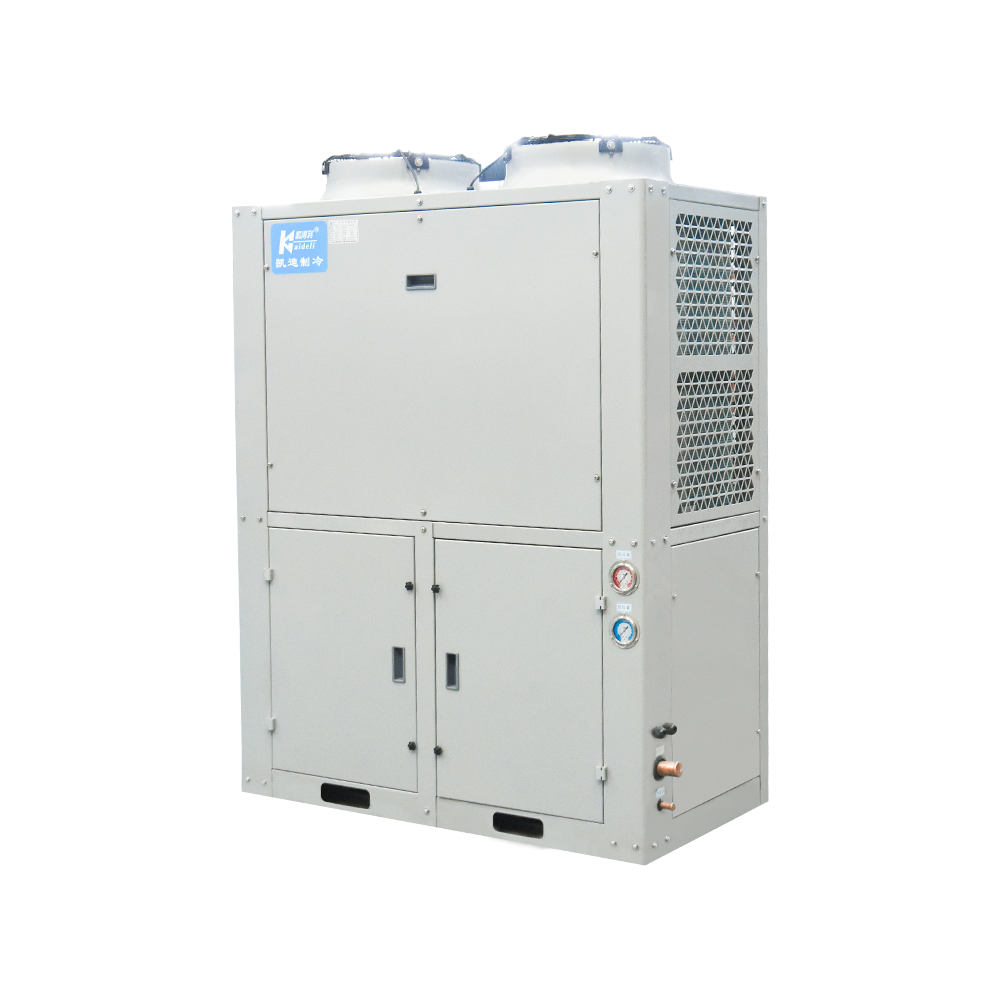
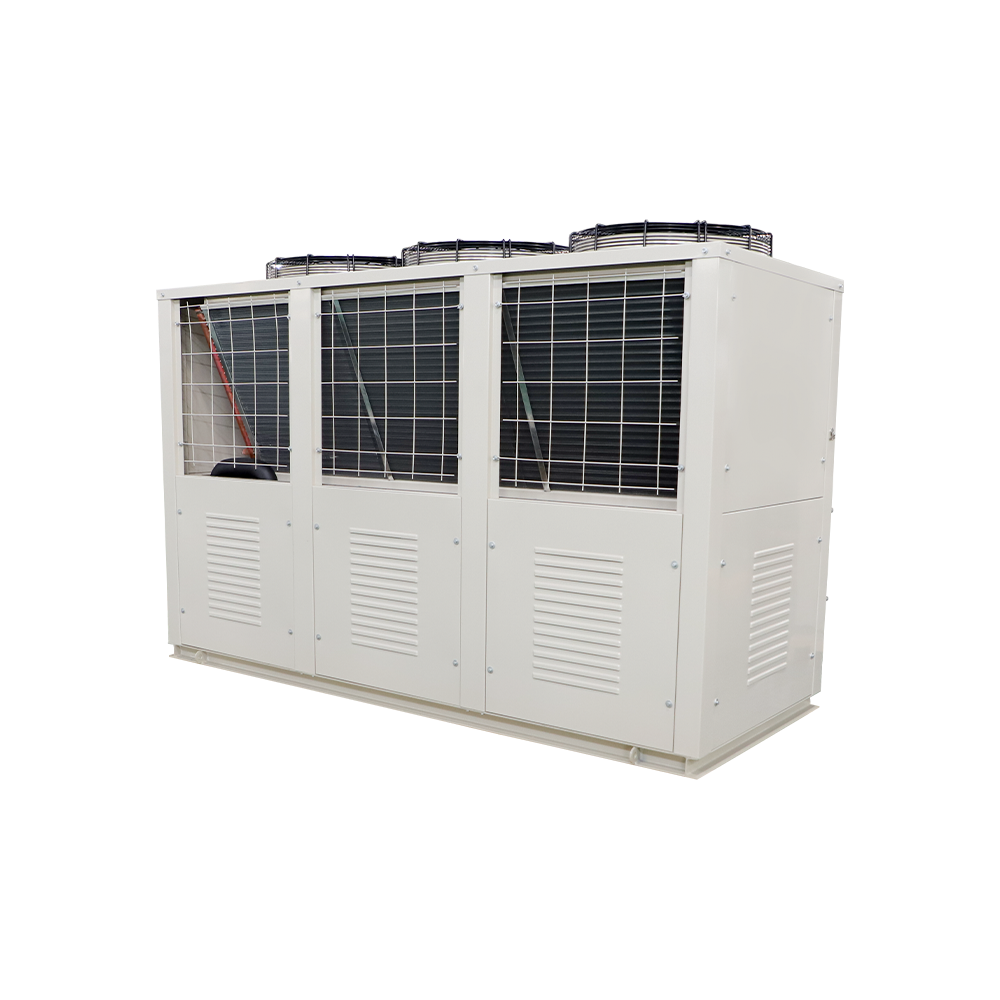
The condenser unit (the box outside your home) is responsible for completing the condensation process efficiently. It is not a single component but a system of parts working together. Understanding each one clarifies why the unit behaves the way it does.
The Condenser Coil
This is a network of copper or aluminum tubing with metal fins attached. Hot refrigerant gas flows through the tubing while the fins increase the surface area available for heat transfer. The larger the coil, the more efficiently heat can be rejected. Most residential condenser coils are made of aluminum-on-aluminum or copper-on-aluminum construction. When the fins become bent or coated in dirt, heat transfer efficiency drops measurably — studies have shown that a condenser coil with fins blocked by debris can reduce system efficiency by 10 to 30 percent.
The Compressor
Often called the heart of the system, the compressor is almost always housed inside the condenser unit in split-system designs. It is responsible for pressurizing the refrigerant gas so that its temperature rises above the outdoor ambient temperature. Without this temperature elevation, the refrigerant could not transfer heat to outdoor air on a hot summer day. The compressor typically accounts for 70 to 90 percent of the total energy consumed by the condenser unit.
The Condenser Fan
This fan draws ambient air across the condenser coil. Without adequate airflow, the refrigerant cannot release its heat fast enough, and the system's head pressure climbs dangerously high. Most residential condenser fans move between 1,000 and 3,000 cubic feet of air per minute depending on system capacity. If this fan fails or slows — even partially — the condenser unit becomes far less effective and the compressor is put under extreme stress.
The Refrigerant Lines
Two refrigerant lines connect the condenser unit to the indoor evaporator unit. The suction line (larger, insulated) carries low-pressure gas from the evaporator to the compressor. The liquid line (smaller, uninsulated) carries high-pressure liquid refrigerant from the condenser coil back to the expansion device. Proper insulation on the suction line is critical — heat gain on this line reduces efficiency and can cause compressor damage over time.
Why Outdoor Temperature Has Such a Large Impact on Condensing Performance
Here is something that surprises many people: your air conditioner works harder and uses more electricity on hotter days not just because your home gains more heat, but because the condenser unit has a harder time rejecting heat into hot outdoor air.
Heat transfer always moves from a region of higher temperature to a region of lower temperature. The condenser coil is effective because the refrigerant inside it is hotter than the outdoor air outside it. But as outdoor temperatures rise, the temperature difference — called the delta T — shrinks. The condenser unit must work harder to push the same amount of heat out.
This has real, measurable consequences:
- At 75°F (24°C) outdoor temperature, a typical 3-ton central air conditioner might draw around 3,000 watts.
- At 95°F (35°C), that same unit might draw 4,200 watts or more to achieve the same cooling output.
- At 105°F (40°C), many standard units begin to struggle to maintain their rated capacity at all, and some will cycle on their high-pressure limit switch to protect the compressor.
This is why HVAC equipment is typically rated at a standard outdoor temperature of 95°F (35°C) for cooling capacity and efficiency (SEER ratings). Actual performance varies significantly from that baseline depending on your climate.
| Outdoor Temp (°F) | Approx. Power Draw | System Load | Condensing Efficiency |
|---|---|---|---|
| 75°F | ~3,000 W | Low | High |
| 95°F | ~4,200 W | Moderate | Rated Baseline |
| 105°F | ~5,000+ W | High | Degraded |
| 115°F | May trip limits | Extreme | Severely Reduced |
Common Signs That Your Condenser Unit Is Not Condensing Properly
Because the condenser unit handles heat rejection rather than heat absorption, the symptoms of a failing condenser are often confused with other HVAC problems. Knowing what to look for saves time and avoids misdiagnosis.
The System Runs But Barely Cools
If your air conditioner runs continuously but the indoor temperature barely drops, the condenser unit may be the culprit. When the refrigerant cannot condense completely — often because the coil is dirty, the fan is weak, or airflow is blocked — it re-enters the evaporator still carrying too much heat. The indoor coil cannot absorb as much heat as it should, and cooling performance suffers noticeably. In a properly functioning system, you should feel a temperature split of 15 to 22°F (8 to 12°C) between the air entering and leaving the indoor unit.
The Outdoor Unit Feels Extremely Hot to the Touch
The condenser unit should discharge warm air, but the top of the unit or the surrounding panels should not be too hot to touch briefly. If the entire cabinet feels scalding, heat is building up inside due to poor airflow or a dirty coil. This is a warning sign that the compressor is operating under elevated head pressure and could fail prematurely.
The System Trips on High Pressure
Most modern condenser units include a high-pressure safety switch. When condensation is insufficient and refrigerant pressure builds beyond safe limits (often above 400–450 psig for common refrigerants like R-410A), this switch cuts power to the compressor. The system shuts off, may cool briefly after the pressure drops, and then shuts off again in a repeating pattern. This is the system protecting itself from catastrophic compressor failure — but the root cause needs to be addressed immediately.
Ice Forming on the Indoor Unit
This one confuses homeowners because ice seems like a sign the system is working too well. In reality, ice on the indoor evaporator coil often indicates that the refrigerant is not completing its cycle properly. If the condenser unit fails to fully condense the refrigerant, liquid refrigerant may flood back to the evaporator, causing it to get excessively cold and freeze the moisture in the surrounding air. The ice then blocks airflow and compounds the problem rapidly.
Unusually High Electricity Bills
A condenser unit struggling to reject heat draws significantly more power than a clean, well-maintained one. If your summer electric bills have climbed without an obvious explanation — no new appliances, no change in usage habits — a dirty or underperforming condenser unit is a prime suspect. In many cases, a professional cleaning restores efficiency and reduces runtime by a meaningful margin.
The Role of Refrigerant Type in the Condensing Process
Not all refrigerants condense at the same pressure or temperature, and the type of refrigerant in your system directly affects how your condenser unit operates.
For many years, R-22 (Freon) was the dominant residential refrigerant. It has a relatively low condensing pressure — typically around 200–250 psig at typical operating conditions. R-22 is now phased out under international environmental agreements, and systems using it can no longer be recharged with new refrigerant.
R-410A became the standard replacement and operates at significantly higher pressures — often 350–450 psig on the high side under normal operating conditions. This means condenser units designed for R-410A are built with heavier-duty components that can withstand those pressures. Mixing refrigerant types or using incorrect refrigerant in a condenser unit causes severe operational problems and can destroy the compressor.
Newer systems are now being designed around R-32 and R-454B, which have lower global warming potential (GWP) than R-410A. These refrigerants have their own specific condensing pressure and temperature profiles, and the condenser units built for them incorporate accordingly adjusted coil sizing and compressor specifications.
Understanding which refrigerant your condenser unit uses is not just a technical detail — it determines what service procedures are appropriate, what pressures are normal versus abnormal, and what refrigerant can legally be used to recharge the system if there is a leak.
Condenser Unit Placement and Its Effect on Condensing Efficiency
Where you place (or where an installer places) your condenser unit has lasting consequences for how well it condenses refrigerant and how long it lasts. This is a decision that often gets insufficient attention during installation, and homeowners pay for it in higher operating costs and premature equipment failure.
Shade vs. Direct Sunlight
A condenser unit sitting in full afternoon sun can have its cabinet temperature elevated by 10 to 15°F compared to one in shade. Since the unit is trying to reject heat to the surrounding air, a hotter immediate environment makes that job harder. Planting deciduous shrubs or trees to provide afternoon shade — without blocking airflow — is a legitimate way to improve condenser performance. The key constraint is that the unit needs at least 18 to 24 inches of clear space on all sides for adequate airflow.
Recirculation of Hot Discharge Air
This is one of the most underappreciated installation problems. When a condenser unit is placed in a confined area — a narrow side yard between two walls, a utility closet with louvers, or too close to a fence — the hot air discharged from the top of the unit has nowhere to go. It recirculates back into the unit's intake, raising the effective ambient temperature the coil is working against. Even a modest recirculation problem can raise inlet air temperature by 5 to 10°F, which degrades efficiency and increases compressor wear.
Elevation and Drainage
The condenser unit should be installed on a stable, level pad that keeps it elevated above grade — typically 2 to 4 inches. This prevents the unit from sitting in pooled water during rain, which can corrode the base and potentially damage electrical components. In climates with heavy snowfall, additional elevation may be necessary to keep the unit above typical snow accumulation levels so that airflow is not blocked during winter operation (in heat pump applications) or so the unit does not get buried during the off-season.
Distance from the Indoor Unit
Refrigerant lines between the condenser unit and the indoor evaporator must be kept as short as practical. Longer lines mean more refrigerant in the system, greater potential for pressure drop, and more heat gain or loss along the line set depending on insulation quality. Most manufacturers specify a maximum line set length — often 50 to 100 feet for standard installations — and require refrigerant charge adjustments when line sets exceed a baseline length (commonly 15 to 25 feet).

Maintaining Your Condenser Unit for Reliable Condensing Performance
The good news is that most condenser unit maintenance tasks are straightforward and can significantly extend equipment life while maintaining efficiency. A well-maintained condenser unit will typically last 15 to 20 years. A neglected one may need replacement in 8 to 10 years.
Annual Coil Cleaning
The condenser coil collects airborne debris — cottonwood seeds, dust, grass clippings, pet hair — over the course of a cooling season. This layer acts as insulation, reducing the coil's ability to transfer heat. Before each cooling season, the coil should be cleaned, either by a homeowner with a gentle garden hose rinse (from inside the unit outward) or by a technician using coil cleaner and a low-pressure rinse. Never use a pressure washer on condenser fins — the high pressure bends the delicate aluminum fins and permanently reduces airflow area.
Fin Straightening
Bent fins — caused by hail, lawn equipment, or physical impact — reduce the surface area available for heat transfer. A fin comb (a simple, inexpensive tool available at HVAC supply stores) can be used to carefully straighten bent fins. Even modest fin damage across a significant portion of the coil is worth correcting — research from HVAC component manufacturers indicates that 25 percent fin blockage can reduce condenser efficiency by approximately 7 to 10 percent.
Checking and Lubricating the Fan Motor
Some condenser fan motors have oil ports and should be lubricated annually with a few drops of SAE 10 non-detergent electric motor oil. Many modern motors are sealed-bearing designs and do not require lubrication — consult your unit's documentation to confirm which type you have. A fan motor running at reduced speed due to bearing wear will move less air across the coil and reduce condensing performance even if the coil itself is clean.
Keeping the Area Around the Unit Clear
Vegetation, fencing, and stored items that encroach on the condenser unit restrict airflow and can cause the hot discharge air to recirculate. As a seasonal habit, clear at least 18 inches of space around the unit at the start of each cooling season, trim back any shrubs that have grown closer than that, and remove any debris that has collected under or around the unit during winter.
Professional Refrigerant Pressure Checks
Refrigerant does not get consumed under normal operation — if your system is low on refrigerant, it has a leak. A technician with manifold gauges can check both the high-side pressure (condenser side) and low-side pressure (evaporator side) to confirm the system has the correct charge. Incorrect refrigerant charge is one of the most common causes of poor condensing performance. An overcharged system has excess head pressure; an undercharged system fails to deliver enough refrigerant mass to the condenser coil for efficient heat rejection.
Heat Pumps: When the Condenser Unit Becomes the Evaporator
There is one important scenario where the terminology around condensing and the outdoor unit gets complicated: heat pumps. A heat pump is a refrigeration system that can reverse its cycle to provide both cooling in summer and heating in winter.
In cooling mode, a heat pump operates exactly like a conventional air conditioner. The outdoor unit functions as the condenser, rejecting heat. But in heating mode, the cycle reverses. The outdoor unit now functions as the evaporator — it absorbs heat from the cold outdoor air (even air at 20°F / -6°C contains extractable heat energy) and delivers that heat indoors. In heating mode, the indoor unit becomes the condenser, releasing heat into your living space.
This is why the outdoor unit on a heat pump is technically called the outdoor unit rather than the condenser unit — it plays both roles depending on the season. Understanding this reversal explains some heat pump behaviors that otherwise seem counterintuitive, such as the outdoor unit developing frost or ice on its coil during winter operation (because it is now acting as an evaporator, absorbing heat from frigid air and causing moisture to freeze on the coil surface). The system periodically runs a defrost cycle to melt this frost and restore airflow.
Modern cold-climate heat pumps (sometimes called hyper-heat or cold-climate models) can efficiently extract heat from outdoor air down to temperatures as low as -13°F (-25°C), making them viable heating solutions in regions that previously relied entirely on combustion heating.
Condensing in Commercial and Industrial Systems: The Same Principle, Different Scale
The condensing process in residential systems operates on the same thermodynamic principles as in commercial and industrial refrigeration, but the equipment looks and behaves quite differently at scale.
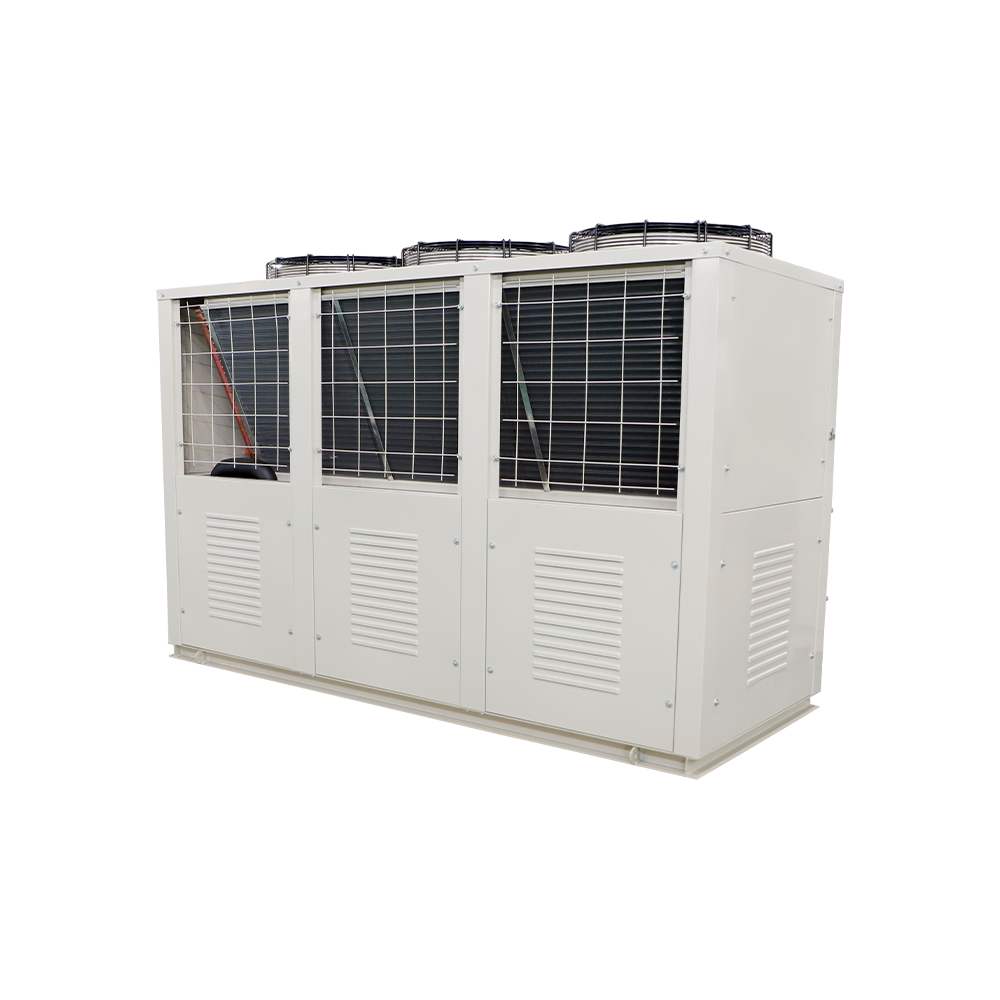
Commercial rooftop units (RTUs) integrate the condenser and evaporator into a single cabinet mounted on a flat roof. The condenser section — typically on one end of the unit — still draws outdoor air across a coil to reject heat, but in sizes ranging from 5 to 100+ tons rather than the 1.5 to 5 tons common in residential applications.
Large commercial and industrial facilities often use water-cooled condensers, where heat from the refrigerant is transferred to water rather than outdoor air. That warm water then flows to a cooling tower on the roof, where it is cooled by evaporation before returning to the condenser. Water-cooled condenser systems are significantly more efficient than air-cooled ones in hot climates because water can absorb and transport heat far more effectively than air — water has roughly 3,400 times the heat capacity of air by volume. However, they require a continuous water supply and more complex maintenance.
In grocery store refrigeration, multiple cases and walk-in coolers share a central condensing system — often called a rack system — housed in a machine room. The condenser units may be located on the roof of the store, and refrigerant lines run throughout the building to dozens of individual evaporators in the display cases. The scale is different, but the fundamental process of condensing refrigerant vapor into liquid by rejecting heat to a cooler medium remains identical to what happens in a residential condenser unit.
Frequently Asked Questions About Condensing and Condenser Units
Not directly. The water dripping from your indoor unit is atmospheric moisture — humidity from indoor air — that has condensed on the cold evaporator coil surface, just like moisture condenses on a cold glass of water on a humid day. This is a completely separate process from the refrigerant condensation happening in the outdoor condenser unit. Confusingly, both involve the word "condensation," but they refer to entirely different substances (water vapor vs. refrigerant vapor) and entirely different locations.
Can I run my condenser unit when it is very cold outside?
Standard air-conditioning-only condenser units are generally not designed to operate in cooling mode when outdoor temperatures fall below approximately 60°F (15°C). At low outdoor temperatures, refrigerant pressures drop significantly, the compressor may not operate within its designed range, and liquid refrigerant can migrate to and damage the compressor. Most systems have a low-ambient lockout that prevents cooling operation below a set temperature threshold. Heat pumps designed for cold climates have additional components — crankcase heaters, special expansion devices, variable-speed compressors — that allow safe operation across a much wider temperature range.
Why does the air coming out of the top of my condenser unit feel so hot?
Because that is exactly what should be happening. The condenser unit is discharging the heat it has extracted from your home, plus the additional heat generated by the compressor doing mechanical work. On a 95°F (35°C) day, the air discharged from the top of a properly functioning condenser unit can be 120 to 140°F (49 to 60°C) or hotter. This is not a sign of malfunction — it is confirmation that the unit is successfully rejecting heat. A condenser unit discharging only warm air on a hot day would actually be a cause for concern.
Does covering the condenser unit in winter damage it?
For air-conditioning-only units, a breathable cover that keeps out leaves and debris while allowing moisture to escape can protect the coil and cabinet over winter. A fully airtight cover is counterproductive — it traps moisture and creates a comfortable home for rodents. For heat pumps, the outdoor unit should never be covered while the system might operate, since it needs to draw in outdoor air for heating. Many HVAC manufacturers specifically advise against winterizing heat pump outdoor units at all, since the equipment is designed to operate year-round.