

 English
 中文简体
中文简体Content
- 1 What Is the KCS Series Screw Condensing Unit and Who Needs It?
- 2 The Hanzhong Custom Compressor: Why the 5:6 Asymmetric Rotor Design Changes Everything
- 3 Multi-Stage Energy Regulation: How the KCS Series Cuts Annual Power Consumption by Up to 20%
- 4 7-Layer Safety Protection: Ensuring Continuous Refrigeration Without Accidental Shutdown
- 5 Wide-Domain Application: Where the KCS Series Delivers Industrial-Grade Performance
- 6 Kaidi's 30-Year Track Record and Industry Client Base
What Is the KCS Series Screw Condensing Unit and Who Needs It?
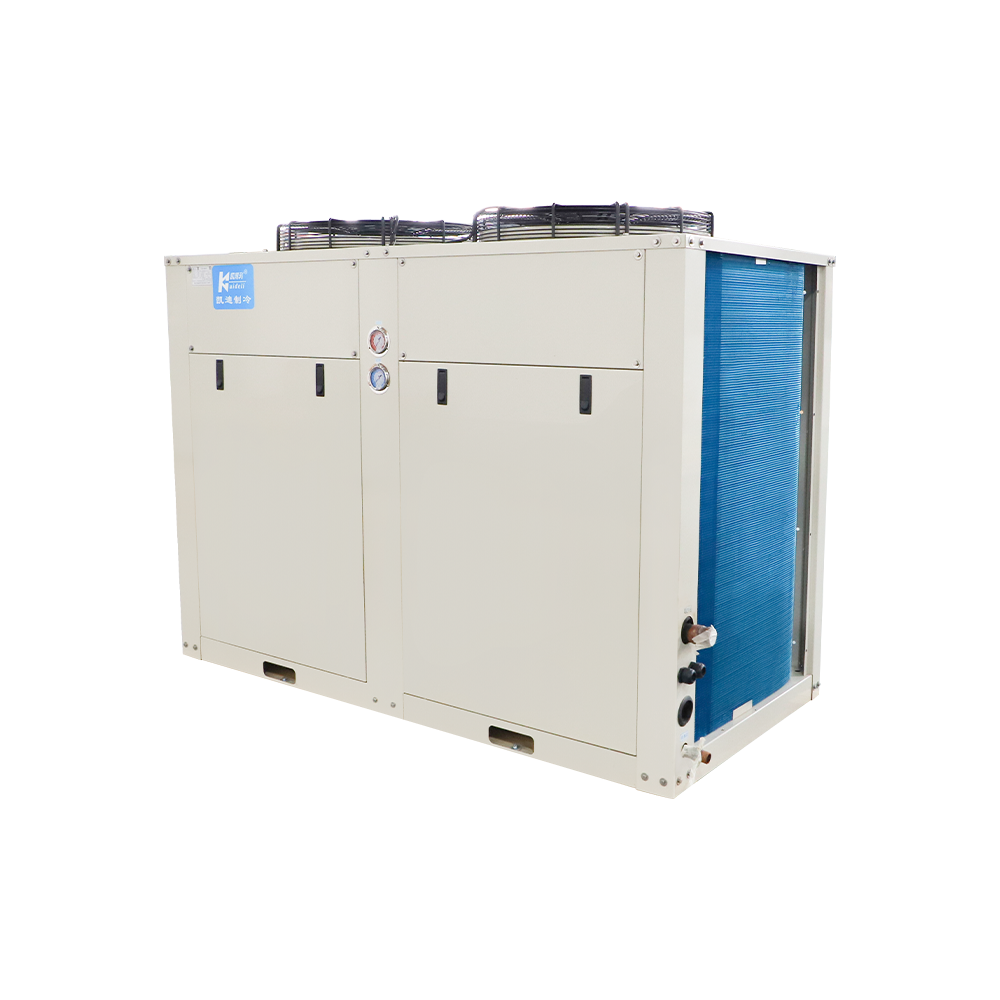
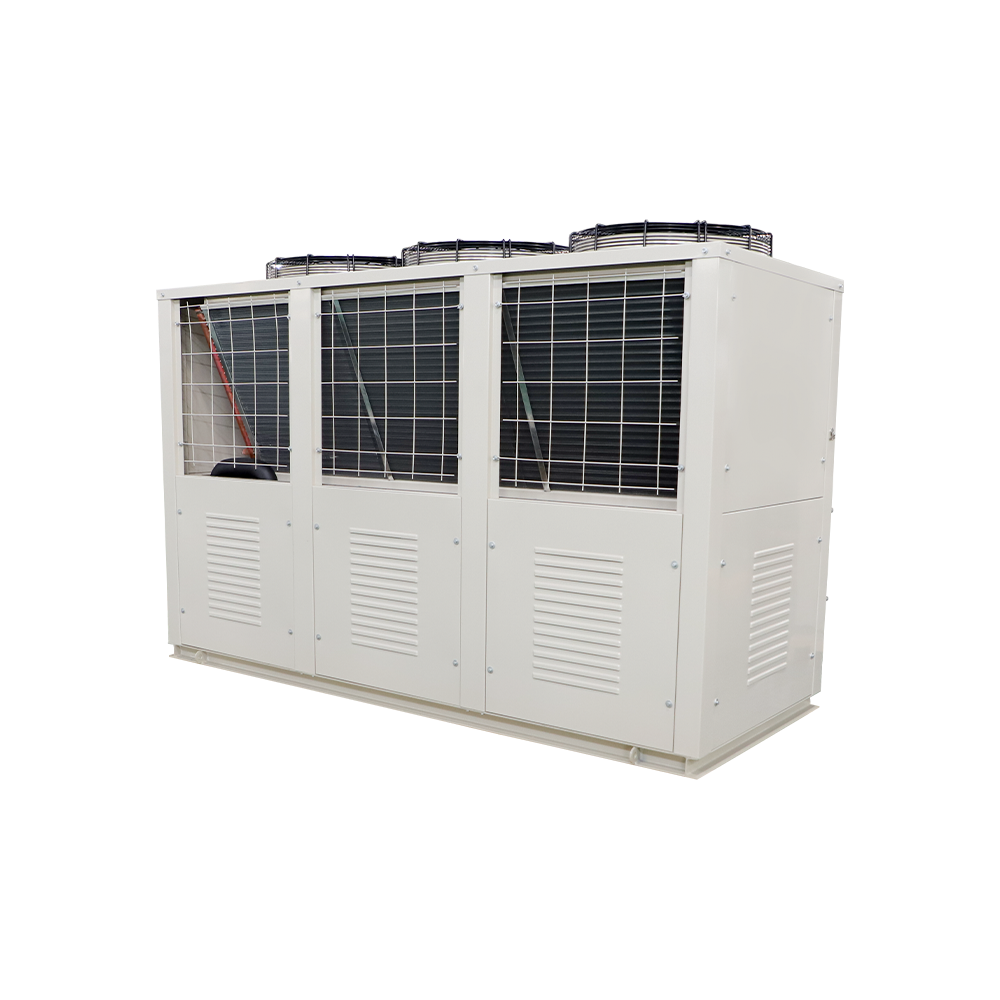
The KCS Series Screw Condensing Unit is a heavy-duty commercial refrigeration system engineered specifically for large-scale cooling applications that exceed the practical limits of conventional piston compressor technology. Where piston-based systems begin to struggle — in terms of capacity, efficiency, and operational continuity — the KCS Series steps in with a fundamentally different compression architecture built around a high-performance screw compressor.
The unit is purpose-designed to handle refrigeration demands in environments such as large-scale fresh-keeping warehouses exceeding 1,000 square metres, low-temperature freezer storage facilities, industrial ice-making plants processing 50 or more tonnes per day, and refrigeration water systems used across industrial manufacturing and processing operations. These are environments where refrigeration is not a convenience — it is a core operational requirement, and any failure in cooling capacity or system uptime carries direct financial and regulatory consequences.
The KCS Series is manufactured by Zhejiang Kaidi Refrigeration Equipment Co., Ltd., a company with nearly 30 years of dedicated experience in the refrigeration industry since its founding in 1995. Operating from a 100,000-square-metre facility in Shengzhou City, Zhejiang Province, Kaidi has established itself as one of China's leading refrigeration equipment manufacturers, serving major clients in cold chain logistics, food processing, pharmaceutical storage, and industrial refrigeration across both domestic and international markets.
The Hanzhong Custom Compressor: Why the 5:6 Asymmetric Rotor Design Changes Everything
At the heart of the KCS Series is the Hanzhong custom 5:6 asymmetric rotor screw compressor — a component that represents a meaningful departure from the symmetric rotor geometries common in standard screw compressor designs. Understanding why this matters requires a brief look at how screw compressors work.
A screw compressor uses two intermeshing helical rotors — a male and female rotor — to trap and compress refrigerant gas as it moves axially through the rotor pair. In a 5:6 asymmetric configuration, the male rotor has 5 lobes and the female rotor has 6 flutes, and crucially, the rotor profiles are asymmetrically shaped rather than being mirror images of each other. This asymmetry is carefully calculated to optimize the compression process: it reduces internal leakage paths between the high-pressure and low-pressure sides of the rotor mesh, improves volumetric efficiency, and distributes mechanical contact stresses more evenly across the rotor surfaces.
Extended Service Life: 30%+ Improvement
The practical outcomes of this design are significant. The more even stress distribution and reduced internal leakage achieved by the asymmetric profile translate directly into extended compressor service life — a minimum 30% improvement compared to conventional rotor designs. For a piece of equipment operating continuously in a large cold storage facility or industrial refrigeration system, that extended service life represents a substantial reduction in total cost of ownership over the system's operational lifespan. Compressor overhauls and replacements are among the most costly maintenance events in any refrigeration system; deferring or reducing their frequency has compounding financial benefits.
Noise Performance: Below 65dB for Silent Environments
The same rotor geometry improvements that extend service life also reduce the mechanical noise generated during compression. The KCS Series achieves an operating noise level below 65dB — a specification that makes the unit genuinely suitable for noise-sensitive environments. Pharmaceutical storage facilities, food processing plants with open working areas, and facilities located near residential zones all benefit from this reduced acoustic footprint. At 65dB, the unit operates at a volume comparable to a normal conversation, a notable achievement for a compressor handling large-scale industrial refrigeration loads.
Multi-Stage Energy Regulation: How the KCS Series Cuts Annual Power Consumption by Up to 20%
Energy consumption is the dominant ongoing cost in any large-scale refrigeration operation. A cold storage warehouse running refrigeration equipment 24 hours a day, 365 days a year accumulates electricity costs that can rival or exceed the original capital investment in the refrigeration system over a 10-year operational period. The KCS Series addresses this directly through its multi-stage energy regulation system, which dynamically matches compressor output to actual cooling demand in real time.
Traditional fixed-capacity refrigeration systems operate in a binary fashion — either running at full capacity or cycling off entirely. This approach is inherently inefficient because real-world cooling demand fluctuates continuously based on ambient temperature, warehouse traffic, product loading, and other variables. A system locked to full-capacity operation wastes energy whenever demand is lower than peak; a system that cycles off and on loses efficiency through the repeated start-up energy surges and temperature recovery periods.
The KCS Series multi-stage regulation avoids both failure modes by adjusting compressor capacity in discrete steps that closely track the actual cooling load. The documented result is an annual energy consumption reduction of 15% to 20% compared to fixed-capacity alternatives. For a large cold storage operation consuming, for example, 500,000 kWh annually, a 15–20% reduction represents a saving of 75,000 to 100,000 kWh per year — a figure that carries significant financial weight across the system's operational life.
The system adapts to operating conditions across two primary temperature ranges: 8°C to -5°C for fresh-keeping and chilled storage applications, and -15°C to -20°C for frozen and low-temperature refrigeration environments. This dual-range capability means a single KCS unit platform can serve fundamentally different storage requirements without requiring entirely separate system designs.
7-Layer Safety Protection: Ensuring Continuous Refrigeration Without Accidental Shutdown
In large-scale cold storage and industrial refrigeration, an unexpected system shutdown is not merely an inconvenience — it can mean the loss of thousands or tens of thousands of dollars worth of perishable inventory, production line stoppages, or regulatory compliance failures in pharmaceutical and food safety contexts. The KCS Series incorporates a 7-fold full-time safety protection system specifically designed to prevent accidental shutdowns and maintain continuous refrigeration under adverse operating conditions.
The protection system covers critical failure modes including:
- Coil overtemperature protection — prevents motor winding damage from thermal overload
- Oil level monitoring — detects insufficient lubrication oil before compressor damage occurs
- Oil pressure protection — ensures adequate lubrication pressure is maintained at all times
- High and low pressure safeguards against refrigerant circuit anomalies
- Phase protection and electrical fault detection
- Discharge temperature monitoring to prevent compressor overheating
- Anti-short-cycle protection to prevent damaging rapid start-stop sequences
Together, these seven protection layers create what amounts to a continuous monitoring framework that identifies developing problems before they escalate into system failures. Rather than reacting to breakdowns after the fact, the protection architecture enables early intervention — allowing maintenance teams to address issues during planned maintenance windows rather than in emergency situations.
Wide-Domain Application: Where the KCS Series Delivers Industrial-Grade Performance
The KCS Series is not a specialist unit designed for a single niche application. Its combination of capacity, efficiency, and refrigerant compatibility makes it directly applicable across a broad range of large-scale refrigeration scenarios.
| Application | Operating Temperature Range | Key Requirement Met |
|---|---|---|
| Large fresh-keeping warehouses (1,000㎡+) | 8°C to -5°C | Stable chilled storage, energy efficiency |
| Low-temperature freezer cold storage | -15°C to -20°C | Deep freeze capability, continuous operation |
| Industrial ice-making (50 tonnes/day) | -15°C to -20°C | High-capacity output, reliability |
| Industrial refrigeration water systems | Variable | Load matching, multi-stage regulation |
| Pharmaceutical cold chain storage | 2°C to 8°C (typical) | Precision temperature control, uptime assurance |
Refrigerant compatibility adds further versatility. The KCS Series supports both R22 and R404A, accommodating both legacy system infrastructure and modern HFC-blend installations. This compatibility is particularly relevant for operators upgrading existing refrigeration infrastructure who need new condensing units that integrate with existing refrigerant circuits without requiring a complete system conversion.
Kaidi's 30-Year Track Record and Industry Client Base
Selecting a condensing unit for a large-scale refrigeration installation is a long-term commitment — these systems are expected to operate reliably for 10 to 20 years or more. The manufacturer's track record, technical capability, and after-sales support infrastructure are therefore as important as the unit's published specifications.
Zhejiang Kaidi Refrigeration Equipment Co., Ltd. brings nearly 30 years of focused refrigeration industry experience t