

 English
 中文简体
中文简体Content
- 1 The Real Challenge of Cooling Large, High-Ceilinged Spaces
- 2 Why Standard Evaporators Struggle in High-Ceilinged Environments
- 3 Large-Diameter, High-Static-Pressure Fans: The Foundation of Long-Range Air Delivery
- 4 Advanced Heat Exchange Technology: Maximizing Cooling Efficiency
- 5 Structural Durability and Corrosion Resistance for Demanding Cold Room Environments
- 6 Defrost System Options: Keeping the Coil Clean and Efficient
- 7 Refrigerant Compatibility and Quality Assurance
- 8 Frequently Asked Questions About the GUM Series Large Ceiling Type Evaporator
- 8.1 Q: What ceiling height is the GUM Series suitable for?
- 8.2 Q: What fin spacing option should I choose for my application?
- 8.3 Q: Can the GUM Series be used with newer low-GWP refrigerants?
- 8.4 Q: What is the advantage of the Venturi liquid distributor over conventional distributor designs?
- 8.5 Q: How does the IP65 junction box benefit cold room operations?
- 8.6 Q: What quality testing does each GUM Series unit undergo before shipment?
The Real Challenge of Cooling Large, High-Ceilinged Spaces
High-ceilinged rooms present a refrigeration and cooling challenge that standard equipment simply was not designed to solve. Whether the space is a large-scale cold storage warehouse, a food processing facility, a logistics hub, or an industrial freezer room, the combination of significant ceiling height, large floor area, and high thermal load creates conditions where conventional evaporators fall short. Cool air delivered without sufficient throw distance fails to reach the far ends of the space; units with inadequate capacity cannot maintain uniform temperatures across the full volume; poorly designed drainage and defrost systems create maintenance headaches that interrupt operations.
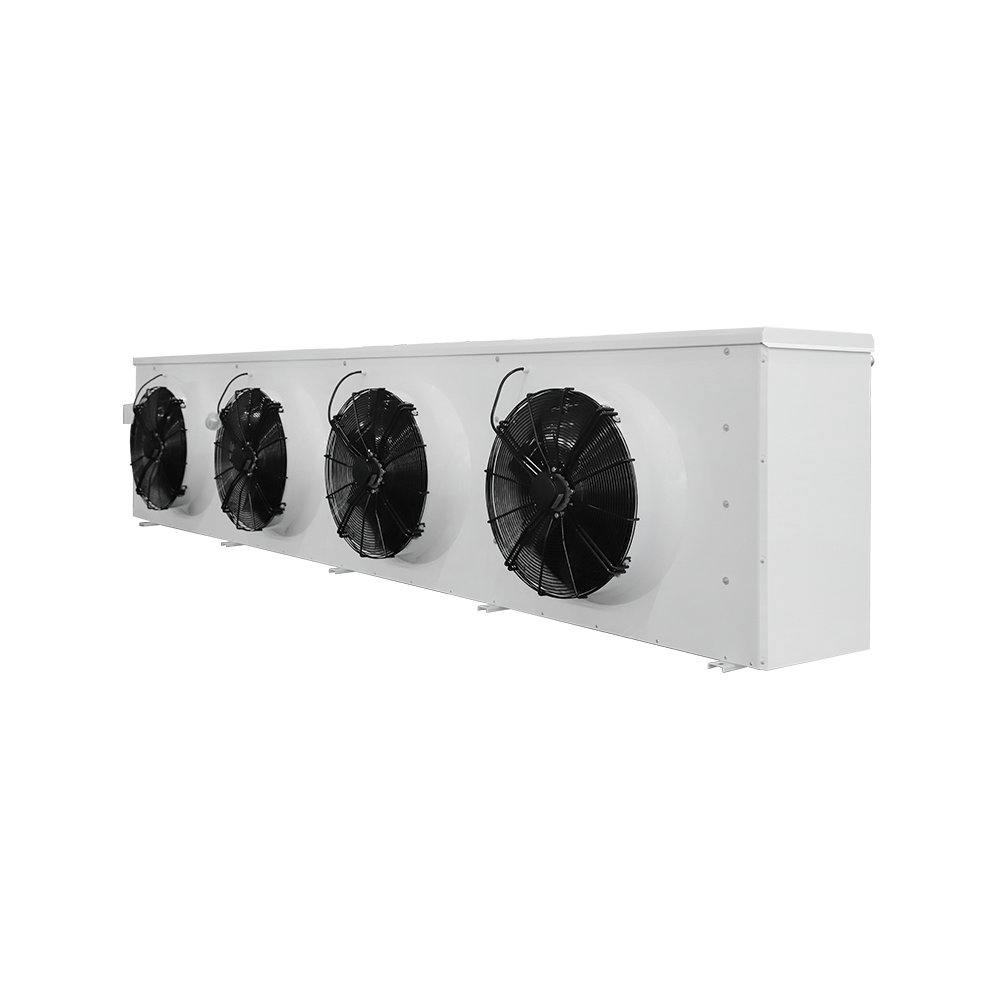
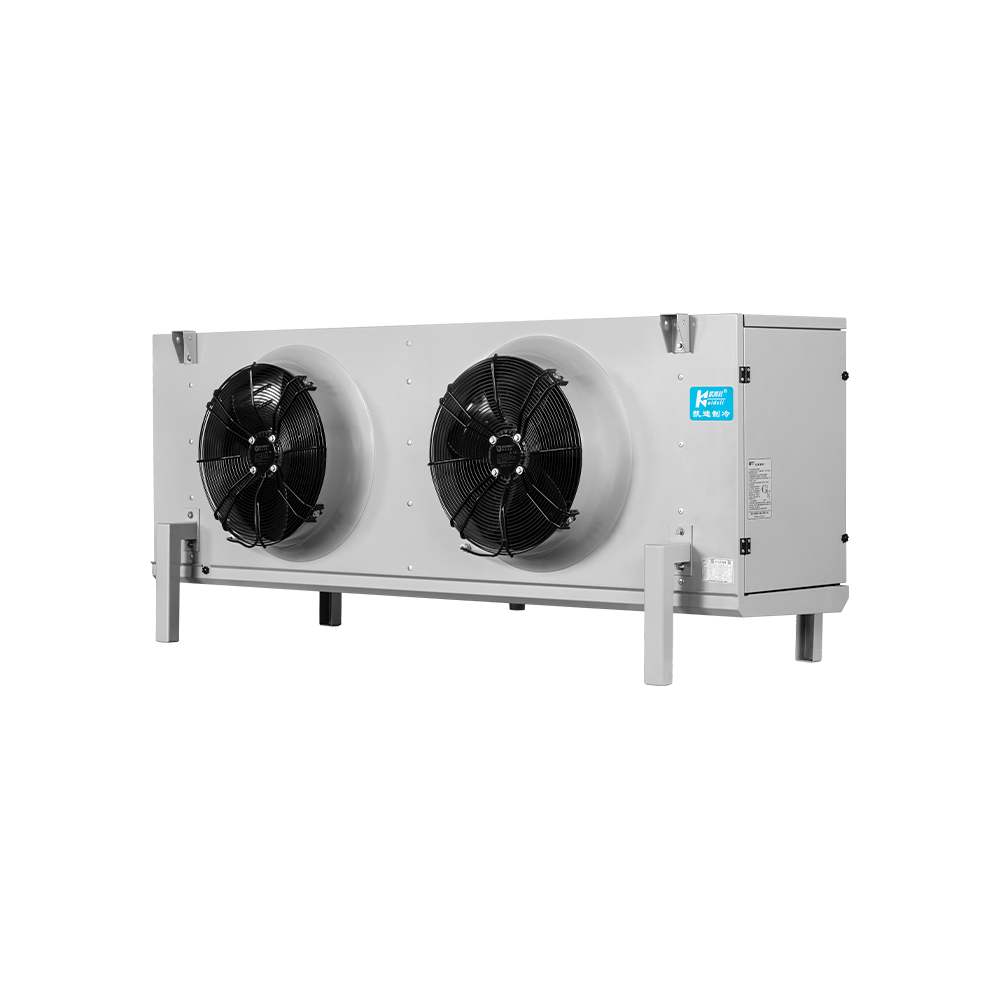
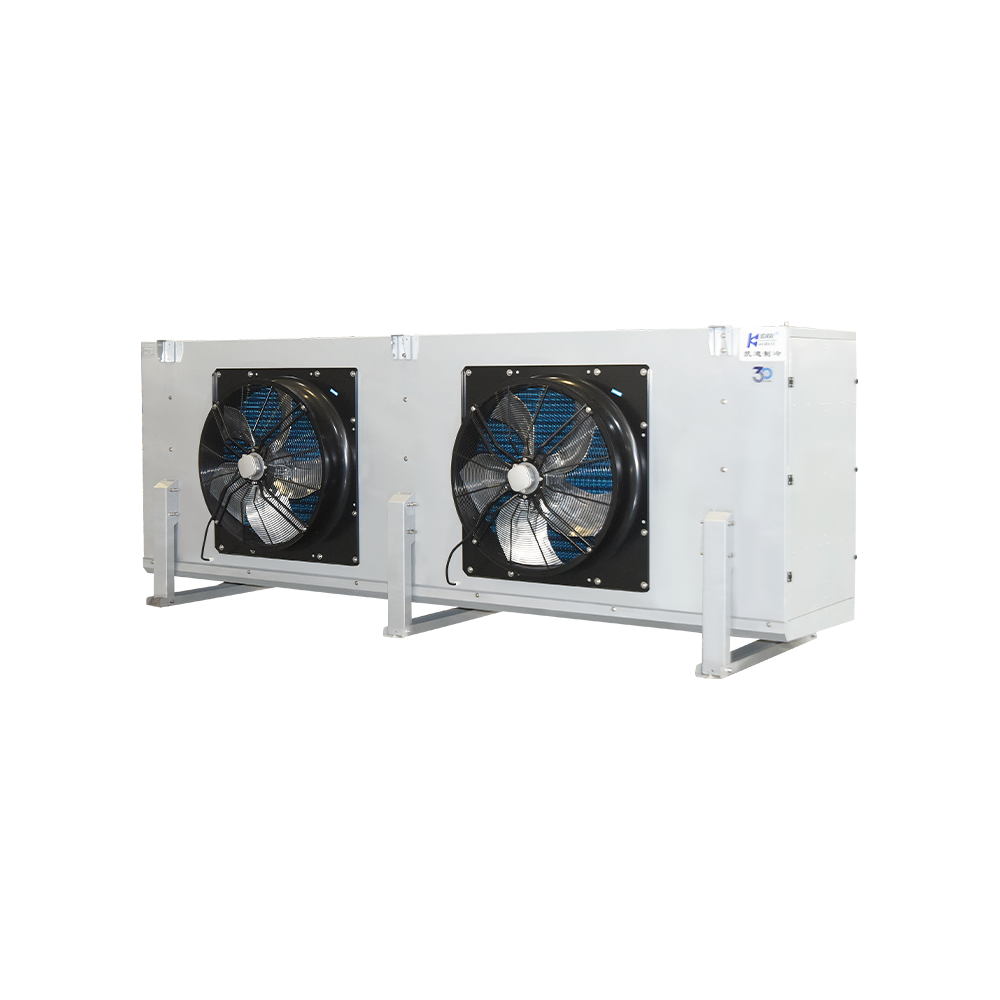
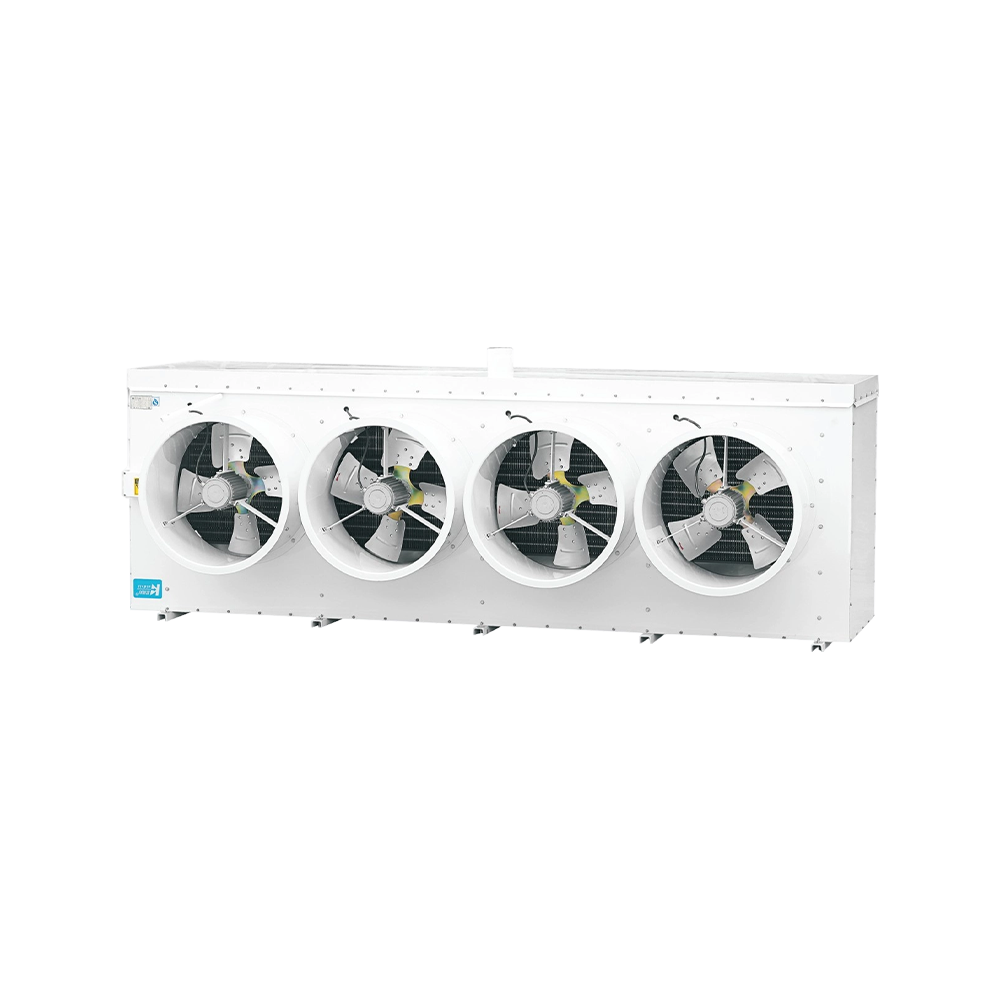
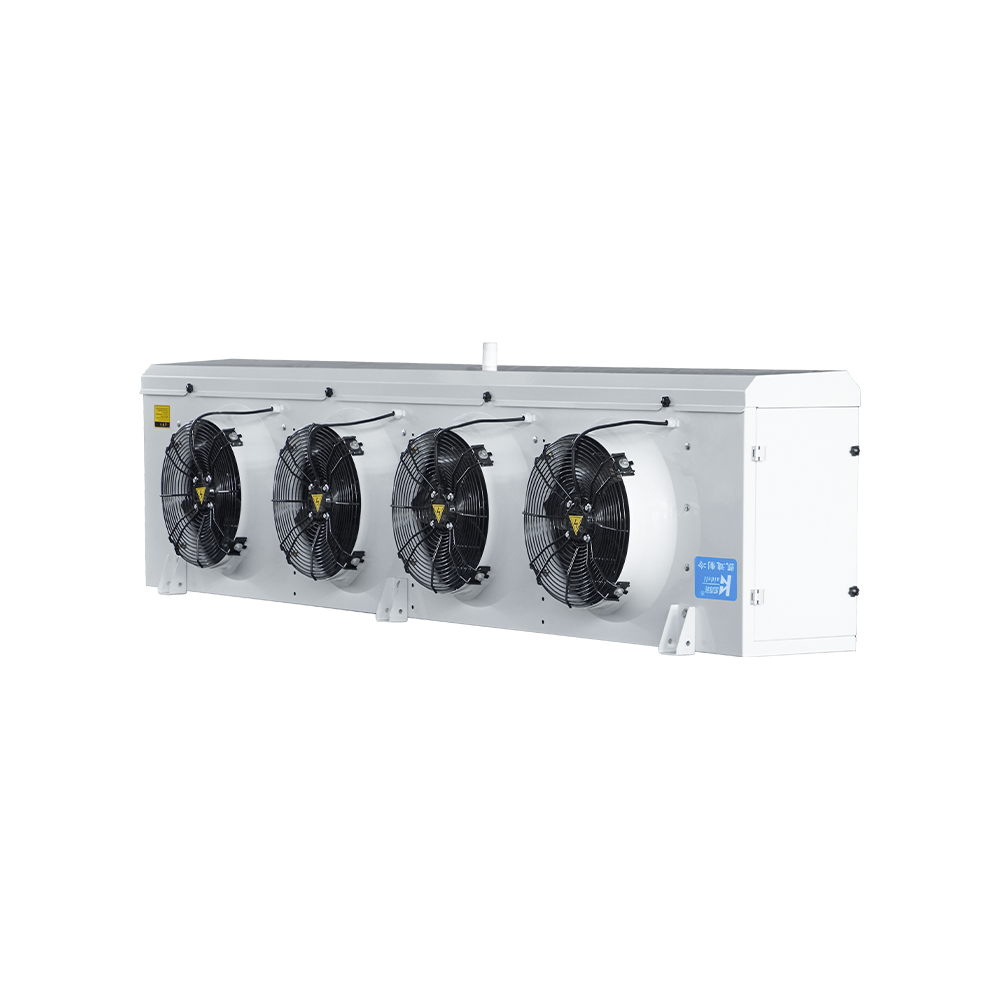
The answer to these challenges lies in equipment purpose-built for exactly this environment. The GUM Series Large Ceiling Type Evaporator from Kaidi Refrigeration was developed specifically to address the demands of large-volume, high-ceiling cooling applications — combining high-capacity heat exchange, long-range air delivery, and a comprehensive engineering package that covers everything from fin geometry to junction box waterproofing. This article breaks down how the GUM Series solves the specific problems of keeping high-ceilinged rooms cool, and why its design choices matter in practice.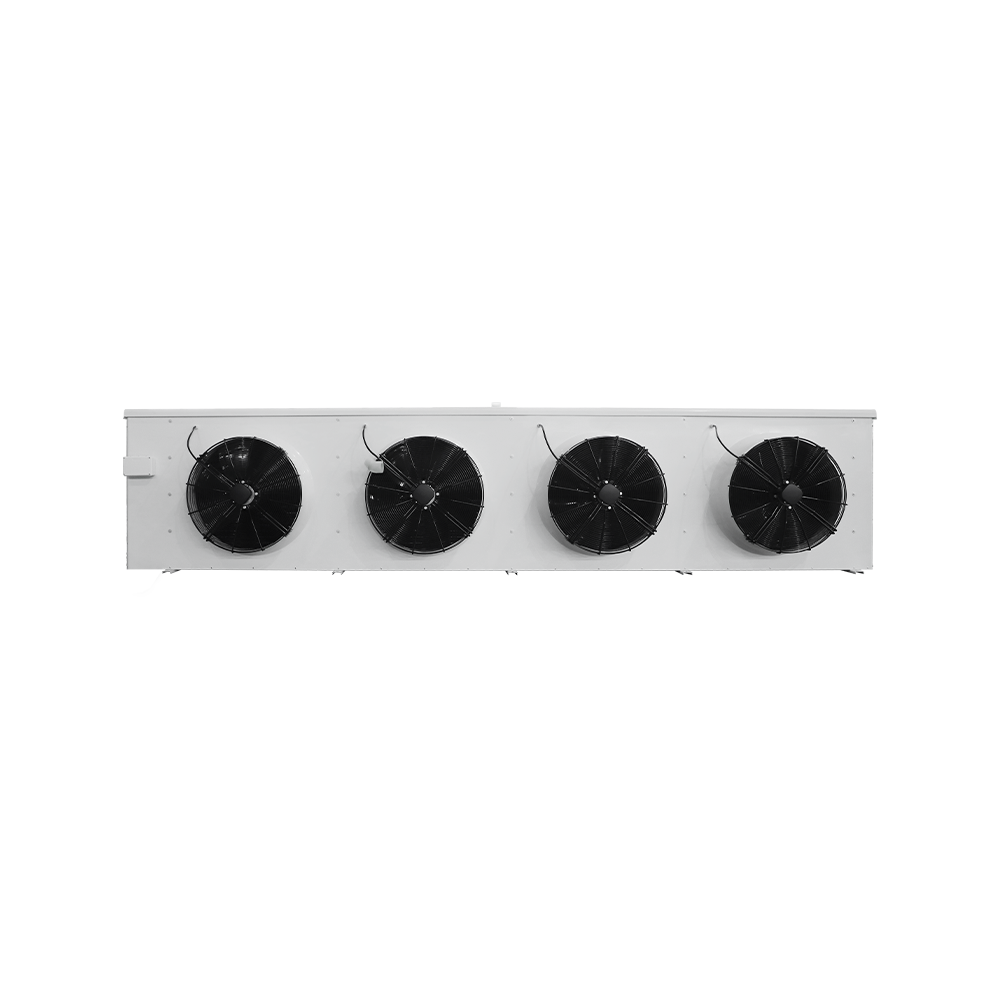
Why Standard Evaporators Struggle in High-Ceilinged Environments
Before examining what makes the GUM Series effective, it is worth understanding precisely why ordinary ceiling-mounted evaporators underperform in large, tall spaces. The physics are straightforward: cool air is denser than warm air and naturally falls, while warm air stratifies near the ceiling. In a space with ceiling heights of 6, 8, or 10 metres or more, a unit mounted at ceiling level needs to project cooled air far enough downward and outward to actually reach the stored product or working area at floor level. A unit with insufficient static pressure or fan diameter produces a tight, short throw — the air falls close to the unit and recirculates locally, leaving the majority of the space inadequately cooled.
Compounding this, large cold rooms and warehouses typically have significant heat ingress through walls, roof, and doors, along with internal heat loads from people, equipment, lighting, and the product itself. Maintaining a stable target temperature across a large volume under these conditions demands both raw cooling capacity and the ability to distribute that cooling uniformly. A unit that excels at one without the other produces hot spots, temperature gradients, and uneven product storage conditions — all unacceptable in food, pharmaceutical, or logistics cold chain operations.
The GUM Series Large Ceiling Type Evaporator was engineered from the ground up with these realities in mind, incorporating large-diameter fan technology, optimized heat exchange components, and advanced air distribution features to address every dimension of the high-ceiling cooling problem.
Large-Diameter, High-Static-Pressure Fans: The Foundation of Long-Range Air Delivery
The defining feature of the GUM Series is its use of large-size, high-lift fan motors with fan diameters of 630mm and 710mm. These are not incremental size increases over standard evaporator fans — they represent a fundamentally different approach to air delivery. Larger fan diameters allow more air to be moved per revolution, and when combined with the 4-pole external rotor motor configuration used in the GUM Series, the result is a fan assembly that generates both the volume flow rate and the static pressure needed to project cooled air over genuinely long distances.
The standard configuration uses a 4-pole high-efficiency, high-static-pressure external rotor fan with thermal protection. External rotor motors — where the rotating magnetic assembly surrounds a fixed inner stator — are a well-established choice for high-performance fan applications because they allow for direct-drive fan operation without the mechanical losses associated with belt or shaft coupling arrangements. The thermal protection feature ensures the motor responds to overtemperature conditions before winding damage occurs, protecting the unit during demanding continuous-duty operation.
Optional EC Energy-Saving Motors for Enhanced Efficiency
For operators prioritizing energy efficiency, the GUM Series offers an optional EC (electronically commutated) energy-saving motor upgrade. EC motors use permanent magnet rotor technology and electronic control to operate at significantly higher efficiency than conventional AC induction motors across the full operating speed range. In applications where fan motors run continuously, the energy savings from EC motor adoption are substantial and accumulate meaningfully over the system's operational life.
Range Extension Kit: Pushing Cooled Air Even Further
For particularly deep spaces or applications where maximum air throw distance is critical, the GUM Series offers Kaidi's self-developed range extension kit as an optional accessory. This kit optimizes the air supply cycle, disperses the radiation of longitudinal acceleration without pressure loss, and increases the effective target air supply volume at extended distances. In practice, this means the cooled air delivered by the unit reaches further into the space without the velocity decay that reduces cooling effectiveness in deep warehouses or processing halls.
Advanced Heat Exchange Technology: Maximizing Cooling Efficiency
Moving large volumes of air through the evaporator is only half the equation — that air must exchange heat effectively with the refrigerant circuit to actually deliver cooling capacity. The GUM Series incorporates multiple heat exchange enhancements on both the refrigerant side and the air side to maximize the thermal performance of each unit.
High-Efficiency Internal Thread Heat Exchange Tubes
The standard heat exchange tube configuration uses high-efficiency internal thread tubes with medium diameter. The internal threading is precision-engineered with an optimized tooth height that promotes turbulent flow of the refrigerant inside the tube. Turbulent flow — as opposed to laminar flow — ensures the refrigerant constantly mixes as it travels through the tube, bringing the bulk fluid into contact with the tube wall rather than allowing a stagnant boundary layer to act as a thermal insulator. The result is significantly more effective heat transfer between the refrigerant and the tube wall, with the internal threading also substantially increasing the effective heat exchange area inside the tube compared to smooth bare tube alternatives.
European Double Sine Wave Fork-Arranged Aluminum Fins
On the air side, the GUM Series uses the latest European double sine wave fork-arranged fin design manufactured from hydrophilic corrugated aluminum sheet. The double sine wave profile improves air-side turbulence as airflow passes over the fin surface — the wave pattern disrupts boundary layer development and promotes mixing, enhancing convective heat transfer between the air and the fin material. The fork arrangement of fins relative to the tube rows further optimizes airflow distribution through the coil.
The hydrophilic surface treatment on the aluminum fins is an important operational feature in refrigeration applications. Standard untreated aluminum causes condensed water to bead on the fin surface, which can partially block airflow and reduce heat exchange efficiency. The hydrophilic coating causes condensate to spread into a thin, uniform film that drains away quickly — maintaining fin passage cleanliness and consistent airflow. The GUM Series offers four fin spacing options: 4.5mm, 6.0mm, 9.0mm, and 8.0/16.0mm to accommodate different temperature and humidity operating environments.
Venturi Liquid Distributor for Uniform Refrigerant Distribution
Uniform refrigerant distribution across the coil is essential for realizing the full heat exchange potential of the evaporator. The GUM Series uses a standard small pressure drop Venturi type liquid distributor with a wide liquid distribution efficiency range and broad adaptability to liquid supply temperature variations. Critically, all GUM Series models use a single liquid distributor — simplifying the piping valve arrangement and reducing both installation complexity and component cost without compromising distribution performance.
Structural Durability and Corrosion Resistance for Demanding Cold Room Environments
Cold storage and refrigeration environments are inherently corrosive. Condensation, defrost water, cleaning chemicals, food acids, and continuous exposure to moisture all attack evaporator components over time. The GUM Series addresses this through a multi-layered approach to corrosion protection across its structural components.
- Shell: Standard configuration uses high-quality galvanized steel plate with plastic spray coating on the surface for strong anti-corrosion performance. For more demanding environments, aluminum plate and stainless steel shell options are available as custom configurations.
- Heat exchanger end plate: Aluminum plate construction is used as a flexible support for the tube plate, preventing direct contact between copper tubes and steel components — a contact that would establish a galvanic couple and accelerate corrosion of the copper tubing.
- Inner water tray: Full aluminum plate covering reduces air bypass, accelerates condensate discharge, and enhances the radiant heat effect during defrost cycles.
- Outer water tray: Angled angular structure design ensures smooth drainage to all corners with no dead zones where standing water could accumulate and cause corrosion or hygiene issues.
The IP65-rated waterproof junction box and waterproof connectors complete the corrosion protection picture on the electrical side. IP65 certification means the junction box is fully protected against dust ingress and direct water jets from any direction — a meaningful specification in cold rooms where high-pressure water cleaning is routine. The terminal design offers high pressure resistance and wiring reliability even after years of exposure to cold and wet conditions.
Defrost System Options: Keeping the Coil Clean and Efficient
In any refrigeration application operating below 0°C, frost accumulation on the evaporator coil is inevitable. Frost acts as an insulating layer between the airstream and the refrigerant, progressively degrading heat exchange efficiency and restricting airflow through the coil. Effective, uniform defrosting is therefore not a secondary consideration — it directly determines the sustained performance of the evaporator over time.
The GUM Series offers three defrost options to suit different application requirements:
| Defrost Method | Key Feature | Best Suited For |
|---|---|---|
| Electric Defrost (Standard) | Stainless steel heating tubes evenly distributed in coil fins and inner water tray; uniform defrost, no dead corners | Freezer rooms, low-temperature cold storage |
| Water Defrost (Standard) | Kaidi patented water distributor and water tray technology; uniform defrost, minimal water drift | Medium-temperature cold rooms, high-frequency defrost cycles |
| Hot Gas Defrost (Optional) | Uses hot refrigerant gas from the compressor discharge; energy-efficient defrost cycle | Applications requiring minimal temperature rise during defrost |
The electric defrost configuration uses stainless steel heating tubes evenly distributed throughout the coil fin pack and across the inner water tray plate — ensuring every part of the coil receives adequate heat during the defrost cycle with no frost-retaining dead corners. The water defrost option employs Kaidi's patented water distributor and water tray design, which achieves uniform water distribution across the coil surface while minimizing drift of defrost water outside the intended drainage path.
Refrigerant Compatibility and Quality Assurance
The GUM Series is compatible with a comprehensive range of refrigerants reflecting both current industry standards and the regulatory transition underway in many markets:
- R404A — widely used HFC blend for medium and low-temperature commercial refrigeration
- R507A — azeotropic HFC blend for low-temperature applications
- R448A and R449A — lower-GWP HFC blend alternatives designed as R404A/R507 replacements
- R134a — single-component HFC for medium-temperature applications
- R22 — legacy HCFC for existing system compatibility
This broad refrigerant compatibility ensures the GUM Series can be specified for new installations using the latest low-GWP refrigerants while also serving retrofit and replacement projects in existing R22 or R404A systems. The standard coil collection riser is equipped with a 1/4-inch needle valve port to facilitate pressure measurement points for electronic expansion valve integration — a practical feature for system commissioning and ongoing performance monitoring.
Every GUM Series unit undergoes a strict 28bar pressure test before leaving the factory, along with cleaning and functional testing. This factory testing protocol ensures that each unit shipped to customers meets performance and integrity standards from day one of operation.
Frequently Asked Questions About the GUM Series Large Ceiling Type Evaporator
Q: What ceiling height is the GUM Series suitable for?
The GUM Series is specifically designed for large, high-ceilinged spaces where standard evaporators lack the fan power and air throw distance needed for effective cooling. The 630mm and 710mm fan diameters and high-static-pressure fan configuration make it suitable for warehouses and cold rooms with ceiling heights typically ranging from 5 metres to 10 metres or more, depending on the specific unit model and optional range extension kit installation.
Q: What fin spacing option should I choose for my application?
Fin spacing selection depends on the operating temperature and humidity of the application. Closer fin spacing (4.5mm) is suitable for medium-temperature applications with lower frost accumulation rates. Wider spacing (6.0mm, 9.0mm, or the dual-pitch 8.0/16.0mm option) is recommended for low-temperature freezer applications where heavier frost buildup requires larger inter-fin passages to maintain adequate airflow between defrost cycles.
Q: Can the GUM Series be used with newer low-GWP refrigerants?
Yes. The GUM Series supports R448A and R449A, both of which are lower-GWP alternatives to R404A and R507 that are increasingly specified in new installations as part of the global phase-down of high-GWP refrigerants. This future-oriented compatibility protects the investment value of GUM Series installations as refrigerant regulations continue to evolve.
Q: What is the advantage of the Venturi liquid distributor over conventional distributor designs?
The Venturi-type distributor achieves uniform refrigerant distribution with a lower pressure drop than conventional orifice-type distributors, which improves overall system efficiency. Its wide adaptability to liquid supply temperature variations also makes it less sensitive to operating condition changes — maintaining good distribution performance across a broader range of system states than many alternative designs.
Q: How does the IP65 junction box benefit cold room operations?
Cold rooms are regularly cleaned with high-pressure water jets, and evaporator electrical components must withstand direct water exposure without moisture ingress causing insulation breakdown, short circuits, or corrosion of terminal connections. The IP65-rated junction box provides certified protection against both complete dust ingress and water jets from any direction, ensuring electrical reliability throughout the unit's service life regardless of cleaning regimes.
Q: What quality testing does each GUM Series unit undergo before shipment?
Every unit is cleaned and functionally tested before leaving the factory, and must pass a 28bar pressure test that verifies the integrity of all refrigerant-side joints, connections, and coil passages. This factory testing protocol ensures zero-defect delivery and eliminates the risk of field refrigerant leaks from manufacturing defects.