

 English
 中文简体
中文简体Content
- 1 Why Ultra-Low Temperature Refrigeration Demands Specialized Equipment
- 2 Two-Stage Compression: The Engineering Solution to High Compression Ratios
- 3 Condenser Options: Air-Cooled and Shell-and-Tube Water-Cooled for Different Installation Requirements
- 4 Safety and Control Systems: Protecting the Compressor Under Extreme Operating Conditions
- 5 Customized Expansion Options for Complex Industrial Applications
- 6 Primary Applications: Where the KCWS Series Delivers the Most Value
- 7 Frequently Asked Questions About the KCWS Series Semi-Enclosed Piston Water-Cooled Condensing Unit
- 7.1 Q: What is the operating temperature range of the KCWS Series?
- 7.2 Q: When does the KCWS Series switch to two-stage compression?
- 7.3 Q: Does the shell-and-tube water condenser require a separate liquid receiver?
- 7.4 Q: What high-pressure protection value does the dual pressure controller use for R22 systems?
- 7.5 Q: Is the gas-liquid separator necessary for all KCWS Series installations?
- 7.6 Q: What improvement in heat exchange efficiency does the air-cooled condenser provide?
- 7.7 Q: Can the KCWS Series be used for pharmaceutical ultra-low temperature storage?
Why Ultra-Low Temperature Refrigeration Demands Specialized Equipment
Most commercial refrigeration equipment is designed for a relatively narrow band of operating temperatures — typically between 0°C and -25°C. Below that threshold, the engineering demands of refrigeration change substantially. Compression ratios increase dramatically as evaporating temperatures drop, placing mechanical stress on compressor components that standard single-stage designs were never built to handle. Lubricating oil viscosity changes at extreme temperatures, heat rejection becomes more complex, and the risk of liquid refrigerant returning to the compressor — a condition known as liquid hammer — increases with the severity of the operating conditions.
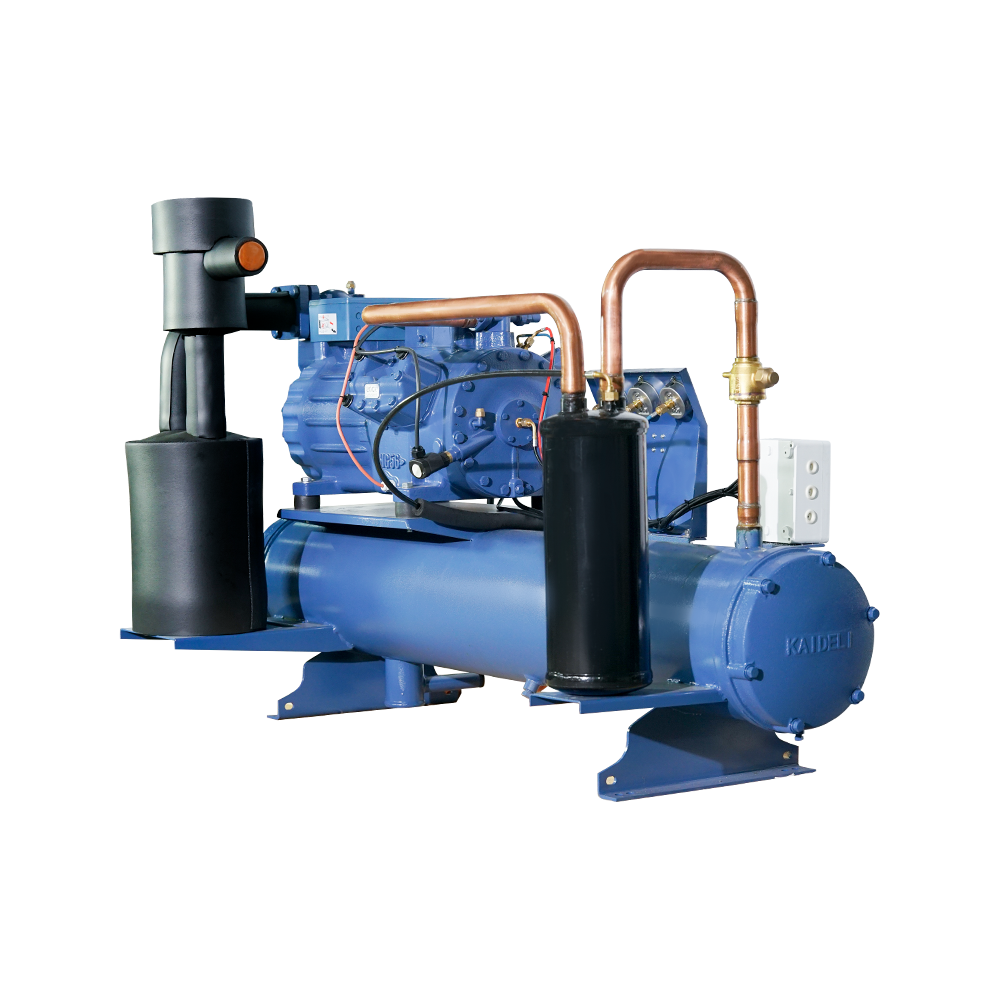
The KCWS Series Semi-Enclosed Piston Water-Cooled Compressor Condensing Unit was developed specifically to operate where standard equipment cannot. With a stable operating range of -25°C to -50°C, this unit addresses the full spectrum of ultra-low temperature industrial refrigeration needs — from food quick-freezing lines processing large volumes of product to pharmaceutical cold chain storage facilities requiring precise, reliable low-temperature maintenance around the clock.
Understanding what makes the KCWS Series capable of operating reliably at these temperatures requires a look at the specific engineering decisions built into the unit — starting with its core compression architecture.
Two-Stage Compression: The Engineering Solution to High Compression Ratios
In any vapor-compression refrigeration system, the compression ratio — the ratio of condensing pressure to evaporating pressure — determines how hard the compressor must work. At moderate temperatures, compression ratios are manageable with single-stage compression. But as evaporating temperatures drop toward -30°C, -40°C, and below, compression ratios climb to levels that exceed the practical limits of single-stage piston compressors. At these ratios, a single-stage compressor experiences sharply reduced volumetric efficiency, elevated discharge temperatures that degrade lubrication, and mechanical stresses that shorten component life significantly.
The KCWS Series addresses this directly through two-stage compression technology, which is automatically employed when the compression ratio exceeds 8 to 10. For systems using R22 refrigerant operating below -30°C evaporation temperature, two-stage compression is standard practice. Rather than compressing refrigerant from evaporating pressure to condensing pressure in a single step, the two-stage approach divides the compression work into two sequential stages with an intercooling step between them.
The Role of the Intercooler Assembly
Between the first and second compression stages, the KCWS Series incorporates an intercooler assembly that reduces the interstage exhaust temperature before refrigerant enters the high-stage compressor. This intercooling serves multiple critical functions simultaneously. It reduces the temperature of the gas entering the high-stage compressor, which directly lowers the final discharge temperature and prevents the thermal breakdown of compressor oil that would otherwise occur at extreme compression temperatures. It also improves the density of gas entering the high-stage cylinder, which improves volumetric efficiency and overall system capacity. The combined effect is a system that operates more efficiently, runs cooler, and places less thermal and mechanical stress on compressor components — directly translating into longer service intervals and extended equipment life.
Condenser Options: Air-Cooled and Shell-and-Tube Water-Cooled for Different Installation Requirements
Heat rejection is a critical subsystem in any ultra-low temperature refrigeration unit. At deep evaporating temperatures, the temperature lift from evaporator to condenser is substantial, and the condenser must reject a significant amount of heat reliably and consistently. The KCWS Series offers two distinct condenser configurations to suit different installation environments and operational priorities.
Air-Cooled Condenser: High-Efficiency Fin-and-Tube Construction
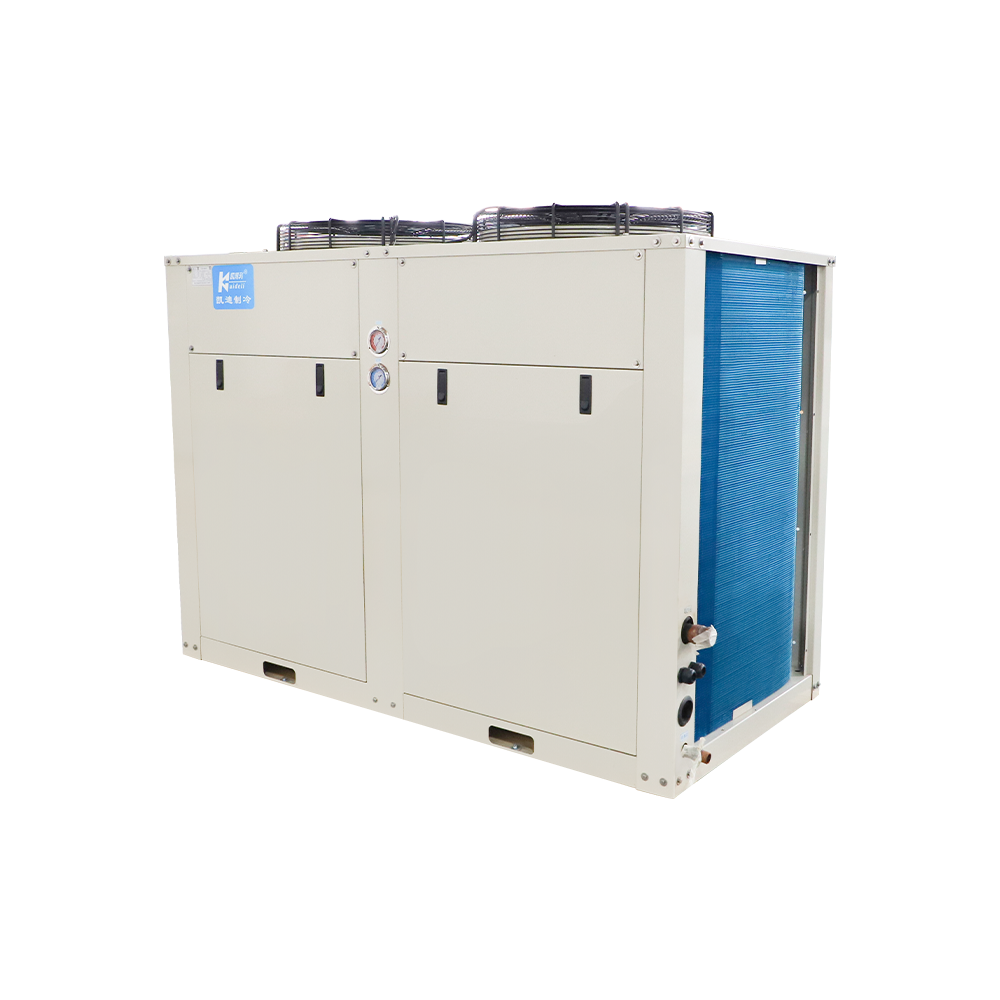
The air-cooled condenser option uses a high-speed punch stamping and secondary flanging manufacturing process to create precisely formed fin collars around each copper tube. The copper tubes are then mechanically expanded into the fins, creating a tight mechanical bond that minimizes contact thermal resistance between tube and fin — the interface that is most critical to efficient heat transfer in a fin-and-tube coil. The result is a documented improvement in heat exchange efficiency of more than 15% compared to conventional manufacturing methods. For facilities where water supply is limited or where water treatment costs are a concern, the air-cooled option provides self-contained heat rejection without any auxiliary water infrastructure.
Shell-and-Tube Water-Cooled Condenser: Compact, High-Performance Heat Rejection
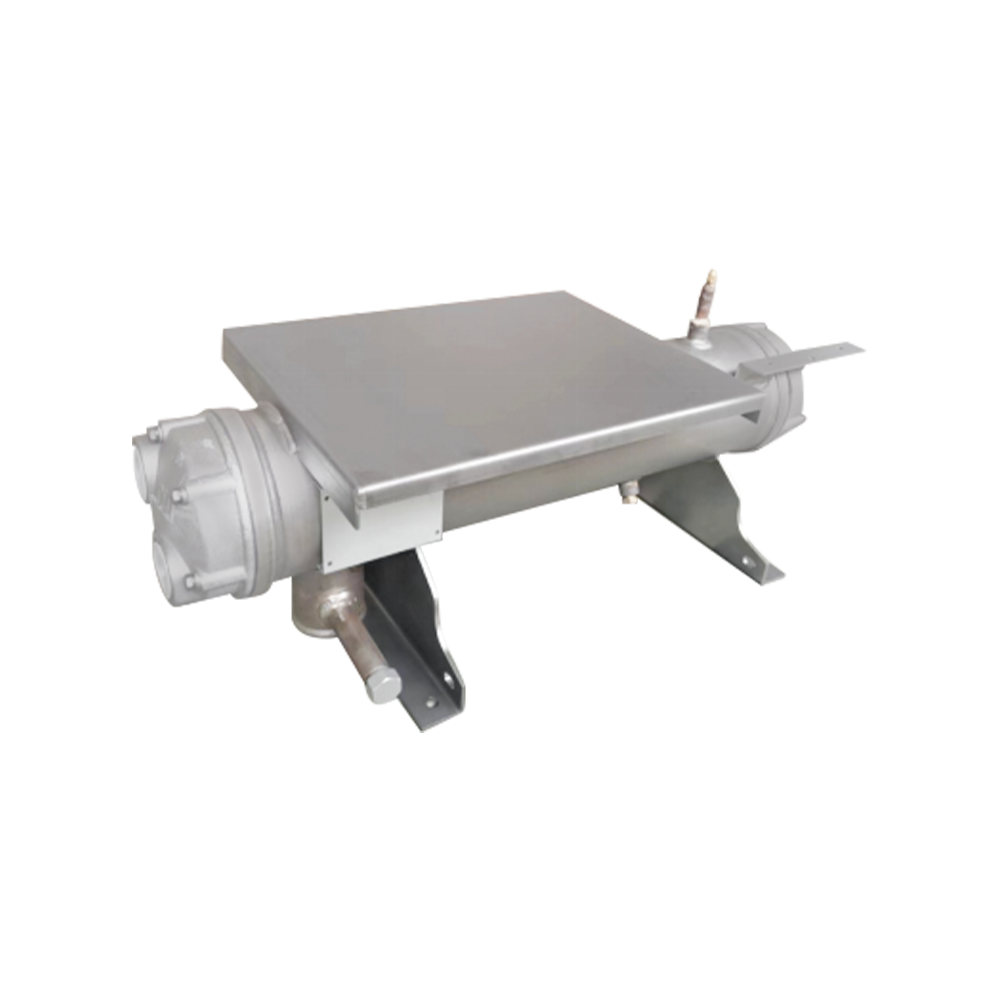
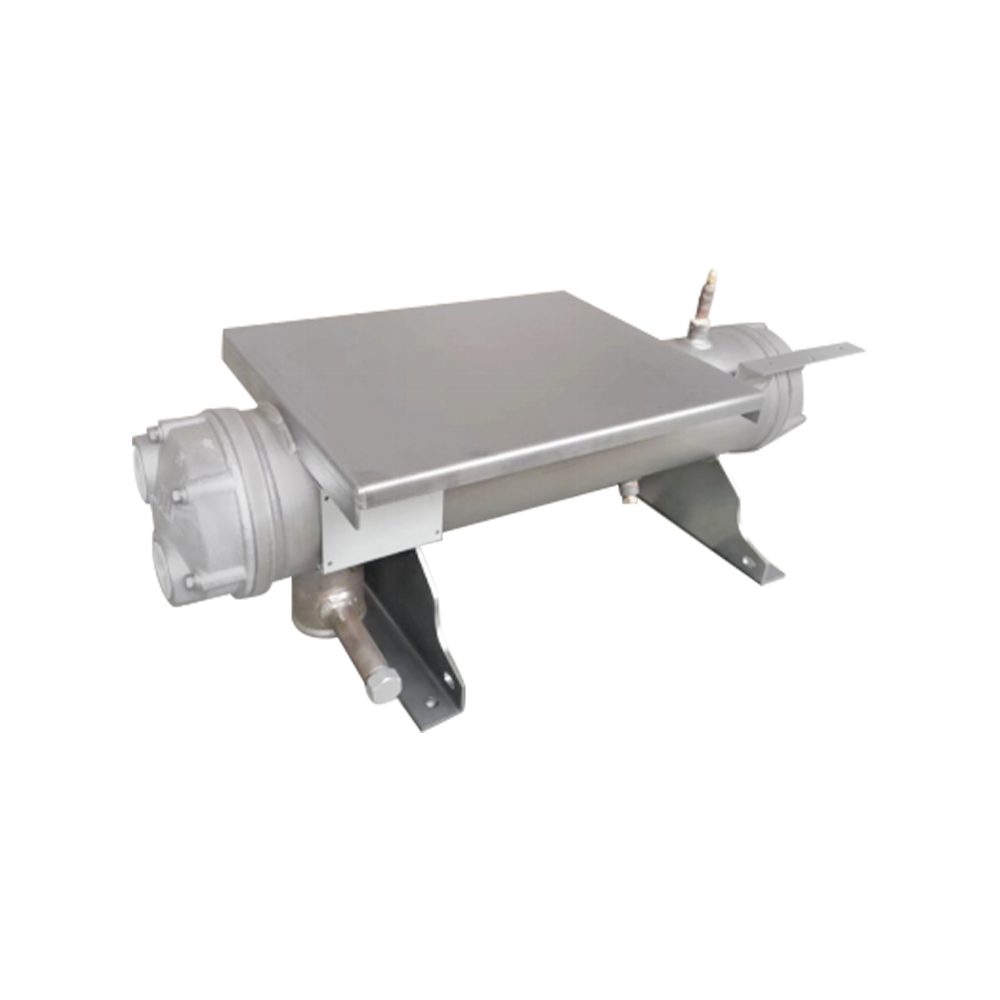
The shell-and-tube water-cooled condenser configuration uses high-efficiency externally threaded copper tubes with enhanced heat transfer design on the tube exterior. The external threading increases the effective surface area of each tube and promotes turbulent flow of the water-side fluid, both of which contribute to higher overall heat transfer coefficients compared to smooth-tube alternatives. The condenser is manufactured to comply with the JB/T 4750-2003 "Pressure Vessels for Refrigeration Devices" standard, providing documented certification of pressure resistance and long-term structural reliability.
A particularly practical feature of the shell-and-tube condenser is its integrated liquid storage function. The condenser vessel has sufficient volume to serve as a liquid receiver, eliminating the need for a separate liquid storage device in the refrigerant circuit. This reduces overall system component count, simplifies installation piping, and removes one potential leak point from the refrigerant circuit — a meaningful advantage in any low-temperature system where refrigerant management is operationally critical.
Safety and Control Systems: Protecting the Compressor Under Extreme Operating Conditions
Ultra-low temperature refrigeration systems operate under conditions that leave little margin for error. A pressure excursion that might be a minor event in a medium-temperature system can cause serious compressor damage or create a safety hazard in a deep-freeze application. The KCWS Series incorporates a multi-layer safety and control architecture designed to monitor system status continuously and intervene before problems escalate.
The core safety component is a dual pressure controller that monitors both high-side and low-side system pressures in real time. When monitored pressures approach or exceed preset protection thresholds — for example, the high-pressure protection value of 2.4MPa for R22 systems — the controller triggers an automatic shutdown to prevent compressor overload damage. This protection operates independently of operator attention, providing continuous safeguarding during unattended overnight or weekend operation.
| Safety Component | Function | Protection Provided |
|---|---|---|
| Dual Pressure Controller | Monitors high and low system pressure continuously | Prevents compressor overload; auto-shutdown at 2.4MPa (R22) |
| Intercooler Assembly | Reduces interstage exhaust temperature between compression stages | Protects lubrication system; extends component life |
| Gas-Liquid Separator (Optional) | Separates liquid refrigerant from suction gas before compressor inlet | Prevents liquid hammer damage to compressor valves and pistons |
| Oil Pressure Differential Controller (Optional) | Monitors differential pressure across the lubrication oil pump | Detects lubrication failure before bearing or journal damage occurs |
The intercooler assembly contributes to safety as well as efficiency. By keeping interstage temperatures within acceptable limits, it protects the lubrication oil from thermal degradation — a failure mode that can rapidly progress from reduced lubrication effectiveness to bearing failure and compressor seizure in extreme-temperature applications. Maintaining proper lubrication conditions at all stages of compression is foundational to the long-term reliability that industrial refrigeration operators require.
Customized Expansion Options for Complex Industrial Applications
No two industrial refrigeration installations are identical. Load profiles vary by industry, product type, and process design. Some applications involve flooded evaporator systems where liquid refrigerant is deliberately maintained at a high level in the evaporator — a condition that maximizes heat transfer area but creates elevated risk of liquid carryover to the compressor. Others involve significant load fluctuations throughout the operating day that can create transient operating conditions outside the normal design range. The KCWS Series is designed to accommodate these real-world complexities through a range of optional accessories that can be specified at the time of order.
Gas-Liquid Separator: Preventing Liquid Hammer
In applications where load fluctuations or full-liquid evaporation system designs create a risk of liquid refrigerant entering the compressor suction line, an optional gas-liquid separator can be added to the KCWS Series installation. The separator intercepts the suction line upstream of the compressor and removes any entrained liquid refrigerant before it can reach the compressor cylinders. Liquid hammer — the hydraulic shock caused when incompressible liquid enters a compressor cylinder designed for gas — can cause immediate and severe mechanical damage to valves, pistons, and connecting rods. The gas-liquid separator eliminates this risk entirely.
Oil Pressure Differential Controller: Continuous Lubrication Monitoring
The optional oil pressure differential controller monitors the differential pressure across the lubrication oil pump continuously during operation. A drop in oil pressure differential below the acceptable threshold indicates a developing lubrication problem — whether from oil pump wear, oil foaming, or low oil charge — before that problem causes bearing or journal damage. This early warning capability allows operators to address lubrication issues during a planned response rather than after a compressor failure has already occurred.
Primary Applications: Where the KCWS Series Delivers the Most Value
The KCWS Series operating range of -25°C to -50°C places it squarely in the territory of the most demanding refrigeration applications across multiple industries.
- Food quick-freezing processing: Tunnel freezers, spiral freezers, and blast freezers processing meat, seafood, bakery products, and prepared foods require deep evaporating temperatures and high reliability to maintain throughput and product quality. The KCWS Series' two-stage compression capability and stable performance at -40°C to -50°C make it directly suitable for these applications.
- Industrial low-temperature refrigeration: Chemical processing, materials testing, and industrial process cooling often require precise low-temperature control in ranges that standard refrigeration equipment cannot reach. The KCWS Series provides reliable capacity across the full -25°C to -50°C range for these technically demanding applications.
- Pharmaceutical cold chain storage: Certain biologics, vaccines, and pharmaceutical products require storage at temperatures well below standard refrigeration ranges — including some products requiring -40°C or colder storage. The KCWS Series delivers the stable, reliable ultra-low temperature environment these products require, with safety systems that protect against temperature excursions that could compromise product integrity.
- Scientific and research cold storage: Laboratories, biobanks, and research institutions requiring long-term sample preservation at ultra-low temperatures benefit from the KCWS Series' combination of temperature stability, safety protection, and operational reliability.
Frequently Asked Questions About the KCWS Series Semi-Enclosed Piston Water-Cooled Condensing Unit
Q: What is the operating temperature range of the KCWS Series?
The KCWS Series is designed to operate stably across a temperature range of -25°C to -50°C, making it one of the few commercially available condensing unit platforms capable of sustained operation at the deepest end of industrial refrigeration requirements.
Q: When does the KCWS Series switch to two-stage compression?
Two-stage compression is applied when the compression ratio exceeds 8 to 10. For R22 refrigerant applications specifically, two-stage compression is standard when evaporation temperatures fall below -30°C. The transition to two-stage operation is built into the unit's design and does not require separate configuration by the operator.
Q: Does the shell-and-tube water condenser require a separate liquid receiver?
No. The shell-and-tube water condenser in the KCWS Series incorporates an integrated liquid storage function, eliminating the need for a dedicated external liquid receiver in the refrigerant circuit. This simplifies installation and reduces the total number of system components.
Q: What high-pressure protection value does the dual pressure controller use for R22 systems?
For R22 refrigerant systems, the dual pressure controller triggers an automatic shutdown when high-side pressure reaches 2.4MPa, protecting the compressor from overload damage during abnormal operating conditions such as condenser fouling, high ambient temperatures, or refrigerant overcharge.
Q: Is the gas-liquid separator necessary for all KCWS Series installations?
The gas-liquid separator is an optional accessory recommended for applications with significant load fluctuations or full-liquid evaporation system designs where liquid carryover to the compressor suction line is a realistic risk. For standard dry-expansion evaporator systems with stable loads, it may not be required — but it is strongly advisable for flooded evaporator applications.
Q: What improvement in heat exchange efficiency does the air-cooled condenser provide?
The high-speed punch stamping and secondary flanging manufacturing process used in the air-cooled condenser reduces contact thermal resistance at the copper tube-to-fin interface, delivering a documented heat exchange efficiency improvement of more than 15% compared to conventionally manufactured fin-and-tube condensers.
Q: Can the KCWS Series be used for pharmaceutical ultra-low temperature storage?
Yes. The KCWS Series' stable operating range, comprehensive safety protection systems, and ability to maintain reliable performance at temperatures as low as -50°C make it well-suited for pharmaceutical cold chain storage applications, including those requiring the ultra-low temperatures needed for certain biologics, vaccines, and sensitive research materials.