

 English
 中文简体
中文简体Content
- 1 Air Cooled Condenser Or Water Cooling: The Direct Answer
- 2 Core Differences Between Air Cooling And Water Cooling Systems
- 3 Energy Efficiency: What The Numbers Actually Show
- 4 Water Consumption And Hidden Operating Costs
- 5 How Climate Should Drive Your Selection
- 6 Maintenance, Reliability, And Service Life Considerations
- 7 Noise, Footprint, And Installation Factors
- 8 Which Applications Typically Favor Each Technology
- 9 Hybrid And Adiabatic Cooling: A Middle Path
- 10 Capital Cost And Payback Period Comparison
- 11 Sustainability Reporting And Corporate Water Targets
- 12 Frequently Asked Questions
- 12.1 Is an Air Cooled Condenser less efficient than a water-cooled system in every climate?
- 12.2 How much water does a typical cooling tower use compared to an Air Cooled Condenser?
- 12.3 Does an Air Cooled Condenser require less maintenance than a cooling tower?
- 12.4 Can an Air Cooled Condenser be retrofitted onto a building that previously used water cooling?
- 12.5 What is the typical lifespan difference between the two systems?
- 12.6 Are hybrid adiabatic systems a good compromise?
- 12.7 How does altitude affect Air Cooled Condenser performance?
- 12.8 Which system has a faster capital payback period?
Air Cooled Condenser Or Water Cooling: The Direct Answer
For most new industrial and commercial refrigeration, power plant, and process cooling projects, an Air Cooled Condenser is the better long-term choice in regions with limited water access, strict environmental discharge rules, or high water costs, while water cooling remains the more efficient option where water is cheap, abundant, and ambient temperatures are consistently high. The decision is not about which technology is universally superior — it is about matching the cooling method to local water availability, climate, energy cost structure, and maintenance capability.
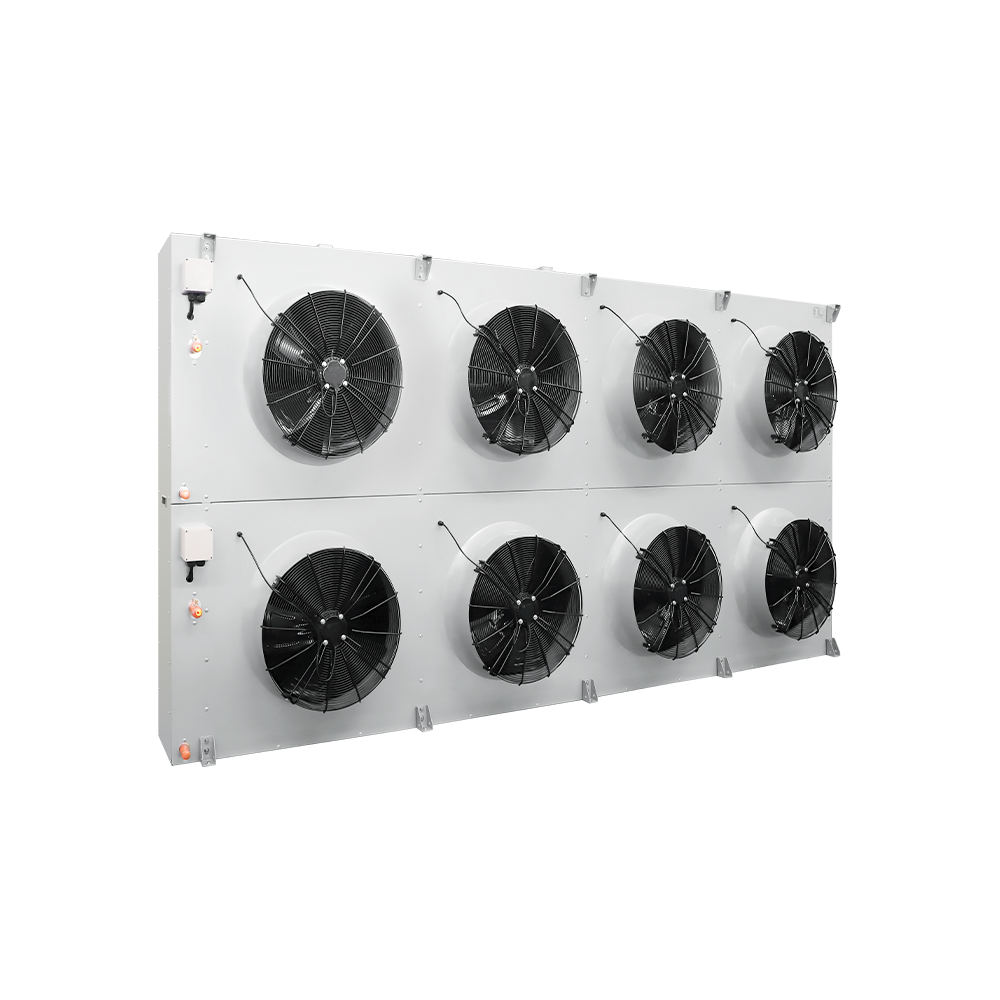
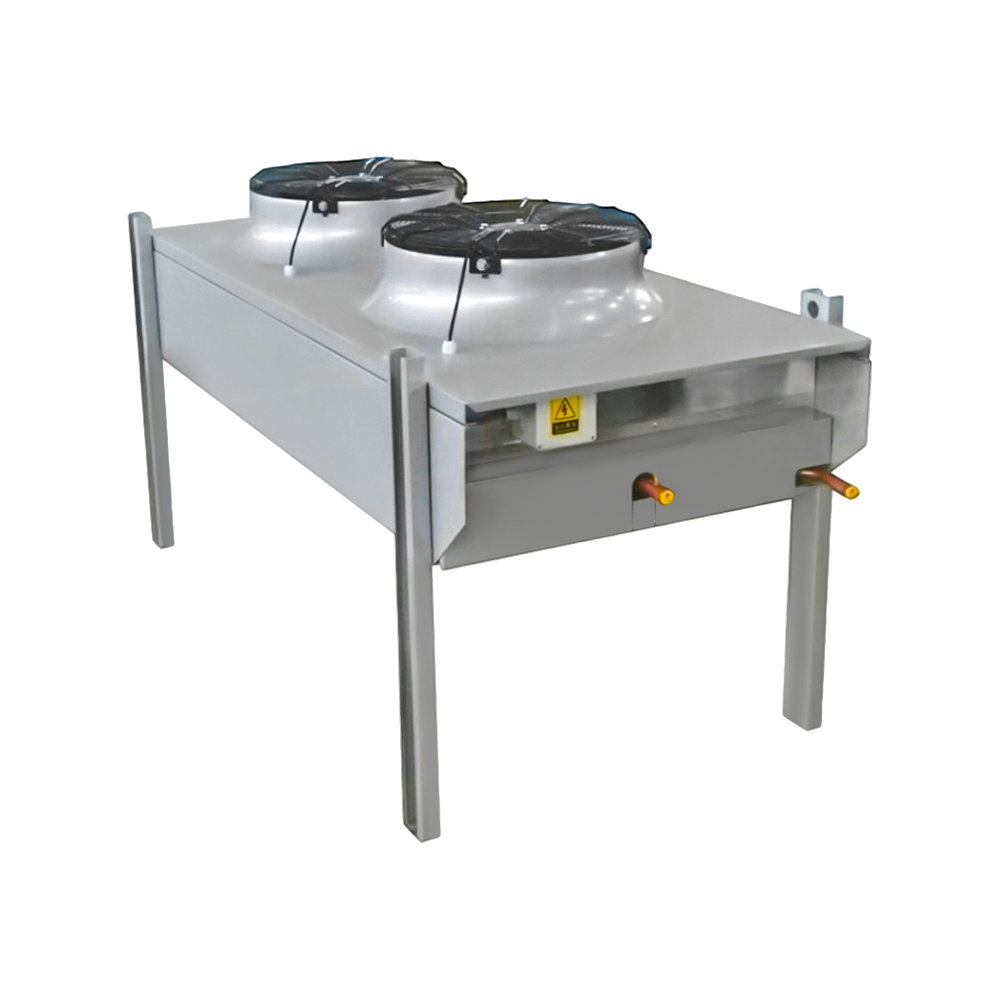
An Air Cooled Condenser rejects heat directly to the atmosphere through finned tube bundles and forced-draft or induced-draft fans, eliminating the need for cooling towers, water treatment chemicals, and blowdown discharge. Water cooling, by contrast, uses a circulating water loop and a cooling tower to reject heat through evaporation, which is thermodynamically more efficient but creates a continuous water consumption and treatment burden.
This guide walks through the full engineering, financial, environmental, and maintenance picture so that facility engineers, plant managers, and project planners can make a defensible decision rather than relying on a single rule of thumb. We cover thermodynamics, real operating cost ranges, regional water policy pressure, noise and footprint planning, retrofit considerations, and a detailed application-by-application breakdown, finishing with an extended FAQ section addressing the questions most commonly raised during procurement discussions.
Core Differences Between Air Cooling And Water Cooling Systems
Both systems exist to reject the same quantity of heat, but they use fundamentally different mechanisms, and understanding this mechanism is the starting point for any sound design decision. Water cooling relies on the latent heat of evaporation, which allows a cooling tower to approach the wet-bulb temperature of the surrounding air — typically several degrees lower than the dry-bulb temperature an air-cooled system must work against. This is why, on a pure thermal efficiency basis, water cooling generally wins in raw numbers, although that advantage does not automatically translate into the lowest total cost of ownership once every operating expense is included.
An Air Cooled Condenser instead approaches the dry-bulb ambient temperature, which means its performance degrades more sharply on hot, dry afternoons. In a location with a 35°C dry-bulb temperature and a 24°C wet-bulb temperature, a water-cooled chiller condenser might operate at a saturated condensing temperature near 30°C, while an air-cooled unit could be forced to condense closer to 45°C, reducing compressor efficiency and increasing energy draw. This gap is known in engineering circles as the "approach temperature," and it is the single most important number for predicting how each system will perform on the hottest design day of the year.
Heat Rejection Mechanism
- Water cooling: sensible heat transfer to circulating water, then latent heat rejection through evaporation in a cooling tower.
- Air cooling: sensible heat transfer directly from refrigerant or process fluid to ambient air across finned coils.
- Hybrid systems: combine both, using evaporative spray on the coil surface during peak load periods only.
Why The Approach Temperature Matters So Much
A smaller approach temperature means the refrigerant or process fluid can condense closer to ambient conditions, which directly lowers compressor lift and energy consumption. Cooling towers are typically designed with a 3°C to 5°C approach to the wet-bulb temperature, while a well-designed Air Cooled Condenser is usually designed with an 8°C to 12°C approach to the dry-bulb temperature. Selecting oversized coil surface area can shrink this gap, but at the cost of a larger physical footprint and higher capital expenditure.
Energy Efficiency: What The Numbers Actually Show
Across a wide range of published chiller plant studies, water-cooled chillers typically achieve a coefficient of performance (COP) between 5.5 and 7.0, compared with 2.8 to 3.8 for comparable air-cooled chillers operating at full load in moderate climates, according to ASHRAE Fundamentals data commonly cited in mechanical engineering design guides. This efficiency gap narrows considerably in cooler climates and widens in hot, humid regions where cooling towers can exploit a large wet-bulb depression.
| Parameter | Air Cooled Condenser | Water Cooled System |
|---|---|---|
| Typical COP at full load | 2.8 - 3.8 | 5.5 - 7.0 |
| Water consumption | Negligible | High, ongoing makeup water needed |
| Typical footprint | Larger, more coil surface area | Smaller condenser, but tower adds space |
| Maintenance demand | Low, mainly fan and coil cleaning | Higher, water treatment and tower upkeep |
| Legionella risk | None | Present, requires biocide treatment |
| Typical design approach temperature | 8°C - 12°C above dry-bulb | 3°C - 5°C above wet-bulb |
These figures shift meaningfully with ambient conditions. In a coastal or temperate climate where dry-bulb temperatures rarely exceed 28°C, the efficiency gap can shrink to within 15 to 20 percent, which often makes air cooling the more economical total-cost choice once water and chemical treatment costs are included. Plant engineers running annual energy models, rather than single peak-day comparisons, frequently find that an Air Cooled Condenser closes much of this gap when averaged across spring, autumn, and winter operating hours, since those seasons make up the majority of a typical operating calendar in most climates.
Water Consumption And Hidden Operating Costs
Water cooling towers lose water continuously through evaporation, drift, and blowdown. A typical 1,000-ton cooling tower system can consume between 3 and 4 gallons of makeup water per minute at full load, which translates to roughly 1.5 to 2.1 million gallons per year for a facility running near continuous duty. In regions where municipal or well water costs $4 to $8 per thousand gallons, this alone can add tens of thousands of dollars annually before factoring in sewer discharge fees, water softening, scale inhibitors, corrosion inhibitors, and biocide dosing.
An Air Cooled Condenser avoids essentially all of these recurring costs. There is no blowdown to treat, no chemical dosing program to manage, and no risk of scale buildup inside heat exchanger tubes from hard water. This is one of the primary reasons air cooling has become the default choice for new power generation projects sited in arid regions such as parts of the southwestern United States, the Middle East, and inland China, where water rights and water scarcity regulations make large-scale water withdrawal increasingly difficult to permit.
Regulatory And Permitting Pressure
Many jurisdictions now require environmental impact assessments specifically addressing thermal discharge and water withdrawal volumes for any new water-cooled industrial installation. Air-cooled systems, having no liquid discharge stream, typically face a substantially simpler permitting path, which can shorten project timelines by months in water-stressed regions.
Building The True Lifecycle Cost Model
A defensible comparison should account for capital cost, annual energy cost, water and sewer cost, chemical treatment cost, scheduled maintenance labor, unscheduled repair risk, and equipment replacement cycle, projected over a 15 to 20 year horizon. When all of these line items are included rather than just the electricity bill, many facilities in moderate or water-constrained climates find that the higher energy cost of an Air Cooled Condenser is more than offset by the elimination of water, chemical, and tower-related maintenance expenses.
How Climate Should Drive Your Selection
Climate is the single largest variable in this decision. The following guidance reflects patterns commonly observed across industrial cooling system selection:
- Hot and humid climates (high wet-bulb temperature): water cooling retains a strong efficiency advantage because the wet-bulb depression available to a cooling tower stays meaningful even when dry-bulb temperatures are extreme.
- Hot and dry climates (large gap between dry-bulb and wet-bulb): water cooling shows its largest theoretical efficiency advantage here, but water scarcity often makes it impractical regardless of efficiency.
- Temperate and coastal climates: the efficiency gap narrows enough that an Air Cooled Condenser frequently wins on total lifecycle cost once water, chemicals, and tower maintenance labor are included.
- Cold and seasonal climates: air cooling performs strongly for much of the year, though both systems require freeze protection measures during winter shutdown periods.
Facility planners increasingly run a full annual energy simulation rather than relying on a single peak-day comparison, since a system that looks worse on the hottest day of the year may still be the better annual-average performer once shoulder-season and off-peak hours are factored in. Software tools that model bin-weather data hour by hour across a full calendar year give a far more accurate picture than a single design-day calculation, and most experienced mechanical engineers will insist on this level of analysis before specifying either technology for a large facility.
Altitude And Air Density Effects
High-altitude sites present an additional consideration for an Air Cooled Condenser, since lower air density reduces the mass flow rate of air moved by a given fan at a given speed. Projects above roughly 1,500 meters elevation often require derated fan performance curves or additional coil surface area to compensate, a factor that is sometimes overlooked during early-stage budgeting.
Maintenance, Reliability, And Service Life Considerations
Maintenance burden is frequently underestimated when comparing these two technologies on efficiency alone. A water-cooled system introduces several additional points of failure and recurring tasks: cooling tower fill media degradation, basin sediment accumulation, condenser tube fouling from mineral scale, drift eliminator wear, and the ongoing need for a certified water treatment program to control Legionella bacteria growth in the warm, wet tower environment.
An Air Cooled Condenser has fewer moving parts in the heat rejection loop — primarily the fan motors, fan blades, and the finned coil surface, which needs periodic cleaning to remove dust, pollen, and debris that reduce airflow and heat transfer efficiency. Coil cleaning is typically required two to four times per year in dusty or high-pollen environments, compared with the near-continuous chemical monitoring a cooling tower demands.
Typical Service Life
Properly maintained air-cooled condenser coils commonly reach 15 to 20 years of service life, while cooling towers, due to constant exposure to water, chemicals, and biological growth, often require fill media replacement every 7 to 10 years and structural refurbishment within 15 to 20 years depending on construction material.
Common Failure Points To Plan For
For an Air Cooled Condenser, the most common service items are fan motor bearing wear, fan belt or coupling fatigue, coil fin damage from debris impact, and refrigerant leak points at brazed joints exposed to vibration. For a water-cooled system, the most common service items are tower fill collapse, condenser tube fouling requiring mechanical or chemical cleaning, pump seal failure, and cooling tower basin corrosion. Building a preventive maintenance schedule around these known failure points, rather than reacting after a breakdown, materially extends the working life of either system.
Noise, Footprint, And Installation Factors
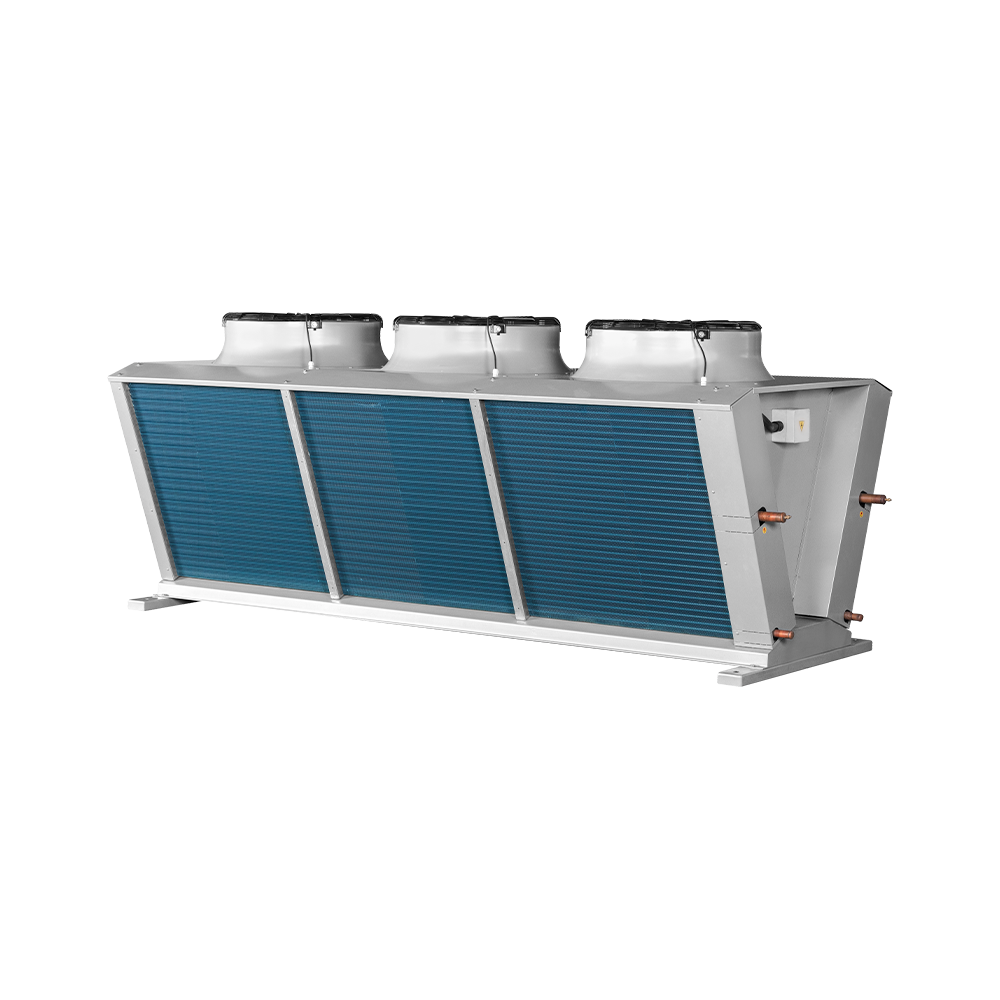
Air-cooled systems generally require more physical footprint and produce more audible fan noise than an equivalent water-cooled installation, since they rely entirely on moving large volumes of air across coil surfaces rather than the more compact heat transfer achieved through water. This makes acoustic planning important for an Air Cooled Condenser sited near occupied buildings, residential boundaries, or noise-sensitive process areas. Low-noise fan options, variable-speed drives, and sound attenuation enclosures can bring sound levels down significantly, though usually at added equipment cost.
Water-cooled systems can be more compact at the chiller or condenser itself, but the cooling tower still requires open-air placement with adequate clearance for air intake and discharge, along with structural support for the wet weight of the tower basin. Rooftop structural loading is a common constraint that pushes some retrofit projects toward air cooling simply because the building cannot support a water-filled tower.
Planning Clearances And Recirculation
An Air Cooled Condenser needs sufficient clearance around the intake and discharge sides of the coil bank to avoid hot air recirculation, which can quietly degrade performance well below rated capacity if neighboring equipment, walls, or parapets restrict airflow. Manufacturers generally recommend a minimum clearance equal to the unit height on the discharge side, and project teams should always confirm site-specific clearance requirements during the layout phase rather than after equipment has already been ordered.
Which Applications Typically Favor Each Technology
Industry practice generally sorts applications as follows, though every project should still be evaluated individually based on its own water access, climate, and operating profile:
Better Suited To Air Cooled Condenser Systems
- Power plants and combined-cycle facilities in arid or water-restricted regions
- Refrigeration and HVAC systems for facilities without access to a reliable water supply
- Process industries where water discharge permitting is difficult or costly
- Remote sites where water treatment expertise is not readily available on staff
- Projects with a strong sustainability mandate to reduce freshwater withdrawal
- Rooftop installations where structural loading cannot support a wet cooling tower
Better Suited To Water Cooled Systems
- Large central chiller plants in hot, humid climates where annual energy savings are substantial
- Facilities with access to low-cost reclaimed or treated effluent water for tower makeup
- Sites where minimizing rooftop footprint and fan noise is a higher priority than water use
- Operations with dedicated facilities staff capable of running a rigorous water treatment program
- High-density urban plants where land is too valuable to dedicate to large air-cooled coil banks
Hybrid And Adiabatic Cooling: A Middle Path
A growing number of new installations use hybrid or adiabatic pre-cooling systems, which spray a fine water mist over the air intake of an Air Cooled Condenser only during the hottest hours of the year. This lowers the effective dry-bulb temperature the coil sees, recovering much of the efficiency advantage of water cooling while using a small fraction of the water volume a full wet cooling tower would consume — often 90 percent less water on an annual basis. This approach has become particularly popular for data centers and power generation projects that want both water stewardship credentials and strong peak-load performance.
Adiabatic systems typically only activate above a set dry-bulb threshold, commonly between 25°C and 30°C, which means the misting pads remain dry and inactive for the majority of operating hours in most climates. This dramatically reduces both water consumption and the risk of mineral scale buildup compared with a continuously wetted cooling tower fill, while still delivering a meaningful capacity and efficiency boost exactly when it is needed most — during the peak summer design conditions that size the rest of the plant.
Capital Cost And Payback Period Comparison
Initial capital cost for an Air Cooled Condenser is generally higher per ton of cooling capacity than an equivalent water-cooled chiller and tower package, often by 10 to 25 percent, because of the larger coil surface area and fan count needed to achieve adequate heat rejection without the benefit of evaporative cooling. However, the absence of a cooling tower, water piping distribution, pumps, and water treatment skid can narrow or even reverse this gap once full installed system cost is considered.
Payback comparisons should always be run on a project-specific basis, since local electricity rates, water and sewer rates, and chemical treatment costs vary widely by region. A facility paying premium electricity rates but very low water rates will favor water cooling on a financial basis, while a facility in the reverse situation — common in many drought-prone regions — will often find an Air Cooled Condenser delivers a faster payback once water scarcity surcharges and tiered water pricing are included in the model.
Sustainability Reporting And Corporate Water Targets
Many manufacturers and corporate facility operators now track water withdrawal as a formal sustainability metric alongside energy consumption and carbon emissions. Choosing an Air Cooled Condenser over a traditional wet cooling tower can materially improve a facility's reported water intensity figures, which has become an increasingly important factor in corporate environmental, social, and governance disclosures. For multinational manufacturers operating in regions facing growing water stress, this consideration is increasingly weighed alongside pure energy cost when new cooling infrastructure is specified.
Frequently Asked Questions
Is an Air Cooled Condenser less efficient than a water-cooled system in every climate?
No. The efficiency gap is largest in hot, dry climates with a wide spread between dry-bulb and wet-bulb temperature. In temperate, coastal, or humid climates, the gap narrows substantially and can be offset by the lower operating cost of an air-cooled system.
How much water does a typical cooling tower use compared to an Air Cooled Condenser?
A mid-size cooling tower can consume well over a million gallons of makeup water annually at continuous operation, while an air-cooled system uses essentially no process water beyond occasional coil washing.
Does an Air Cooled Condenser require less maintenance than a cooling tower?
Generally yes. Air-cooled systems avoid water treatment chemistry, Legionella control programs, and tower fill replacement, though coil cleaning to remove dust and debris is still required on a regular schedule.
Can an Air Cooled Condenser be retrofitted onto a building that previously used water cooling?
It is possible, but the larger footprint and structural support requirements for coil banks and fans must be evaluated against the available roof or ground space before committing to a retrofit.
What is the typical lifespan difference between the two systems?
Air-cooled coils often reach 15 to 20 years of service with proper coil maintenance, while cooling towers typically need fill media replacement within 7 to 10 years due to constant wet, biologically active conditions.
Are hybrid adiabatic systems a good compromise?
For many projects, yes. Adiabatic pre-cooling on an Air Cooled Condenser can recover much of the efficiency advantage of water cooling while using a small fraction of the water volume of a full wet tower system.
How does altitude affect Air Cooled Condenser performance?
Lower air density at higher elevations reduces the mass of air a given fan can move, so projects above roughly 1,500 meters often need derated fan curves or additional coil surface area to maintain rated capacity.
Which system has a faster capital payback period?
It depends entirely on local electricity and water pricing. Facilities with low water costs and high electricity costs tend to favor water cooling, while facilities with high or tiered water pricing often see a faster payback with an Air Cooled Condenser once full lifecycle costs are included.