

 English
 中文简体
中文简体Content
- 1 Understanding Modern Refrigeration Challenges in Commercial Settings
- 2 What Features Make Modern Condensing Units Effective?
- 3 How Do Safety Features Protect Your Investment?
- 4 What Benefits Can Businesses Expect from Advanced Condensing Units?
- 5 How Should Businesses Select the Right Condensing Unit?
- 6 What Maintenance Practices Ensure Long Equipment Life?
- 7 How Are Environmental Considerations Addressed in Modern Equipment?
- 8 What Installation Considerations Are Important for Optimal Performance?
- 9 How Do Control Systems Enhance Equipment Performance?
- 10 What Future Trends Are Shaping Condensing Unit Development?
- 11 Conclusion: Making Informed Decisions for Commercial Refrigeration
Understanding Modern Refrigeration Challenges in Commercial Settings
The commercial cold chain industry faces numerous challenges in today's competitive market. Business owners and facility managers constantly seek reliable refrigeration solutions that can maintain consistent temperatures while keeping operational costs under control. From supermarkets and restaurants to pharmaceutical storage facilities and food distribution centers, the demand for efficient cooling systems continues to grow.
One of the primary concerns for businesses operating in warm climates is maintaining cooling efficiency when ambient temperatures rise. Traditional refrigeration systems often struggle to perform well in high-temperature environments, leading to increased energy consumption and potential product spoilage. This challenge has led manufacturers to develop advanced compression condensing units capable of operating reliably even in challenging conditions.
What Features Make Modern Condensing Units Effective?
When evaluating refrigeration equipment for commercial applications, several key features determine the overall performance and reliability of the system. Understanding these features helps business owners make informed decisions about their cold chain infrastructure investments.
Advanced Compressor Technology
The heart of any refrigeration system is its compressor. Modern compression condensing units increasingly incorporate scroll compressor technology due to its reliability and efficiency. Scroll compressors have fewer moving parts compared to traditional reciprocating compressors, which translates to reduced wear and tear over time. This design characteristic contributes to longer service intervals and lower maintenance requirements.
The scroll compressor's operation is also notably quieter, which is an important consideration for businesses located in residential areas or those that prioritize customer comfort in retail environments. With noise levels typically around or below 65dB(A), these units can operate without causing disturbance to employees or customers.
Efficient Heat Exchange Design
The effectiveness of a condensing unit largely depends on its heat exchange capabilities. Advanced units employ simulation-optimized heat exchange designs that maximize thermal transfer while minimizing energy consumption. This optimization process involves sophisticated computer modeling to determine the ideal arrangement of heat exchange surfaces, airflow patterns, and refrigerant flow paths.
| Heat Exchange Feature | Benefit | Application |
|---|---|---|
| Optimized Fin Spacing | Improved airflow with reduced resistance | High ambient temperature environments |
| Enhanced Tube Design | Greater surface area for heat transfer | Energy-efficient operation |
| Strategic Fan Placement | Uniform heat distribution across coils | Consistent cooling performance |
| Corrosion-Resistant Materials | Extended service life in harsh conditions | Outdoor installations |
High-Temperature Operation Capabilities
For businesses operating in regions with warm climates, the ability of refrigeration equipment to function reliably in high ambient temperatures is critical. Some advanced condensing units are specifically designed to maintain performance even when outdoor temperatures reach 45°C. This capability ensures that food products, medicines, and other temperature-sensitive items remain properly preserved regardless of weather conditions.
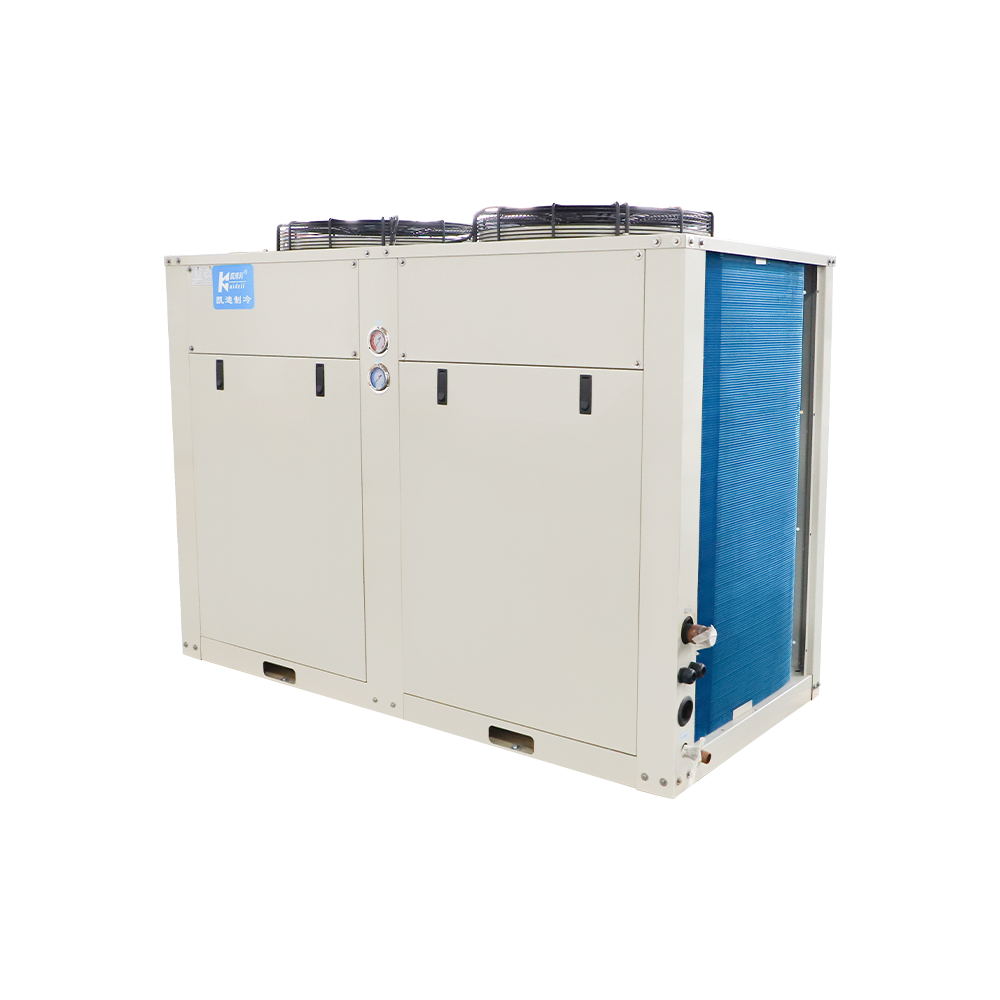
The KL-E Series Condensing Unit exemplifies this capability, with its design focused on maintaining efficiency in high-temperature environments. Such units incorporate specialized components and control strategies that adjust operating parameters to compensate for increased ambient temperatures, preventing system overload and maintaining consistent cooling capacity.
How Do Safety Features Protect Your Investment?
Commercial refrigeration represents a significant investment for any business, and protecting that investment through appropriate safety mechanisms is essential. Modern condensing units incorporate multiple layers of protection to prevent damage from various operating conditions and ensure system longevity.
Compressor Protection Systems
Compressors are among the most expensive components in a refrigeration system, and protecting them from damage is a priority for manufacturers. Advanced units include various protective devices such as:
- High-pressure cutoff switches that prevent operation when discharge pressures exceed safe levels
- Low-pressure protection to avoid compressor damage from insufficient refrigerant flow
- Overload relays that protect the motor from electrical issues
- Temperature sensors that monitor compressor operating conditions and trigger appropriate responses
Fan and Motor Protection
The condenser fan plays a crucial role in maintaining proper heat exchange, and protecting it ensures continued system performance. Modern units include thermal protection for fan motors and, in some cases, variable speed controls that adjust fan operation based on system demand. This not only protects the motor but also contributes to energy efficiency by reducing unnecessary power consumption.
| Safety Feature | Protection Type | Benefit |
|---|---|---|
| High-pressure switch | System pressure | Prevents component damage from excessive pressure |
| Low-pressure switch | System pressure | Protects compressor from oil starvation and overheating |
| Thermal overload relay | Electrical system | Prevents motor burnout from electrical faults |
| Fan motor protector | Component protection | Extends fan motor life and prevents unexpected failures |
| Anti-short cycle timer | Operational protection | Prevents rapid compressor cycling that causes wear |
What Benefits Can Businesses Expect from Advanced Condensing Units?
Investing in high-quality refrigeration equipment yields numerous benefits that contribute to business success. While the initial cost may be higher than basic alternatives, the long-term advantages often justify the investment through improved operational efficiency and reduced total cost of ownership.
Energy Efficiency Advantages
Energy consumption represents one of the largest operating expenses for commercial refrigeration systems. Advanced condensing units incorporate various technologies that reduce energy usage while maintaining cooling performance. These include high-efficiency compressors, optimized heat exchange surfaces, and intelligent control strategies that adjust operation based on actual cooling demand.
Businesses can expect to see measurable reductions in their electricity bills after upgrading to more efficient equipment. In many cases, these savings can offset the initial investment within a few years, after which the equipment continues to provide ongoing operational cost benefits throughout its service life.
Reliability and Reduced Downtime
For businesses that rely on refrigeration to preserve products, equipment reliability is paramount. Unexpected breakdowns can lead to product loss, customer dissatisfaction, and revenue reduction. Advanced condensing units are engineered with reliability as a primary consideration, incorporating quality components and robust design principles that minimize failure rates.
When maintenance is required, these units are typically designed for easy service access, allowing technicians to perform necessary work quickly and efficiently. This reduces the time systems are out of service and minimizes disruption to business operations. The extended service intervals possible with modern equipment also reduce the frequency of maintenance visits, further decreasing total maintenance costs.
Product Preservation and Quality
The ultimate purpose of any refrigeration system is to maintain product quality and safety. Advanced condensing units provide more precise temperature control and maintain conditions within narrower ranges compared to basic equipment. This precision helps preserve food freshness, maintain the efficacy of pharmaceutical products, and ensure overall product quality throughout storage and display periods.
Consistent temperature control also reduces temperature fluctuations that can accelerate product degradation. This is particularly important for businesses with extended storage requirements or those handling products with strict temperature specifications. By maintaining stable conditions, businesses can reduce product waste and improve customer satisfaction through consistently high-quality products.
How Should Businesses Select the Right Condensing Unit?
Selecting the appropriate condensing unit for a commercial application requires careful consideration of various factors. Making the right choice ensures that the equipment will meet current needs while providing flexibility for future requirements.
Assessing Cooling Load Requirements
The first step in selecting a condensing unit is accurately calculating the cooling load for the application. This calculation must account for various factors including:
- The volume of the space to be cooled
- Insulation quality of the storage area
- Expected product load and turnover rate
- Frequency of door openings and traffic patterns
- Maximum ambient temperatures expected at the installation site
- Required internal temperature for product preservation
Professional load calculations help ensure that the selected unit has adequate capacity for peak conditions without being oversized, which would lead to inefficient operation and increased energy consumption. Many equipment manufacturers provide load calculation assistance or tools to help businesses determine their requirements accurately.
Considering Installation Environment
The physical location where the condensing unit will be installed significantly impacts equipment selection. Outdoor installations require units designed to withstand weather exposure, while indoor installations may have different requirements related to noise levels and heat rejection. Factors to consider include:
| Installation Factor | Considerations | Recommended Approach |
|---|---|---|
| Ambient Temperature Range | Maximum expected temperatures in installation location | Select units rated for at least 5°C above maximum expected |
| Available Space | Physical dimensions and access requirements | Ensure adequate clearance for maintenance and airflow |
| Noise Restrictions | Proximity to occupied spaces and local regulations | Choose units with sound levels appropriate for the location |
| Weather Exposure | Rain, sun, salt air, and other environmental factors | Select units with appropriate protective coatings and features |
| Electrical Supply | Available voltage, phase, and amperage capacity | Ensure compatibility with existing electrical infrastructure |
Evaluating Long-Term Value
While initial purchase price is an important consideration, evaluating the total cost of ownership provides a more accurate picture of long-term value. This evaluation should include factors such as:
- Expected energy consumption based on efficiency ratings
- Anticipated maintenance costs and service intervals
- Projected equipment lifespan and warranty coverage
- Availability of replacement parts and service support
- Potential for future capacity expansion or modification
Equipment that may have a higher initial cost but offers better efficiency, reliability, and serviceability often provides better value over its operational lifetime. Businesses should consider these factors alongside their budget constraints to make the most appropriate investment decision.
What Maintenance Practices Ensure Long Equipment Life?
Proper maintenance is essential for maximizing the service life and efficiency of commercial refrigeration equipment. Implementing a regular maintenance program helps prevent unexpected failures, maintains optimal performance, and extends equipment longevity.
Routine Inspection Procedures
Regular inspections form the foundation of an effective maintenance program. These inspections should include checking for signs of wear, verifying proper operation of all components, and identifying potential issues before they develop into serious problems. Key inspection points include:
- Refrigerant pressure readings to verify proper charge
- Electrical connections and wiring condition
- Compressor operation and unusual sounds or vibrations
- Fan motor operation and blade condition
- Control settings and operation accuracy
- Safety device functionality and calibration
Cleaning and Maintenance Tasks
Regular cleaning helps maintain efficient heat exchange and prevents various operational issues. Essential cleaning tasks include:
- Condenser coil cleaning to remove dirt, debris, and other obstructions
- Fan blade cleaning to ensure balanced operation
- Electrical cabinet cleaning to prevent dust accumulation
- Drain line inspection and cleaning to prevent blockages
- Exterior cleaning to maintain appearance and prevent corrosion
Professional Maintenance Schedule
While some maintenance tasks can be performed by on-site staff, certain procedures require qualified refrigeration technicians. Professional maintenance typically includes:
- Comprehensive system performance testing
- Refrigerant level verification and adjustment if necessary
- Electrical system testing and safety verification
- Control system calibration and programming review
- Lubrication of appropriate components
- Wear inspection of moving parts and replacement if needed
The frequency of professional maintenance depends on operating conditions but typically occurs at least annually for most commercial applications. Units operating in harsh environments or with heavy usage may require more frequent service visits.
How Are Environmental Considerations Addressed in Modern Equipment?
Environmental responsibility has become increasingly important in commercial refrigeration. Modern condensing units incorporate various features that reduce environmental impact while maintaining performance and efficiency.
Refrigerant Selection Considerations
The choice of refrigerant significantly impacts the environmental footprint of a refrigeration system. Modern units are designed to work with refrigerants that have lower global warming potential compared to older alternatives. This transition helps businesses reduce their environmental impact while complying with increasingly strict regulations regarding refrigerant use.
When selecting equipment, businesses should consider both current regulatory requirements and anticipated future changes. Choosing units compatible with environmentally responsible refrigerants helps avoid future retrofit requirements and ensures continued compliance with evolving environmental standards.
Energy Efficiency and Carbon Reduction
Reducing energy consumption not only lowers operating costs but also decreases the carbon footprint associated with refrigeration operations. Advanced condensing units achieve improved efficiency through various design elements:
| Efficiency Feature | Environmental Benefit | Operational Advantage |
|---|---|---|
| High-efficiency scroll compressors | Reduced electricity consumption | Lower operating costs |
| Optimized heat exchange design | Reduced energy waste | Consistent performance in varied conditions |
| Variable speed fans | Adjusted operation to actual demand | Reduced power consumption during partial load |
| Intelligent controls | Optimized operation patterns | Adapted to changing conditions automatically |
What Installation Considerations Are Important for Optimal Performance?
Proper installation is critical for achieving the designed performance and longevity of condensing units. Even high-quality equipment will not perform as expected if installed incorrectly, making professional installation an essential investment.
Location Selection Criteria
The installation location significantly affects equipment performance and accessibility. Important considerations include:
- Adequate airflow: Sufficient space around the unit for proper air intake and discharge
- Accessibility: Easy access for maintenance and service requirements
- Protection from elements: Shielding from direct sunlight, rain, and debris where possible
- Vibration isolation: Mounting on appropriate surfaces to minimize vibration transmission
- Drainage provision: Proper drainage for condensate and defrost water
- Electrical access: Convenient access to appropriate power supply with required capacity
Proper Piping and Refrigerant Charging
Correct refrigerant piping design and installation are essential for system performance. Improper piping can lead to oil return problems, reduced efficiency, and premature component failure. Key piping considerations include:
- Proper pipe sizing based on refrigerant type and capacity requirements
- Adequate insulation on suction lines to prevent heat gain
- Support provisions to prevent pipe stress and vibration
- Appropriate line routing to avoid traps and ensure oil return
- Proper installation of service valves and access ports
Accurate refrigerant charging is equally important for proper operation. Both overcharging and undercharging can reduce efficiency and potentially damage system components. Professional charging methods that follow manufacturer specifications ensure the system operates as designed.
How Do Control Systems Enhance Equipment Performance?
Modern condensing units incorporate sophisticated control systems that optimize performance, protect equipment, and provide valuable operational data. These controls have evolved significantly from simple thermostatic switches to intelligent systems capable of complex decision-making.
Basic Control Functions
At a minimum, condensing unit controls provide essential functions such as:
- Temperature setpoint control with appropriate differential
- Compressor cycling based on cooling demand
- Fan operation coordinated with compressor activity
- Safety monitoring and fault indication
- Basic operating status indication
Advanced Control Features
More sophisticated control systems offer enhanced capabilities that contribute to improved efficiency and reliability:
| Control Feature | Function | Benefit |
|---|---|---|
| Adaptive defrost | Initiates defrost based on actual frost accumulation | Reduced energy consumption and product temperature fluctuation |
| Fan speed modulation | Adjusts fan speed based on operating conditions | Improved efficiency and reduced noise |
| Capacity modulation | Varies compressor output based on cooling demand | Better temperature control and reduced cycling |
| Load shedding | Reduces power draw during peak demand periods | Lower electrical demand charges |
| Diagnostic capabilities | Provides detailed operational data and fault codes | Faster troubleshooting and preventive maintenance |
What Future Trends Are Shaping Condensing Unit Development?
The refrigeration industry continues to evolve in response to changing market demands, environmental regulations, and technological advances. Understanding these trends helps businesses make informed decisions about equipment investments and prepare for future requirements.
Increasing Energy Efficiency Standards
Government regulations and industry standards continue to push for higher energy efficiency in commercial refrigeration equipment. These requirements drive manufacturers to develop innovative solutions that reduce energy consumption while maintaining or improving cooling performance. Future condensing units will likely incorporate even more advanced efficiency features such as:
- Enhanced heat exchange materials and designs
- More efficient compressor technologies
- Advanced variable capacity control
- Integration with building management systems
- Renewable energy compatibility
Smart Connectivity and IoT Integration
The Internet of Things (IoT) is transforming commercial refrigeration by enabling connectivity and remote monitoring capabilities. Future condensing units will likely feature enhanced connectivity options that allow:
- Remote performance monitoring and diagnostics
- Predictive maintenance based on operational data analysis
- Automated fault notification and service scheduling
- Energy consumption tracking and optimization recommendations
- Integration with broader facility management systems
Environmental Refrigerant Transition
The transition to environmentally responsible refrigerants continues to influence equipment design. Future condensing units will need to accommodate new refrigerants with lower global warming potential while maintaining efficiency and performance. This transition includes both equipment redesign to optimize performance with new refrigerants and consideration of retrofit options for existing installations.
The KL-E Series Condensing Unit represents the current generation of equipment designed with these considerations in mind, offering efficient operation with environmentally responsible refrigerant options while maintaining reliable performance in commercial applications.
Conclusion: Making Informed Decisions for Commercial Refrigeration
Selecting the right condensing unit for commercial applications requires careful consideration of multiple factors including cooling requirements, installation environment, long-term operating costs, and future needs. Advanced units like those in the KL-E series offer features that address the key challenges faced by businesses today, including high-temperature operation, energy efficiency, and reliable performance.
By understanding the technical features, benefits, and considerations associated with modern condensing units, business owners can make informed decisions that support their operational needs while providing good value over the equipment's service life. Working with qualified professionals for system design, installation, and maintenance ensures that refrigeration investments deliver the expected performance and reliability.
As environmental regulations continue to evolve and energy efficiency standards become more stringent, selecting equipment that incorporates current best practices and future-ready features helps businesses avoid premature obsolescence and ensure their cold chain infrastructure remains compliant and efficient for years to come.