

 English
 中文简体
中文简体Content
Introduction to Modern Refrigeration Needs
Commercial and industrial refrigeration systems play a critical role in preserving perishable goods and maintaining proper storage conditions. Businesses ranging from supermarkets and restaurants to cold storage facilities require refrigeration solutions that operate consistently, even in challenging environments. One of the primary challenges is finding equipment that performs well in elevated ambient temperatures while maintaining energy efficiency and reliability.
The market offers a wide array of refrigeration components, each designed to address specific operational requirements. Among these, integrated air-cooled condensing units have gained significant attention due to their compact design and efficient performance. These units combine key components into a single system, simplifying installation and reducing maintenance complexity.
Understanding Integrated Air-Cooled Condensing Units
An integrated air-cooled condensing unit typically includes a compressor, condenser, and other necessary components assembled in a single package. This design eliminates the need for separate assembly of parts, reducing installation time and potential connection issues. Air-cooled systems use ambient air to dissipate heat, making them suitable for locations where water resources are limited or where water-cooled systems are impractical.
These units are particularly beneficial for commercial applications where space is limited, and ease of installation is a priority. The integrated approach also allows for better compatibility between components, as they are designed to work together as a cohesive system.
Key Features to Consider in Commercial Condensing Units
When selecting a condensing unit for commercial or industrial use, several factors should be evaluated:
- Temperature Capability: The unit must operate effectively in high ambient temperatures, especially in regions with hot climates or in environments where heat generation is significant.
- Protection Rating: The enclosure should provide adequate protection against dust and water ingress to ensure durability and safe operation.
- Installation Flexibility: The design should support various installation configurations, including room-free setups where the unit can operate without specialized cooling rooms.
- Energy Efficiency: Efficient performance helps reduce operational costs over time.
- Maintenance Accessibility: Components should be accessible for routine maintenance and service.
Highlighting a Notable Solution
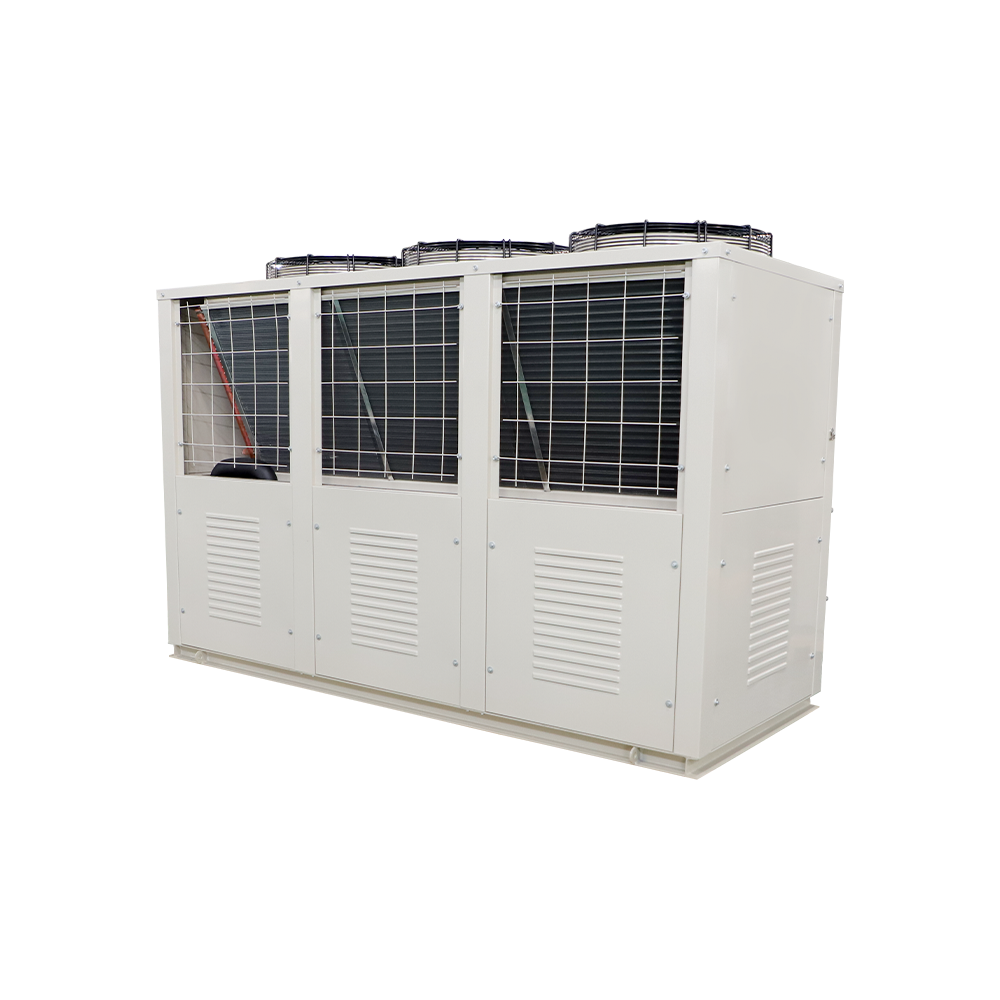
Among the options available in the market, the KL-B Series Condensing Unit has been designed to meet these commercial and industrial refrigeration requirements. This series represents a common, integrated, air-cooled refrigeration core equipment widely applied in commercial and certain industrial refrigeration fields.
Core Design Elements
The KL-B Series Condensing Unit adopts an integrated design that combines a scroll compressor with a simulation optimization heat exchange system. Scroll compressors are known for their efficient operation and reduced noise levels compared to other compressor types. The integration of the compressor with a specially designed heat exchange system aims to provide efficient and reliable refrigeration for commercial refrigeration and freezing equipment.
Performance Specifications
Below is a table outlining some key specifications and features of this condensing unit:
| Feature | Specification |
|---|---|
| Design Type | Integrated air-cooled condensing unit |
| Compressor Type | Scroll compressor |
| Heat Exchange System | Simulation optimization design |
| Maximum Ambient Temperature | 45℃ (113°F) |
| Protection Rating | IP54 |
| Installation Options | Room-free installation supported |
| Application Areas | Commercial refrigeration and freezing equipment; some industrial applications |
Practical Applications in Business Settings
Suitability for High-Temperature Environments
Commercial kitchens, outdoor refrigeration units, and facilities in warmer regions often face ambient temperatures that can challenge standard refrigeration equipment. The ability to function in temperatures up to 45℃ allows the KL-B Series Condensing Unit to maintain cooling performance without significant degradation. This capability makes it suitable for installation in areas where space constraints or building design place refrigeration components in warmer zones.
IP54 Protection for Diverse Locations
The IP54 rating indicates a good level of protection against dust ingress and water splashes from various directions. This rating is beneficial for units installed in environments where exposure to dust, moisture, or occasional cleaning with water is possible. It contributes to the longevity and consistent operation of the equipment by minimizing the risk of damage from environmental factors.
Flexibility in Installation
The support for room-free installation provides greater flexibility for facility designers and operators. Not all commercial spaces have dedicated, climate-controlled rooms for refrigeration equipment. The ability to install the unit in general utility spaces or other areas without requiring specialized rooms simplifies retrofitting projects and new installations alike.
Maintenance and Operational Considerations
Like any mechanical and electrical equipment, regular maintenance is important to ensure continued performance and extend the service life of the unit. Integrated units often simplify maintenance because the components are designed to work together, and access points are typically provided for service tasks.
routine Maintenance Tasks
- Cleaning Coils: Air-cooled units rely on clean condenser coils for effective heat transfer. Periodic cleaning helps maintain efficiency.
- Checking Refrigerant Levels: Ensuring refrigerant charge remains within specified levels is crucial for performance.
- Inspecting Electrical Connections: Loose or corroded connections can cause operational issues.
- Monitoring Compressor Operation: Listening for unusual sounds and monitoring operating temperatures can help identify issues early.
Advantages of the Integrated Design
The integrated design of the KL-B Series Condensing Unit can offer several practical advantages:
- Reduced Installation Complexity: Fewer separate components mean fewer connections to make during installation.
- Space Efficiency: The compact design allows for placement in areas where larger, separated systems might not fit.
- System Compatibility: Since components are designed together, compatibility issues are minimized.
Comparing Key Features with Market Needs
To better understand how the features of this unit align with common market requirements, the following table compares the unit's capabilities with typical commercial needs:
| Commercial Requirement | Unit Capability |
|---|---|
| Operation in Warm Climates | Designed for 45℃ ambient temperature operation |
| Durability in Dusty or Damp Areas | IP54 protection rating helps guard against dust and splashing water |
| Installation in Limited Spaces | Integrated design is compact and supports room-free installation |
| Reliable Cooling for Food Storage | Uses scroll compressor and optimized heat exchange for consistent refrigeration |
| Applicability to Various Businesses | Suitable for commercial refrigeration and freezing equipment as well as some industrial uses |
Evaluating Long-Term Value
When investing in refrigeration equipment, businesses look for solutions that provide good long-term value. Factors influencing this value include initial cost, operational efficiency, maintenance requirements, and equipment lifespan. A unit that combines a proven compressor technology with a robust heat exchange system and protective enclosure can contribute to stable operations over time.
The use of a scroll compressor in the KL-B Series Condensing Unit is a notable feature. Scroll compressors generally have fewer moving parts compared to some other compressor types, which can lead to reduced wear and potentially lower maintenance needs. This characteristic aligns with the goal of providing reliable refrigeration core equipment for commercial use.
Conclusion
Selecting the right condensing unit is a significant decision for businesses relying on commercial refrigeration. The requirements often include the ability to withstand high ambient temperatures, protection against environmental elements, and flexible installation options. The KL-B Series Condensing Unit presents a solution that addresses these needs through its integrated design, scroll compressor technology, and robust construction.
By understanding the specific operational environment and maintenance capabilities, businesses can make informed choices about their refrigeration infrastructure. Products that offer a balance of performance, durability, and ease of installation contribute to the smooth operation of commercial and industrial facilities.