

 English
 中文简体
中文简体Content
- 1 Why Water Cooled Condensers Are the Standard for Central Chillers
- 2 Lower Condensing Temperature Improves Compressor Performance
- 3 Water Cooling Handles Higher Heat Rejection in Compact Spaces
- 4 Indoor Installation and Minimum Exterior Footprint
- 5 Heat Recovery Potential Reduces Overall Building Energy Cost
- 6 Water Cooled vs. Air Cooled Condensers: A Side-by-Side Comparison
- 7 Capital Cost vs. Operating Cost: Why Water Cooling Wins in Most Central Plants
- 8 Typical Applications Where Water Cooled Central Chillers Dominate
- 9 FAQ: Water Cooled Condensers in Central System Chillers
- 9.1 Why not use air cooled condensers for all central chillers?
- 9.2 Do water cooled condensers always need a cooling tower?
- 9.3 Is water treatment a burden for central plant maintenance?
- 9.4 Can a water cooled condenser recover heat for domestic hot water?
- 9.5 What is the difference between a shell and tube water cooled condenser and a plate heat exchanger?
- 9.6 Does a water cooled condenser increase the risk of refrigerant leaks?
- 10 The Engineering Verdict: Water Cooled Condensers Win for Central Systems
Why Water Cooled Condensers Are the Standard for Central Chillers
Imagine a 400-ton central chiller in a hospital. The mechanical room is tight, the roof is already crowded with ventilation equipment, and the facility manager wants the lowest possible energy bill. These three constraints point to the same solution: a water cooled condenser. In fact, most central system chillers above 100 tons of capacity use water cooled condensers for a single dominant reason: they reject heat at a lower temperature, which reduces compressor power directly and consistently.
The physics is simple. Water can absorb and carry away heat far more effectively than air. When that water is cooled in a cooling tower, it exploits the latent heat of evaporation to reach wet-bulb temperatures well below the outdoor dry-bulb temperature. This means the condenser water entering the chiller can be 15 to 20 degrees Celsius cooler than the ambient air that an air cooled condenser would use. The result is a lower condensing temperature, a lower pressure ratio, and a measurable drop in compressor power consumption.
This is not a minor detail. According to ASHRAE Handbook data, a 1°C decrease in condenser water temperature can yield 2% to 3% improvement in chiller COP. For a large central plant operating thousands of hours per year, that single factor can translate into tens of thousands of dollars in annual savings.
Lower Condensing Temperature Improves Compressor Performance
A compressor is a pressure machine. The high-side pressure in a refrigeration cycle is set by the condensing temperature, which in turn depends on the temperature of the cooling medium. With water cooled condensers, the condensing temperature is typically 8 to 12°C lower than with an air cooled condenser under the same design conditions. For example, if an air cooled condenser must operate at 50°C condensing temperature on a 38°C summer day, a water cooled system might operate at 40°C, using 29°C entering condenser water from a cooling tower.
The compressor responds by doing less work. Screw and reciprocating compressors are especially sensitive to the pressure ratio. For every 5°C reduction in condensing temperature, the specific power can drop by 5% to 10%, depending on the compressor design and operating point. This is why water cooled central chillers consistently show higher coefficients of performance (COP) in real-world operations.
Consider a 300-kW compressor power requirement at 50°C condensing. If the condensing temperature is lowered to 40°C, the same chiller might draw only 270 kW — a 10% reduction. Over 5,000 operating hours, that saves 150,000 kWh. At $0.12 per kWh, the annual savings are $18,000. These numbers are not hypothetical; they are the normal experience of central plant operators who compare condenser options.
Water Cooling Handles Higher Heat Rejection in Compact Spaces
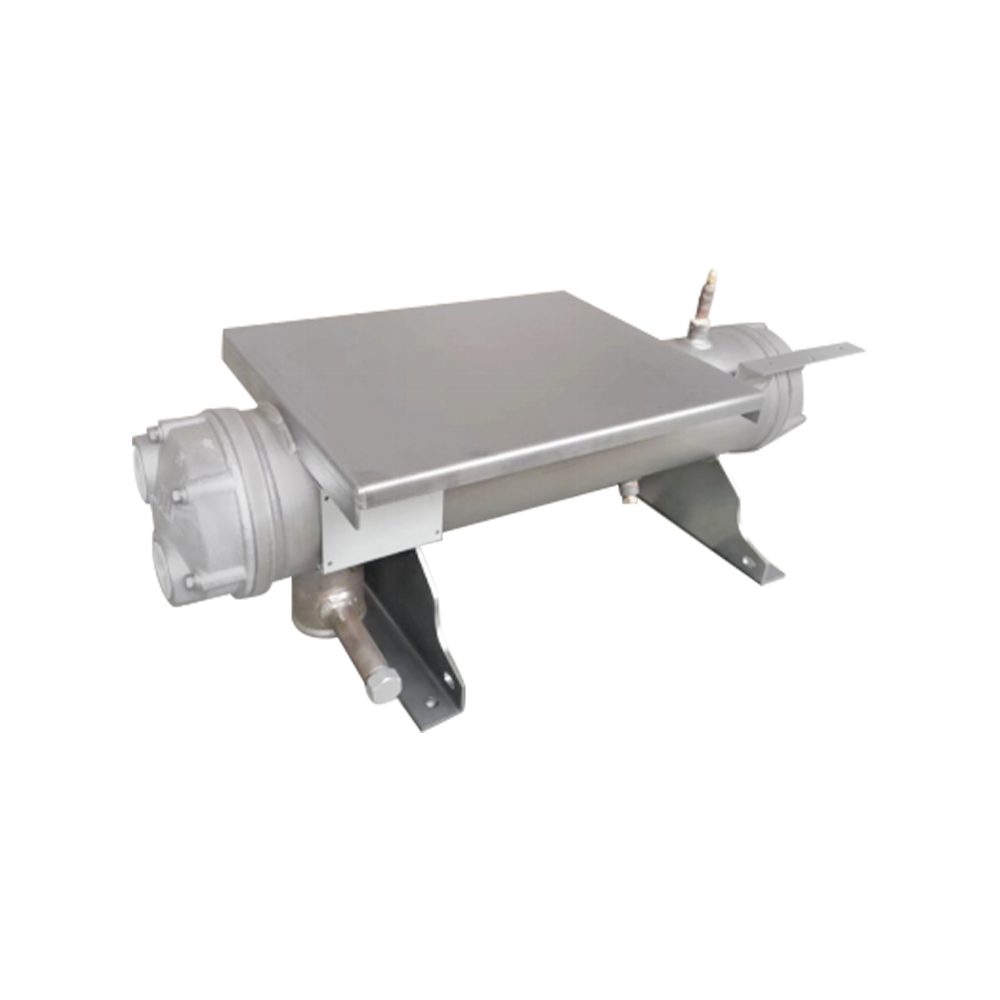
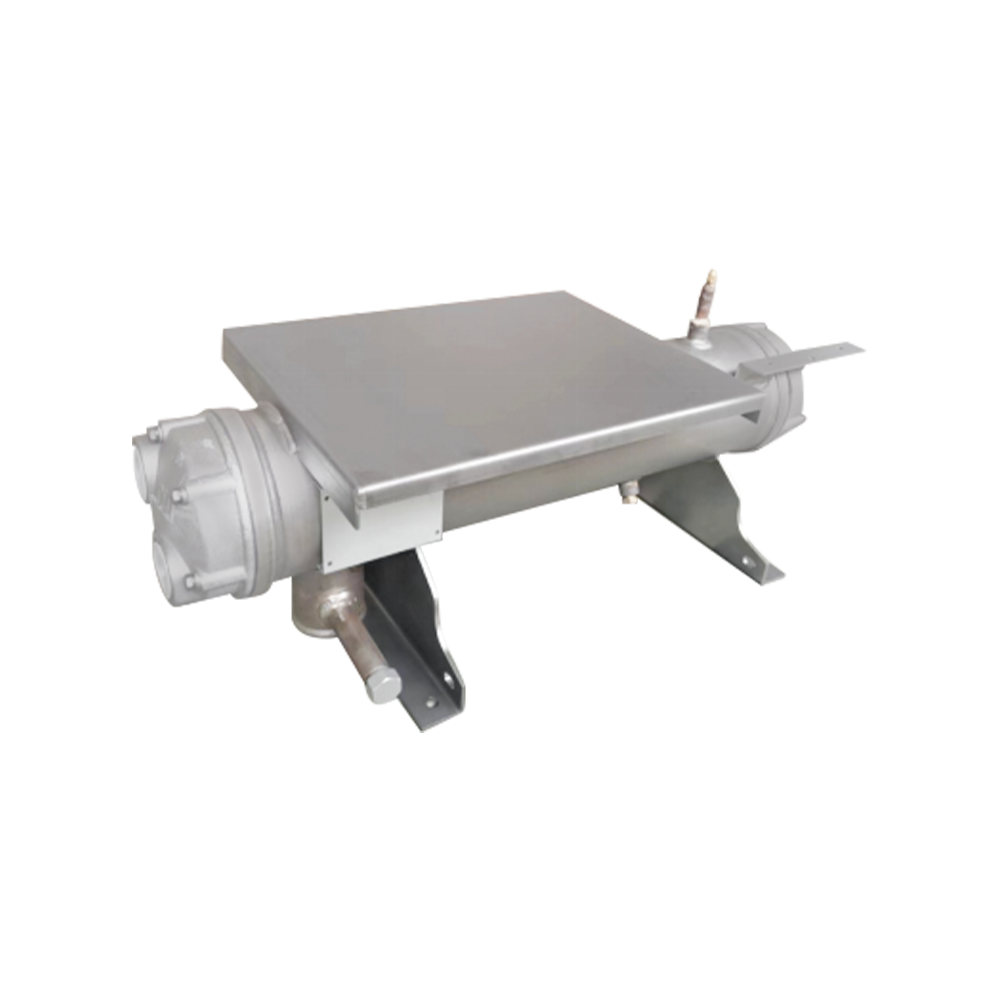 Shell & Tube Water Cooled Condenser SupplierKCWS Series Shell And Tube Water-Cooled Condenser View MoreView Product →
Central chillers reject all the heat they absorb from the building plus the heat equivalent of the compressor work. A 500-ton chiller can reject around 600 tons of heat or more. With an air cooled condenser, that heat must be transferred through a large finned coil using a huge volume of air. The required footprint can be enormous — often covering hundreds of square meters of roof space.
A water cooled condenser, on the other hand, uses a shell and tube vessel that is compact and fully factory assembled. The same 500-ton heat rejection can fit into a vessel that is perhaps 2.5 meters long and 1 meter in diameter. The heat is carried by water through small pipes to a cooling tower, which can be located in a fraction of the roof or ground area. This is the primary reason why central chillers in dense urban buildings are almost always water cooled.
The compact size also means shorter refrigerant lines. Shorter piping reduces pressure drops and refrigerant charge, both of which improve system reliability and efficiency.
Indoor Installation and Minimum Exterior Footprint
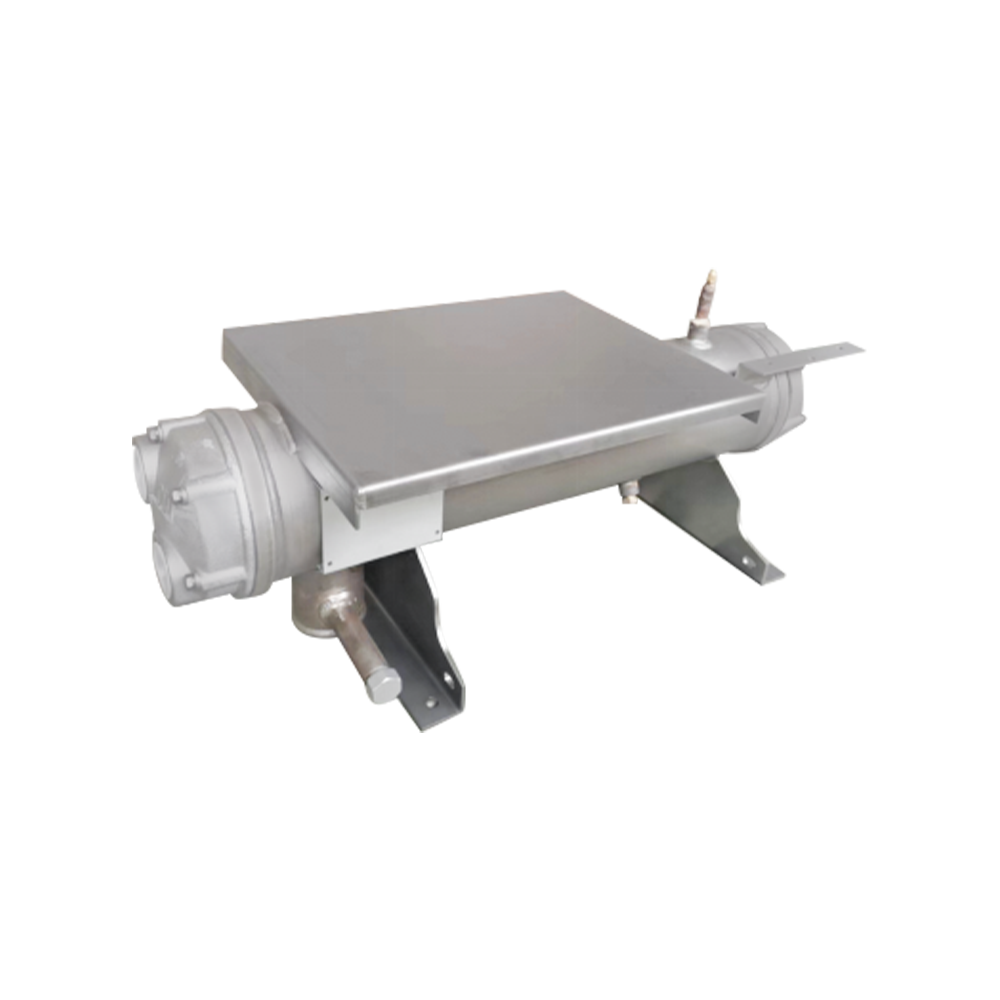 KCWS Series Shell And Tube Water-Cooled CondenserAs an important pressure vessel product of the KCWS series, KCWS always puts quality and safety first. All products have been strictly supervised and inspected by the ...View Product →
With a water cooled central chiller, the condenser can be placed inside the mechanical room, close to the compressor. Only the cooling tower needs to be outdoors. This is a significant advantage for buildings where roof space is limited, where visual appearance matters, or where noise must be contained.
Air cooled condensers require dozens of large fans. Each fan produces noise and vibration that can be annoying to neighboring properties. In many cities, these fans must meet strict sound limitations, and acoustic enclosures add substantial cost. A water cooled condenser produces no fan noise because it relies on a closed water loop. The cooling tower has its own fan, but it is much smaller and can be positioned strategically, often at the base of the building or behind architectural screening.
Refrigerant piping is another consideration. In a water cooled system, the long refrigerant path is eliminated. Instead, water pipes carry the heat. This reduces the risk of refrigerant leaks and improves serviceability. The condenser is a piece of stationary equipment that can be welded, inspected, and repaired without shutting down the whole plant.
Heat Recovery Potential Reduces Overall Building Energy Cost
Water cooled condensers give facility designers an opportunity that air cooled condensers simply cannot match: useful heat recovery. The condenser water leaving a central chiller is typically between 35 and 40°C. This warm water can be routed through a heat exchanger to preheat domestic hot water, supply building heating, or feed industrial process streams.
In a large hospital, for example, the demand for hot water is continuous. A central water cooled chiller can recover 70% to 80% of the heat that would otherwise be rejected to the atmosphere. This recovered heat can reduce the load on boilers and water heaters significantly. The payback on heat recovery equipment is often less than three years.
Even in buildings without an immediate hot water demand, the recovered heat can be stored in a thermal storage tank and used later. Air cooled condensers reject heat directly to the air, making recovery inefficient and impractical. This versatility is another reason why designers choose water cooled condensers for central plants.
Water Cooled vs. Air Cooled Condensers: A Side-by-Side Comparison
| Factor | Water Cooled Condenser | Air Cooled Condenser |
|---|---|---|
| Heat rejection medium | Water via cooling tower | Ambient air |
| Condensing temperature | 35–42°C typical | 45–55°C typical |
| Compressor power | 10–20% lower | Baseline |
| Space requirement | Compact condenser, small tower | Large finned coil, large footprint |
| Noise | Low indoors | High fan noise outdoors |
| Heat recovery | Practical and efficient | Not practical |
| Maintenance | Water treatment, tube cleaning | Coil cleaning, fan maintenance |
| Initial cost | Higher (tower + pumps) | Lower |
| Lifecycle cost | Lower due to energy savings | Higher |
The table shows that although water cooled systems require a higher upfront investment, the energy savings and other operational advantages typically produce a much lower lifecycle cost for central chiller plants.
Capital Cost vs. Operating Cost: Why Water Cooling Wins in Most Central Plants
 Water Cooled Chiller Supplierinformation to be updatedView Product →
It is true that a water cooled condenser system costs more to build than an air cooled system. You need a cooling tower, condenser water pumps, water treatment, and extra piping. These components can add 15% to 25% to the initial mechanical equipment cost. But the operating savings are far more significant.
Let's compare two 500-ton central chillers. The air cooled machine might have a full-load efficiency of 0.65 kW per ton of refrigeration. A comparable water cooled machine with a cooling tower might achieve 0.50 kW per ton. That difference of 0.15 kW per ton is 75 kW at 500 tons. If the chiller runs 3,000 hours per year at 70% load, the energy saving is 75 kW × 0.70 × 3,000 hours = 157,500 kWh. At an electricity price of $0.10 per kWh, the saving is $15,750 per year. The extra installation cost for the water cooled system might be $30,000 to $50,000. That yields a simple payback of two to three years.
With central chiller life expectancies of 20 years or more, the lifecycle cost advantage of water cooling is overwhelming. Even considering the additional maintenance required for water treatment, the net present value is strongly in favor of water cooled condensers.
Typical Applications Where Water Cooled Central Chillers Dominate
The decision to use water cooled condensers is not universal; it depends on the specific project conditions. However, certain application types almost always favor water cooling.
- Large commercial office towers — Roof space is scarce and noise from air cooled fans is a concern.
- Hospitals and healthcare facilities — Continuous cooling loads and simultaneous hot water demands make heat recovery attractive.
- Industrial process cooling — Many processes need coolant temperatures that are hard to achieve with air cooled condensers.
- District cooling plants — The scale of heat rejection dictates water cooling because air cooled systems would require impossible footprint.
- Data centers — High-density heat loads require efficient heat rejection; water cooled chillers with cooling towers are common.
- Cold storage and food processing facilities — Water cooled condensing units are often used in central ammonia or fluorocarbon systems for lower energy consumption.
In each of these cases, the common thread is a large, continuous cooling load where the energy savings of a lower condensing temperature outweigh the cost and complexity of a cooling tower.
FAQ: Water Cooled Condensers in Central System Chillers
Why not use air cooled condensers for all central chillers?
Air cooled condensers are simpler and less expensive upfront. But for capacities above roughly 100 tons, the efficiency penalty and footprint become unacceptable. Water cooling offers a lower condensing temperature and smaller equipment, which makes it the practical choice for large central plants.
Do water cooled condensers always need a cooling tower?
Yes, most water cooled systems that are connected to an open cooling tower need one. Alternatively, an evaporative condenser that combines the function of a condenser and a cooling tower can be used. Both approaches rely on the evaporative cooling effect. In dry climates, a closed-circuit cooling tower can be used to save water, but it is still a water-based system.
Is water treatment a burden for central plant maintenance?
Water treatment is necessary to prevent scale, corrosion, and biological growth in the condenser loop. A simple chemical dosing system and annual tube cleaning are standard practice. The cost is small compared with the energy savings achieved. Most central plants employ an automated water treatment system that monitors pH, conductivity, and biocide levels.
Can a water cooled condenser recover heat for domestic hot water?
Yes. Condenser water at 35–40°C can be passed through a desuperheater or a dedicated heat recovery exchanger to preheat water. Many hospitals and hotels use this approach, cutting boiler fuel consumption by 20–30%.
What is the difference between a shell and tube water cooled condenser and a plate heat exchanger?
Shell and tube condensers are typically used in central chillers because they are robust, easy to clean, and handle high pressure. Plate heat exchangers are more compact but can be more sensitive to fouling. The choice depends on the refrigeration system and serviceability requirements.
Does a water cooled condenser increase the risk of refrigerant leaks?
No. The condenser itself is a pressure vessel, and modern shell and tube condensers are welded and tested. The refrigerant is on the shell side, while water is on the tube side. The main concern is water-side fouling, not refrigerant leaks. Proper water treatment prevents tube corrosion and keeps the refrigerant inside.
The Engineering Verdict: Water Cooled Condensers Win for Central Systems
Central system chillers use water cooled condensers because the physics of water cooling reduces condensing temperature and compressor power in a way that air cooling cannot match. The additional cost of cooling towers and water pumps is justified by the dramatic energy savings over the chiller's life. For high-capacity plants, water cooled condensers are not an option; they are the standard.
When you're planning a central chiller system, water cooled condensers give you a lower pressure ratio, higher COP, smaller equipment spaces, and a path to heat recovery.
Please contact our team if you need help sizing a water cooled condenser or choosing between different series. Also, you can read our article on compression condensing units for cold chain efficiency to learn more about related equipment.