

 English
 中文简体
中文简体Content
- 1 Quick Answer: A Condenser Is Not the Same as an AC Unit
- 2 What Exactly Is a Condensing Unit?
- 3 How the Full Air Conditioning System Works Together
- 4 Condensing Unit vs. AC Unit: Side-by-Side Comparison
- 5 Types of Condensing Units You Will Encounter
- 6 Why Matching the Condensing Unit to the Indoor Coil Matters
- 7 Condensing Unit vs. Packaged Unit: Another Common Confusion
- 8 Common Problems Specific to the Condensing Unit
- 9 How to Size a Condensing Unit Correctly
- 10 What to Tell Your HVAC Technician — And What to Ask
- 11 Condensing Unit Lifespan and When Replacement Makes Sense
Quick Answer: A Condenser Is Not the Same as an AC Unit
No — a condenser is not the same as a full AC unit. This is one of the most common points of confusion among homeowners, and it leads to real problems when buying replacement parts, scheduling service, or describing a system issue to a technician.
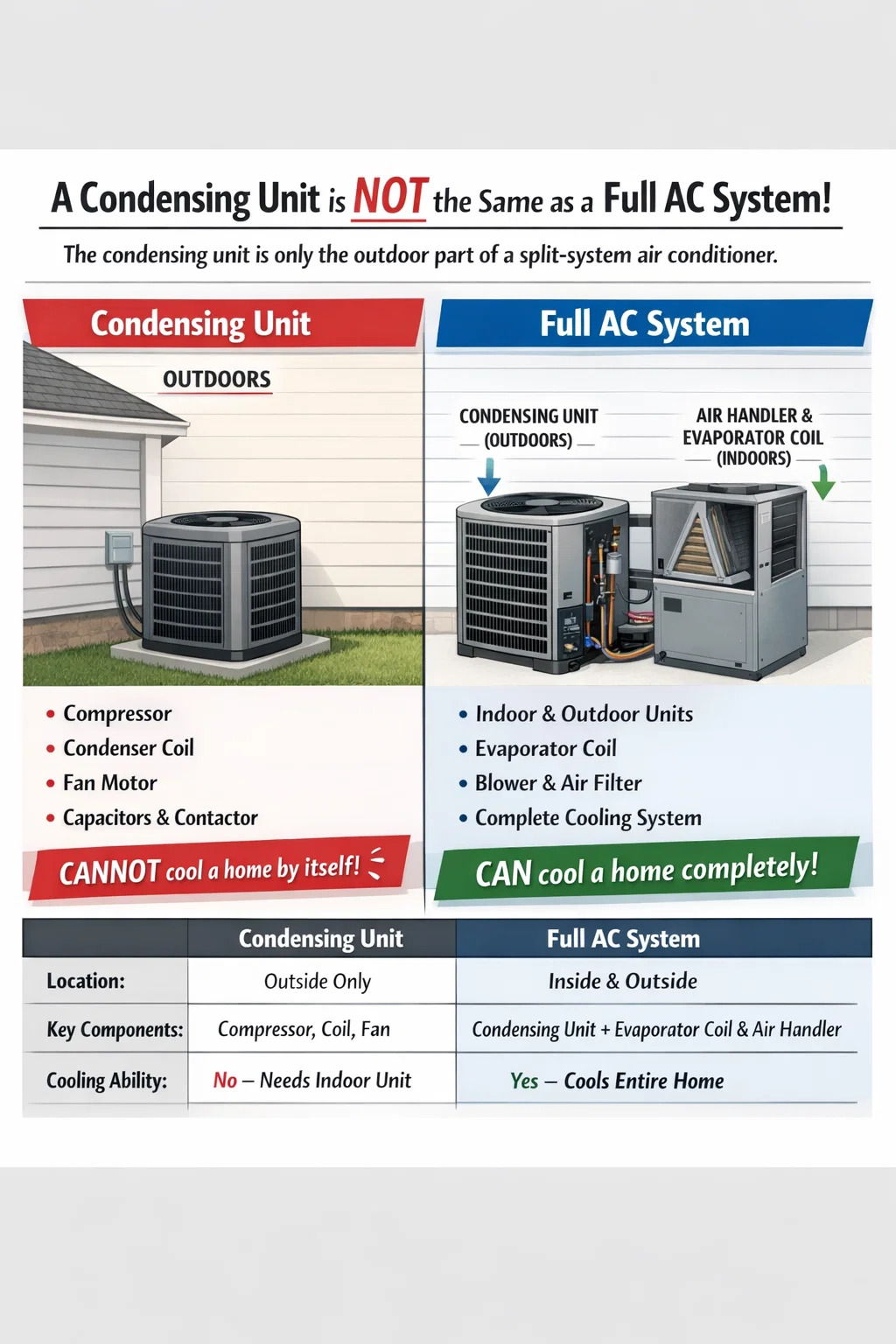
A complete air conditioning system has two main sides: the indoor unit (air handler or evaporator coil) and the outdoor unit (the condensing unit). The condenser — or more precisely, the condensing unit — is the outdoor metal cabinet you see sitting beside your house. It contains the compressor, condenser coil, and fan motor. The indoor side contains the evaporator coil and blower. Together, they form a complete split-system AC.
When people say "AC unit," they often mean the entire system. When HVAC technicians say "condenser" or "condensing unit," they specifically mean the outdoor cabinet. Understanding this distinction saves money, reduces miscommunication, and helps you make better decisions when something breaks down.
What Exactly Is a Condensing Unit?
The condensing unit is the outdoor portion of a split-system air conditioner or heat pump. It earns its name from the process happening inside it: refrigerant vapor that absorbed heat from your home gets compressed and then condensed back into a liquid by releasing that heat outdoors.
Core Components Inside a Condensing Unit
- Compressor: The heart of the system. It pressurizes the refrigerant gas, raising its temperature so it can release heat outside. Compressors typically account for 70–80% of the electrical consumption of the condensing unit.
- Condenser coil: A network of copper or aluminum tubing with fins. Hot refrigerant flows through it, and the outdoor fan blows air across it to carry the heat away.
- Condenser fan motor and blade: Draws air through the coil. Most residential units move between 1,500 and 3,000 CFM of air across the coil.
- Capacitors: Start and run capacitors that help the compressor and fan motor start reliably. Capacitor failure is one of the most common reasons a condensing unit stops working.
- Contactor: An electrical relay that switches the high-voltage circuit on and off when the thermostat calls for cooling.
- Refrigerant lines: The suction line (larger, insulated) and liquid line (smaller) connect the outdoor condensing unit to the indoor evaporator coil.
Notice that the evaporator coil, air handler, blower motor, and air filter are not part of the condensing unit. They live indoors. This is why replacing only the condensing unit does not give you a brand-new AC system — you still have the old evaporator coil and air handler working with it.
How the Full Air Conditioning System Works Together
Understanding why a condensing unit is only part of an AC unit becomes clearer when you trace the refrigeration cycle step by step.
- Evaporation (indoors): Liquid refrigerant enters the evaporator coil at low pressure. It evaporates, absorbing heat from the indoor air flowing across the coil. Your home gets cooler; the refrigerant becomes a warm gas.
- Compression (outdoor condensing unit): The warm refrigerant gas travels through the suction line to the compressor, which pressurizes it to around 200–400 psi depending on the refrigerant type, raising its temperature well above outdoor ambient temperature.
- Condensation (outdoor condensing unit): The hot, high-pressure gas moves through the condenser coil. The fan blows outdoor air across it. The refrigerant releases its heat to the outdoors and condenses back into a liquid.
- Expansion (metering device, typically indoors): The liquid refrigerant passes through a metering device — a TXV (thermostatic expansion valve) or fixed orifice — which drops its pressure and temperature sharply, readying it for the next evaporation cycle.
The condensing unit handles steps 2 and 3 of this four-step cycle. It literally cannot cool your home on its own. Without a properly matched indoor coil and air handler, there is no medium for the refrigerant to absorb indoor heat from in the first place.
Condensing Unit vs. AC Unit: Side-by-Side Comparison
The table below outlines the practical differences between the condensing unit specifically and the full air conditioning system as a whole.
| Feature | Condensing Unit | Full AC System (Split System) |
|---|---|---|
| Location | Outdoors | Indoors + Outdoors |
| Key components | Compressor, condenser coil, fan | Condensing unit + evaporator coil + air handler + metering device |
| Can it cool a home alone? | No | Yes |
| Typical residential cost (replacement) | $1,200 – $3,500 (unit only) | $3,500 – $7,500+ (full system installed) |
| Common failure points | Compressor, capacitor, contactor | All of the above + evaporator coil leaks, blower motor, TXV |
| SEER rating applies to | The matched system, not unit alone | The matched system as tested |
Types of Condensing Units You Will Encounter
Not all condensing units are the same. The type installed in or around your home depends on your climate, building design, and budget. Here are the main categories:
Air-Cooled Condensing Units
By far the most common in residential settings. These use outdoor air to cool the condenser coil. The fan pulls air in through the sides and exhausts it out the top. Virtually every standard home AC system uses an air-cooled condensing unit. They work reliably in temperatures up to about 115°F ambient, though efficiency drops as outdoor temps climb.
Heat Pump Condensing Units
A heat pump condensing unit looks identical to a standard AC condensing unit from the outside. The difference is a reversing valve inside that allows the refrigerant cycle to run backwards in winter, pulling heat from the outdoor air to warm your home. In mild climates, a heat pump can deliver 2–3 units of heat energy for every 1 unit of electrical energy consumed, making it far more efficient than electric resistance heating.
Variable-Speed Condensing Units
Modern high-efficiency condensing units use inverter-driven variable-speed compressors that can modulate their output from around 30% to 100% capacity. Instead of cycling fully on and off, they run continuously at a reduced speed that matches the home's actual cooling load. This results in better humidity control, quieter operation, and SEER2 ratings that can reach 20–26 on premium models, compared to 14–15 SEER2 for basic single-stage units.
Commercial and Industrial Condensing Units
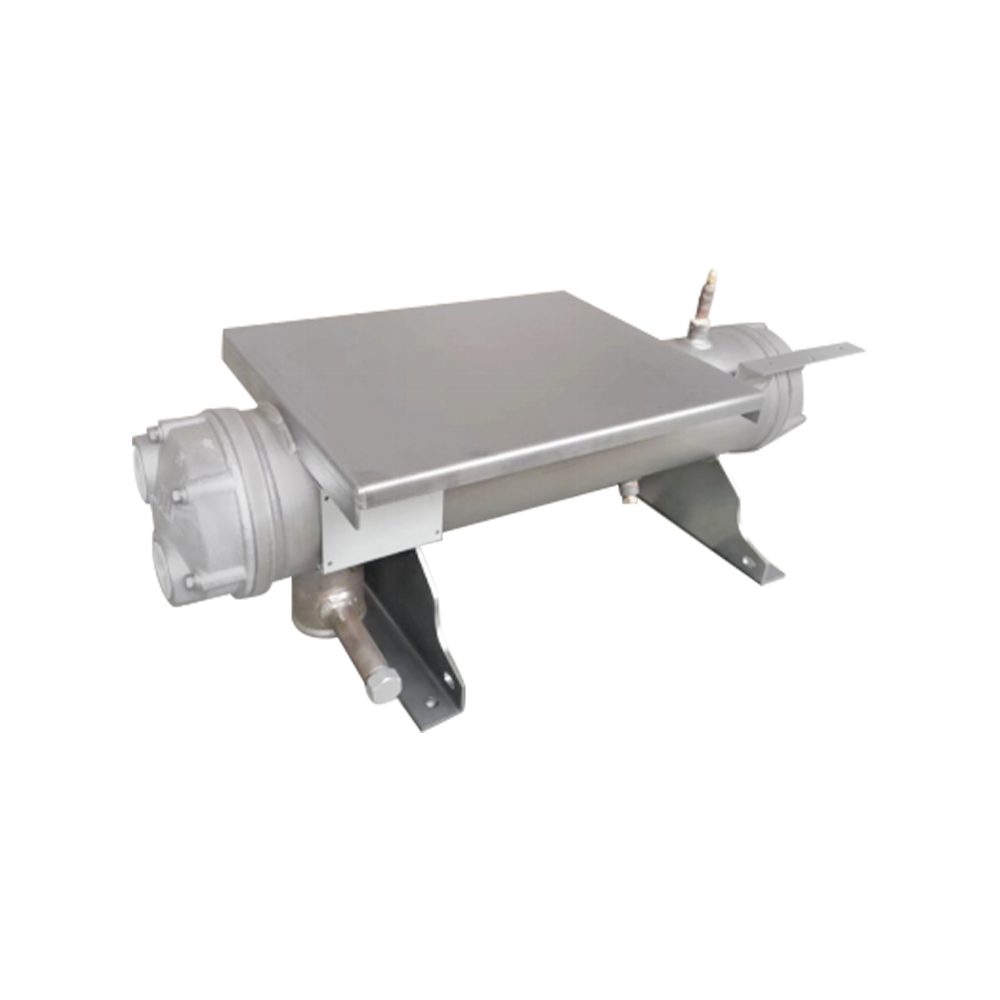
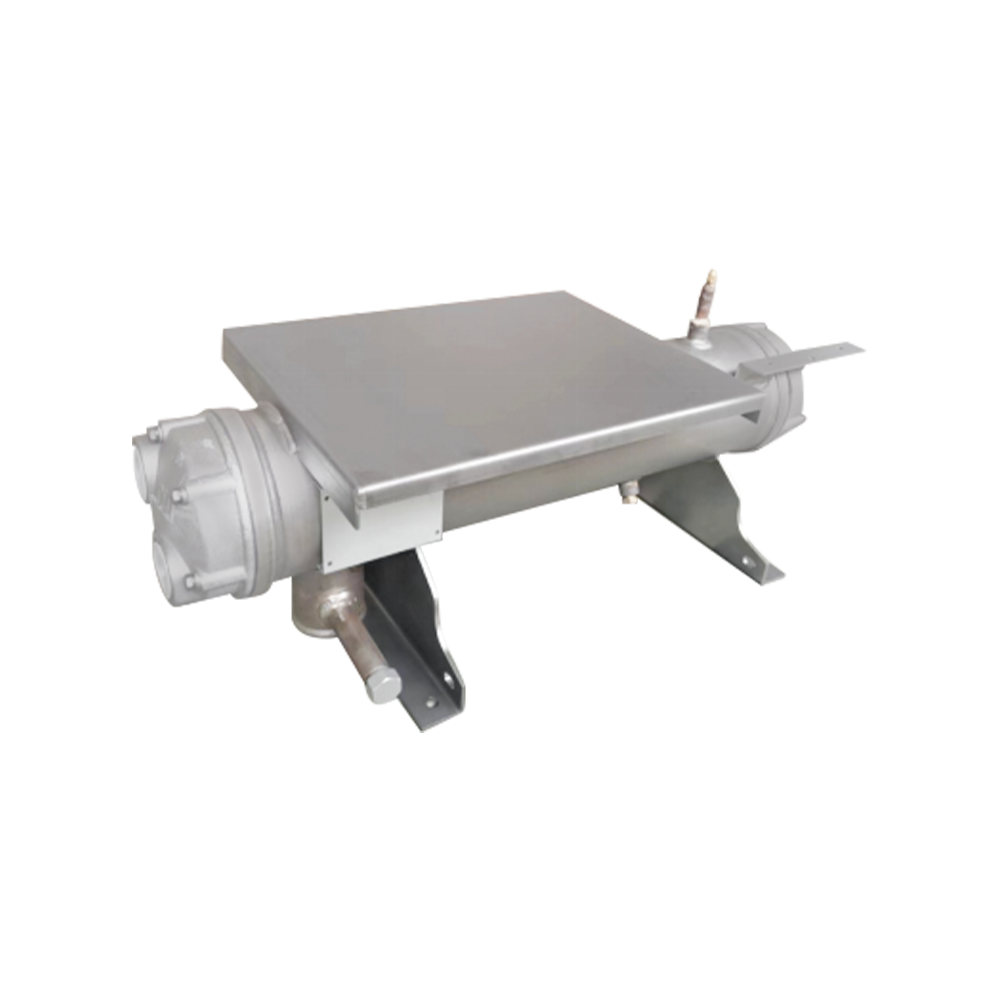
In commercial buildings, condensing units can be much larger — rooftop-mounted, water-cooled, or evaporative. Water-cooled condensing units replace the outdoor fan and coil with a water-based heat exchanger and are typically found in high-rise buildings where rooftop space is limited. They require a cooling tower to reject heat to the atmosphere.
Why Matching the Condensing Unit to the Indoor Coil Matters
One of the most costly mistakes homeowners make is replacing only the outdoor condensing unit while keeping an old, mismatched indoor coil. HVAC manufacturers design and test their systems as matched pairs. When you buy a 3-ton, 18 SEER2 condensing unit and pair it with a 15-year-old indoor coil from a different manufacturer, here is what actually happens:
- Efficiency drops significantly. The SEER2 rating on the nameplate was tested with a specific matched indoor coil. A mismatched coil can reduce real-world efficiency by 15–25%, erasing the financial case for a high-efficiency upgrade.
- Refrigerant charge becomes harder to set correctly. The metering device sizing and coil surface area affect how much refrigerant the system needs. Wrong sizing leads to either flooding the compressor or starving the coil.
- Warranty may be voided. Many manufacturers require a fully matched system installation to honor the extended 10-year parts warranty.
- Refrigerant compatibility issues. Older indoor coils designed for R-22 are not compatible with modern R-410A or R-454B condensing units without modification.
The AHRI (Air-Conditioning, Heating, and Refrigeration Institute) maintains a certified ratings directory where you can verify matched system combinations. When a contractor quotes you a new condensing unit, always ask which indoor coil it is matched with and confirm the pairing in the AHRI database.
Condensing Unit vs. Packaged Unit: Another Common Confusion
Beyond split systems, there is another configuration called a packaged unit (also called a packaged AC or self-contained unit). In a packaged system, the compressor, condenser coil, evaporator coil, and air handler are all housed in a single outdoor cabinet, typically installed on the roof or on a concrete slab beside the house.
Packaged units are common in the American Southwest and in commercial buildings. They are simpler to install because all refrigerant components are in one box — no refrigerant line set running through the house — but they tend to be less energy-efficient than split systems and more exposed to weather-related wear.
In a packaged unit, there is technically no separate "condensing unit" in the split-system sense. The term condensing unit specifically describes the outdoor section of a split system. Calling a packaged AC unit a "condensing unit" is technically incorrect, though some in the trades use the terms loosely.
Common Problems Specific to the Condensing Unit
Because the condensing unit sits outdoors, it faces environmental stresses that indoor components do not. Knowing the most frequent failure points helps you respond faster and avoid unnecessary full-system replacement quotes.
Capacitor Failure
Run and start capacitors degrade with heat cycling over time. A failed run capacitor is the single most common reason a condensing unit hums but will not start. Capacitor replacement typically costs $75–$200 for parts and labor — one of the least expensive repairs on the system. Many homeowners have this component fail every 5–8 years in hot climates.
Contactor Wear
The contactor switches high-voltage power to the compressor and condenser fan. Over time, the contact points pit and burn. A worn contactor may cause the unit to not respond to the thermostat at all, or to run continuously even when the thermostat is off. Replacement costs are similar to a capacitor — usually under $200 installed.
Dirty Condenser Coil
The condenser coil is exposed to cottonwood seeds, grass clippings, dirt, and pet hair year-round. A clogged coil restricts airflow, forcing the compressor to work harder at higher temperatures. Studies show a coil fouled with just 0.042 inches of debris can reduce heat transfer efficiency by up to 21%, increasing energy consumption and shortening compressor life. Annual coil cleaning is worthwhile maintenance.
Refrigerant Leaks
Refrigerant does not "run out" during normal operation — systems are sealed. If refrigerant is low, there is a leak somewhere in the system. Leaks can occur at the Schrader valves on the condensing unit, at the flare connections where the line set meets the unit, or in the coils themselves. Simply adding refrigerant without finding and repairing the leak is a temporary fix that leads to repeat service calls.
Compressor Failure
When a compressor fails on a condensing unit that is 10–15 years old, the repair-versus-replace calculation often tips toward replacing the full system. A compressor replacement on an older R-22 system can cost $1,500–$2,800 for the compressor alone, while R-22 refrigerant has become extremely expensive (often $50–$150 per pound) due to its phaseout. At that point, a new matched system with a manufacturer warranty frequently makes more financial sense.
How to Size a Condensing Unit Correctly
Condensing units are sized in tons of cooling capacity, where one ton equals 12,000 BTU/hr of heat removal. Residential units typically range from 1.5 tons to 5 tons. The most common size for a standard 2,000 sq ft home in a moderate climate is 3 tons, but that number depends heavily on local design conditions, insulation levels, window area, ceiling height, and occupancy.
Proper sizing requires a Manual J load calculation, not a rule-of-thumb square footage estimate. Oversized condensing units short-cycle, meaning they reach thermostat setpoint quickly without running long enough to dehumidify the air. This leaves homes feeling clammy even at 72°F. Undersized units run continuously on the hottest days and never quite catch up. Both scenarios waste energy and accelerate wear.
A properly done Manual J calculation typically takes 1–2 hours for a technician using software like Wrightsoft or Elite RHVAC and costs nothing when included as part of a system quote from a reputable contractor. Be cautious of any installer who quotes a replacement condensing unit based solely on the tonnage of what was previously installed without performing any load analysis.
What to Tell Your HVAC Technician — And What to Ask
Now that you understand the difference between the condensing unit and the full AC system, here is how to apply that knowledge in a real service or replacement conversation:
- Be specific about what stopped working. "The outdoor unit isn't coming on" is more useful than "my AC isn't working." It helps the tech prioritize diagnostic steps before arriving.
- Know the model number of your existing condensing unit. It is on the nameplate label on the outdoor cabinet. This tells the tech the refrigerant type, tonnage, voltage, and age at a glance.
- Ask whether the proposed condensing unit is AHRI-matched with your indoor coil. If replacing only the outdoor unit, this question alone can prevent a costly mismatch.
- Ask about the refrigerant type. As of January 1, 2025, new residential AC equipment in the US must use A2L refrigerants such as R-454B or R-32 instead of R-410A, per new EPA regulations under AIM Act Section 2205. Make sure a new condensing unit uses a current refrigerant with a long supply future.
- Request the SEER2 rating of the matched system, not just the condensing unit spec sheet. The condensing unit alone does not have a standalone efficiency rating that applies in real installation conditions.
Condensing Unit Lifespan and When Replacement Makes Sense
A well-maintained condensing unit in a moderate climate typically lasts 15–20 years. In hot, humid climates like Florida or Texas, or in areas with hard water causing coil corrosion, 12–15 years is more realistic. Coastal environments with salt air exposure can shorten that further to 10–12 years without protective coil coatings.
The general industry guideline is: if the repair cost exceeds 50% of the replacement cost, and the unit is more than 10 years old, replacement is usually the smarter financial move. For example, if a new condensing unit costs $2,500 installed and your current 13-year-old unit needs a $1,400 compressor, the numbers favor replacement — especially since you would be getting a unit with modern efficiency ratings, a new warranty, and compatibility with current refrigerants.
The federal government's 25C tax credit (part of the Inflation Reduction Act) provides up to $600 toward the cost of a qualifying high-efficiency central air conditioning system. Some state and utility rebate programs stack on top of this. For a system meeting the efficiency thresholds (SEER2 ≥16 for split systems in most climate zones), these incentives can meaningfully offset the investment in a replacement condensing unit and matched indoor coil.