

 English
 中文简体
中文简体Content
- 1 How the Compressor Fits Into the Full Refrigeration Cycle
- 2 What the Compressor Actually Does to Refrigerant
- 3 Types of Compressors Used in Refrigeration Systems
- 4 The Compressor's Role Inside the Condensing Unit
- 5 How Compressor Performance Affects System Efficiency
- 6 Common Compressor Problems and What They Mean for the System
- 7 Protecting the Compressor: Maintenance Practices That Matter
- 8 Compressor Sizing and Matching With the Condensing Unit
- 9 Variable-Speed Compressors in Modern Condensing Units
- 10 Reading Compressor Diagnostics: Pressures, Temperatures, and Amperage
- 11 When to Replace vs. Repair a Compressor in a Condensing Unit
The compressor is the heart of any refrigeration system. Its primary job is to compress low-pressure refrigerant vapor into high-pressure, high-temperature vapor, which then flows to the condensing unit where heat is rejected to the surrounding environment. Without a functioning compressor, the entire refrigeration cycle stops — no cooling, no heat transfer, no temperature control.
In practical terms, the compressor acts as the pump that keeps refrigerant circulating through the system. It takes in the low-pressure vapor returning from the evaporator, raises its pressure and temperature significantly, and pushes it toward the condenser coil inside the condensing unit. This pressure difference is what drives refrigerant movement and enables the entire thermodynamic cycle to function continuously.
How the Compressor Fits Into the Full Refrigeration Cycle
Refrigeration works on a vapor-compression cycle involving four key components: the compressor, the condenser, the expansion valve, and the evaporator. Each plays a distinct role, but the compressor initiates and sustains the cycle by creating the pressure differential that everything else depends on.
Here is how the cycle flows step by step:
- Refrigerant enters the evaporator as a low-pressure liquid and absorbs heat from the refrigerated space, evaporating into a vapor.
- This low-pressure vapor travels to the compressor, which compresses it — raising both pressure and temperature dramatically.
- The high-pressure, hot vapor enters the condensing unit, where the condenser coil and fan reject heat to the outside air, causing the refrigerant to condense back into a liquid.
- The high-pressure liquid passes through the expansion valve, dropping in pressure and temperature before entering the evaporator again.
The compressor is the only component in this loop that adds energy to the refrigerant. Every other stage either transfers heat passively or uses pressure mechanics. That is why compressor efficiency directly determines the overall energy consumption of the entire system.
What the Compressor Actually Does to Refrigerant
When refrigerant vapor enters the compressor at suction pressure — typically between 10 PSI and 70 PSI depending on the refrigerant type and application — the compressor mechanically reduces the volume of that vapor. According to gas laws, reducing volume while keeping mass constant raises pressure. The compressor raises discharge pressure to anywhere from 100 PSI to over 400 PSI in high-temperature applications.
Along with pressure, temperature rises sharply. A refrigerant vapor that enters the compressor at perhaps 20°F (−7°C) can exit at discharge temperatures exceeding 150°F (65°C) or higher. This hot, pressurized vapor is exactly what the condensing unit needs to effectively dump heat into the ambient air.
This is why the relationship between the compressor and the condensing unit is inseparable. The condensing unit — which houses the compressor, condenser coil, condenser fan, and associated controls — relies on the compressor to deliver refrigerant at the right pressure and temperature for condensation to happen efficiently.
Types of Compressors Used in Refrigeration Systems
Not all compressors operate the same way. The type used in a condensing unit significantly impacts performance, noise level, maintenance requirements, and application suitability.
Reciprocating Compressors
These use pistons driven by a crankshaft to compress refrigerant. They are highly versatile, handling a wide range of pressures and refrigerants. Common in commercial refrigeration condensing units from 1 HP to 15 HP, reciprocating compressors are durable but can be noisy and require periodic valve maintenance.
Scroll Compressors
Scroll compressors use two interlocking spiral-shaped scrolls to compress refrigerant. One scroll remains stationary while the other orbits, progressively reducing the gas volume. They are quieter, more efficient, and have fewer moving parts than reciprocating types. Most modern residential and light commercial condensing units use scroll compressors. Efficiency ratings (EER) for scroll-based systems are often 10–15% higher than equivalent reciprocating models.
Rotary Compressors
Rotary compressors use a rolling piston inside a cylinder to compress refrigerant. They are compact, lightweight, and commonly found in small refrigeration units and window air conditioners. Their simple design results in low vibration and quiet operation, though they are best suited for smaller capacity applications under 2 HP.
Screw Compressors
Screw compressors use twin helical rotors to compress refrigerant continuously. They are designed for large commercial and industrial refrigeration applications, typically ranging from 20 HP to several hundred HP. Found in large condensing units used in cold storage warehouses, food processing plants, and industrial chillers, screw compressors deliver consistent performance and can be capacity-modulated easily.
Centrifugal Compressors
Used in very large-scale chiller systems, centrifugal compressors rely on high-speed rotating impellers to accelerate refrigerant vapor and convert velocity into pressure. They are most efficient at high loads and are typically used in systems exceeding 200 tons of cooling capacity.
| Compressor Type | Typical Capacity | Common Applications | Key Advantage |
|---|---|---|---|
| Reciprocating | 1–15 HP | Commercial refrigeration | Versatility across pressures |
| Scroll | 1–20 HP | Residential & light commercial | Quiet, efficient operation |
| Rotary | Under 2 HP | Small units, window AC | Compact, low vibration |
| Screw | 20–500+ HP | Industrial cold storage | Capacity modulation |
| Centrifugal | 200+ tons | Large chiller plants | High efficiency at full load |
The Compressor's Role Inside the Condensing Unit
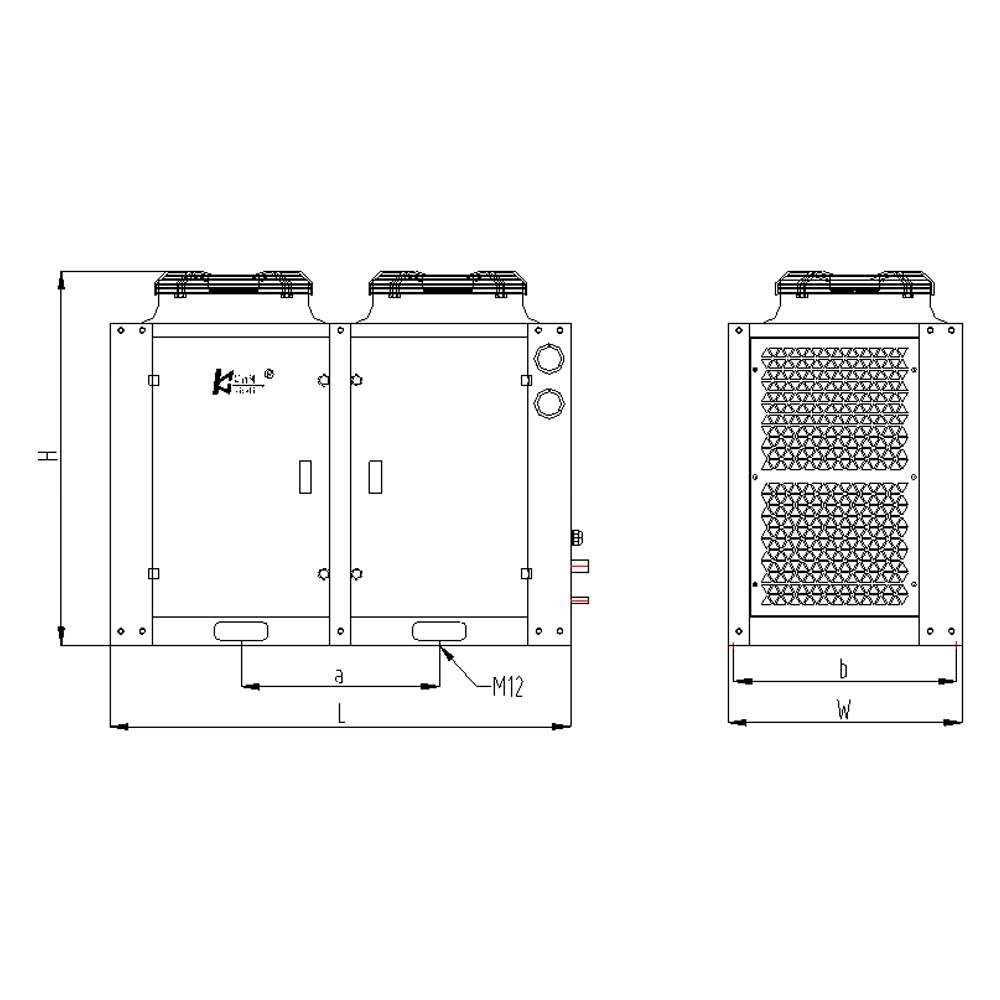
A condensing unit is a self-contained assembly that typically includes the compressor, condenser coil, condenser fan motor, fan blade, refrigerant lines, electrical controls, and a protective cabinet. The compressor is mounted inside this unit — usually at the base — and is the component that consumes the most electrical energy.
In a standard air-cooled condensing unit, the compressor pressurizes the refrigerant and sends it directly into the condenser coil, which is positioned so the condenser fan can draw or push ambient air across it. The efficiency of heat rejection at the condenser coil depends directly on the compressor delivering refrigerant at the correct discharge pressure.
If the compressor under-performs — due to worn valve plates, refrigerant leaks, or electrical faults — the condensing unit as a whole loses its ability to reject heat adequately. This causes the system's saturated condensing temperature to rise, increasing head pressure, reducing efficiency, and eventually leading to system lockout on high-pressure safety controls.
The compressor accounts for roughly 70–90% of the total electrical energy consumed by a condensing unit during normal operation. This makes it the single most important component to maintain and protect.
How Compressor Performance Affects System Efficiency
Compressor efficiency is measured by Coefficient of Performance (COP) and Energy Efficiency Ratio (EER). A higher COP means more cooling output per unit of electrical energy consumed. Modern high-efficiency scroll compressors used in commercial condensing units can achieve COPs of 3.5 to 5.0, meaning they deliver 3.5 to 5 units of cooling energy for every 1 unit of electrical energy input.
Several factors affect how efficiently the compressor does its job:
- Compression ratio: The ratio of discharge pressure to suction pressure. Higher ratios mean the compressor works harder, consuming more energy. Keeping condensing temperatures low (by maintaining clean condenser coils) reduces the compression ratio and improves efficiency.
- Suction superheat: Refrigerant entering the compressor should be slightly superheated (5–10°F / 3–6°C above saturated vapor temperature) to prevent liquid slugging, which can destroy valve components.
- Ambient temperature: As outdoor temperature rises, the condensing unit must work against a higher ambient, increasing head pressure and reducing compressor efficiency. At 95°F (35°C) ambient, a typical condensing unit may consume 15–25% more energy than at 70°F (21°C).
- Refrigerant charge: An overcharged or undercharged system forces the compressor to operate outside its designed pressure range, reducing efficiency and risking mechanical damage.
- Motor efficiency: Variable-speed (inverter-driven) compressors can modulate capacity from as low as 20% to 100%, matching actual load demand and avoiding the energy waste of on/off cycling.
Common Compressor Problems and What They Mean for the System
When the compressor develops problems, the symptoms often show up across the entire refrigeration system — not just at the compressor itself. Understanding these failure modes helps diagnose problems before they result in complete compressor burnout, which is one of the most expensive repairs in any condensing unit.
Valve Failure
In reciprocating compressors, suction and discharge valves can crack or warp from liquid slugging or age. A faulty valve reduces the compressor's ability to maintain pressure differential, resulting in low discharge pressure and poor cooling capacity despite the compressor running. Amperage draw typically drops below the nameplate rating.
Electrical Burnout
Winding failures occur when motor insulation breaks down due to overheating, voltage imbalance, or moisture contamination. A burned-out compressor releases acid into the refrigerant circuit, which must be removed with suction line filter-driers before installing a replacement. Electrical burnout accounts for a significant portion of compressor failures — industry data suggests up to 30–40% of compressor failures have an electrical origin.
Liquid Slugging
If liquid refrigerant or oil enters the compressor's compression chamber, it cannot be compressed (liquids are incompressible) and the resulting hydraulic shock can crack pistons, bend connecting rods, or damage scroll wraps. This happens when the system is overcharged, the expansion valve fails open, or the evaporator gets too cold and refrigerant migrates back to the compressor during the off cycle.
Overheating
Compressors rely on returning refrigerant vapor to carry heat away from the motor windings. If the suction line superheat is too high — say, above 65°F (36°C) at the compressor inlet — the refrigerant is not dense enough to cool the motor effectively, leading to overheating and eventual winding failure. This often results from undersized suction lines, excessive system load, or low refrigerant charge.
Bearing Wear
Oil-lubricated compressors depend on proper oil circulation to keep bearings lubricated. Low refrigerant charge, refrigerant migration diluting the oil, or the wrong oil viscosity can lead to accelerated bearing wear. The result is increased mechanical noise (knocking or grinding sounds from the condensing unit) and eventual mechanical seizure.
Protecting the Compressor: Maintenance Practices That Matter
Because the compressor is both the most critical and typically the most expensive component in a condensing unit, protecting it through proper maintenance and system management is essential. The following practices directly extend compressor service life.
- Keep condenser coils clean: Dirty coils in the condensing unit raise head pressure, forcing the compressor to work harder. Coils should be cleaned at least twice a year in commercial applications, more often in dusty or high-debris environments. A 10°F (6°C) rise in condensing temperature can reduce compressor efficiency by 5–8% and shorten service life.
- Maintain correct refrigerant charge: Check and verify refrigerant charge using subcooling and superheat measurements. An undercharge of just 10% can reduce system capacity by 20% and cause compressor overheating.
- Monitor operating pressures regularly: Abnormal suction or discharge pressures are early indicators of developing problems. Log pressures during each service visit and compare trends over time.
- Verify electrical supply quality: Voltage imbalance of more than 2% between phases in a three-phase compressor can cause current imbalance of up to 10 times that percentage, significantly increasing motor heat and shortening winding insulation life.
- Install crankcase heaters: For systems exposed to low ambient temperatures, crankcase heaters prevent refrigerant migration into compressor oil during the off cycle, protecting against liquid slugging on startup.
- Check capacitors and contactors: Start and run capacitors directly affect compressor motor starting and running characteristics. Weak capacitors cause hard starts that stress compressor windings. Contactors should be inspected for pitting and replaced before they cause intermittent connection issues.
Compressor Sizing and Matching With the Condensing Unit
Selecting the right compressor size is one of the most important decisions in refrigeration system design. An oversized compressor short-cycles — turning on and off too frequently — which causes temperature swings, excessive wear, and inefficient operation. An undersized compressor runs continuously, cannot achieve set point temperatures, and operates at elevated discharge temperatures that shorten its life.
Compressor sizing is expressed in horsepower (HP) or tons of refrigeration (TR), where 1 ton of refrigeration equals 12,000 BTU/hr of cooling capacity. Proper sizing requires calculating the total heat load of the refrigerated space, accounting for:
- Transmission load (heat entering through walls, floors, and ceilings)
- Infiltration load (warm air entering through door openings)
- Product load (heat that must be removed from stored products)
- Internal loads (lighting, motors, people inside the space)
- Pull-down load (the additional capacity needed to bring a warm space down to set point initially)
The condensing unit selected must contain a compressor rated to handle this total load at the expected operating conditions — specifically at the design suction temperature (related to the evaporating temperature) and design condensing temperature (related to ambient temperature plus condenser coil approach temperature).
Most compressor and condensing unit manufacturers publish performance tables that show capacity at various suction temperatures and condensing temperatures. Always select based on actual operating conditions, not just nameplate ratings, which are typically given at standard ARI test conditions that may not match real-world application.
Variable-Speed Compressors in Modern Condensing Units
Traditional compressors operate at a fixed speed — they are either fully on or fully off. This binary operation means the system is always running at full capacity when on, regardless of whether full capacity is needed. Modern condensing units increasingly use inverter-driven, variable-speed compressors that adjust their speed continuously to match the actual cooling demand.
The energy savings can be substantial. When a refrigeration system only needs 60% of its rated capacity, a variable-speed compressor running at reduced speed consumes significantly less energy than a fixed-speed compressor cycling on and off. Studies have shown that variable-speed condensing units can reduce compressor energy consumption by 30–50% in applications with variable load profiles compared to fixed-speed equivalents.
Additional benefits of variable-speed compressors include:
- More stable refrigerated space temperatures due to modulating capacity instead of temperature swing from on/off cycling
- Reduced mechanical wear from eliminating frequent start/stop cycles
- Lower peak current draw at startup, reducing demand charges on utility bills
- Better humidity control in precision cooling applications
Variable-speed compressors do come with a higher initial cost and more complex electronic controls, but the operating savings in commercial applications typically deliver payback periods of 2–4 years depending on hours of operation and local electricity costs.
Reading Compressor Diagnostics: Pressures, Temperatures, and Amperage
For technicians and facility managers, understanding what normal compressor operating parameters look like makes diagnosing problems far more straightforward. Three measurements are essential: suction pressure, discharge pressure, and amperage draw.
Suction Pressure
Suction pressure corresponds to the evaporating temperature. For a medium-temperature refrigeration application using R-404A with a box temperature of 35°F (2°C), suction pressure should typically be around 45–55 PSI, corresponding to an evaporating temperature of approximately 20–25°F (−7 to −4°C). Low suction pressure usually indicates low refrigerant charge, a restricted metering device, or an oversized compressor. High suction pressure may indicate a refrigerant overcharge, high product load, or failing compressor valves.
Discharge Pressure
Discharge pressure reflects the condensing temperature inside the condensing unit's condenser coil. For R-404A at a 95°F (35°C) ambient with a properly clean condenser, discharge pressure should be roughly 250–280 PSI. Elevated discharge pressure (above 300 PSI in this scenario) points to dirty condenser coils, inadequate airflow around the condensing unit, refrigerant overcharge, or non-condensable gases in the system.
Amperage Draw
Comparing measured amperage to the compressor's nameplate RLA (Rated Load Amperage) is a quick health check. Amperage significantly above RLA indicates the compressor is working too hard — usually from high discharge pressure or mechanical issues. Amperage well below RLA suggests low suction pressure or failing discharge valves that reduce the effective compression work.
When to Replace vs. Repair a Compressor in a Condensing Unit
Compressor replacement is expensive — typically ranging from $500 to $3,000 or more for the compressor alone, plus labor. The decision to replace versus repair (or replace the entire condensing unit) depends on several factors.
- Age of the condensing unit: If the unit is more than 10–12 years old, replacing just the compressor may not make economic sense. Other components such as the condenser coil, fan motor, and controls are also aging and may fail soon after compressor replacement.
- Type of failure: A mechanical failure (broken valve, worn bearings) that has not contaminated the refrigerant circuit may justify compressor-only replacement in a newer unit. An electrical burnout that has spread acid throughout the system requires thorough cleanup and often makes full unit replacement more practical.
- Refrigerant type: Units using phased-out refrigerants such as R-22 or R-404A may be better replaced entirely with newer, higher-efficiency condensing units running on lower-GWP refrigerants like R-448A or R-454C, avoiding ongoing supply and compliance costs.
- Root cause identification: Before replacing any compressor, the underlying cause of failure must be identified and corrected. Installing a new compressor into a system with the same underlying problem — dirty condenser coils, improper refrigerant charge, voltage issues — guarantees the replacement will fail prematurely as well.