

 English
 中文简体
中文简体Content
- 1 The Short Answer: How a Water Source Heat Pump Moves Heat
- 2 The Four Components That Do the Work
- 3 Heating Mode and Cooling Mode: The Same Cycle in Reverse
- 4 Closed-Loop, Open-Loop and Building Loops: Where Does the Water Come From?
- 5 Why Water Beats Air: WSHP vs Air-Source Heat Pump
- 6 Efficiency in Numbers: COP, EER and What to Expect
- 7 Five Design Considerations That Decide Real-World Performance
- 8 Matching the Water Loop with the Right Refrigeration Equipment
- 9 Frequently Asked Questions About Water Source Heat Pumps
- 9.1 Do water source heat pumps work in cold climates?
- 9.2 Is a water source heat pump the same as a geothermal heat pump?
- 9.3 Can one water loop heat and cool different zones at the same time?
- 9.4 What maintenance does a water source heat pump need?
- 9.5 How long does a water source heat pump last?
- 9.6 How do I choose between water-to-water and water-to-air?
- 10 The Bottom Line
Picture a four-storey office building in Guangzhou in July. The cooling load is climbing, every floor needs cool air, and yet the roof stays quiet — no condenser fans hammering away. What makes this possible is a loop of water moving quietly through the building. Inside each floor plant room, a water source heat pump (WSHP) does the same work as an air conditioner, but with one crucial difference: it exchanges heat with water, not with the outdoor air.
The direct answer: a water source heat pump is a refrigeration machine that absorbs heat from a piped water loop in heating mode, or rejects heat into that same loop in cooling mode. It moves heat from one place to another instead of creating it. Because the water loop stays at a far more stable temperature than outdoor air, the compressor does less work and the unit delivers more useful heating or cooling for every kilowatt of electricity it consumes.
The Short Answer: How a Water Source Heat Pump Moves Heat
All heat pumps, including WSHPs, run on the same four-step refrigeration cycle: evaporate, compress, condense, expand. In heating mode, cold liquid refrigerant enters the water-side heat exchanger, absorbs heat from the water, and boils into a low-pressure vapor. The compressor pulls that vapor in and raises its pressure and temperature. Hot, high-pressure gas then flows to the indoor coil, where it condenses back into liquid and releases heat into the room air or into a hydronic heating system. A thermal expansion valve meters the liquid back into the evaporator, and the cycle repeats.
In cooling mode, a four-way reversing valve flips the flow. The indoor coil becomes the evaporator and absorbs heat from the room, while the water-side heat exchanger becomes the condenser and dumps that heat into the water loop. The result is that one machine can deliver both heating and cooling using a single water circuit.
The Four Components That Do the Work
The compressor
The compressor is the heart of the system. It raises refrigerant pressure and temperature so that heat can be released at a useful temperature on the indoor side. Small packaged WSHPs typically use rotary or scroll compressors; larger commercial systems use screw compressors or multi-compressor parallel arrangements. A scroll compressor has fewer moving parts than a reciprocating type and handles partial loads well, which is why scroll units dominate packaged WSHPs. In large plants, screw compressors provide high reliability and good efficiency under continuous duty.
The four-way reversing valve
The reversing valve is what makes a heat pump different from an ordinary air conditioner. When the valve shifts, the refrigerant flow direction reverses, swapping the duties of the evaporator and condenser. A small solenoid pilot moves the main spool. In heating mode, hot gas is routed to the indoor coil; in cooling mode, hot gas is routed to the water-side heat exchanger.
The refrigerant-to-water heat exchanger
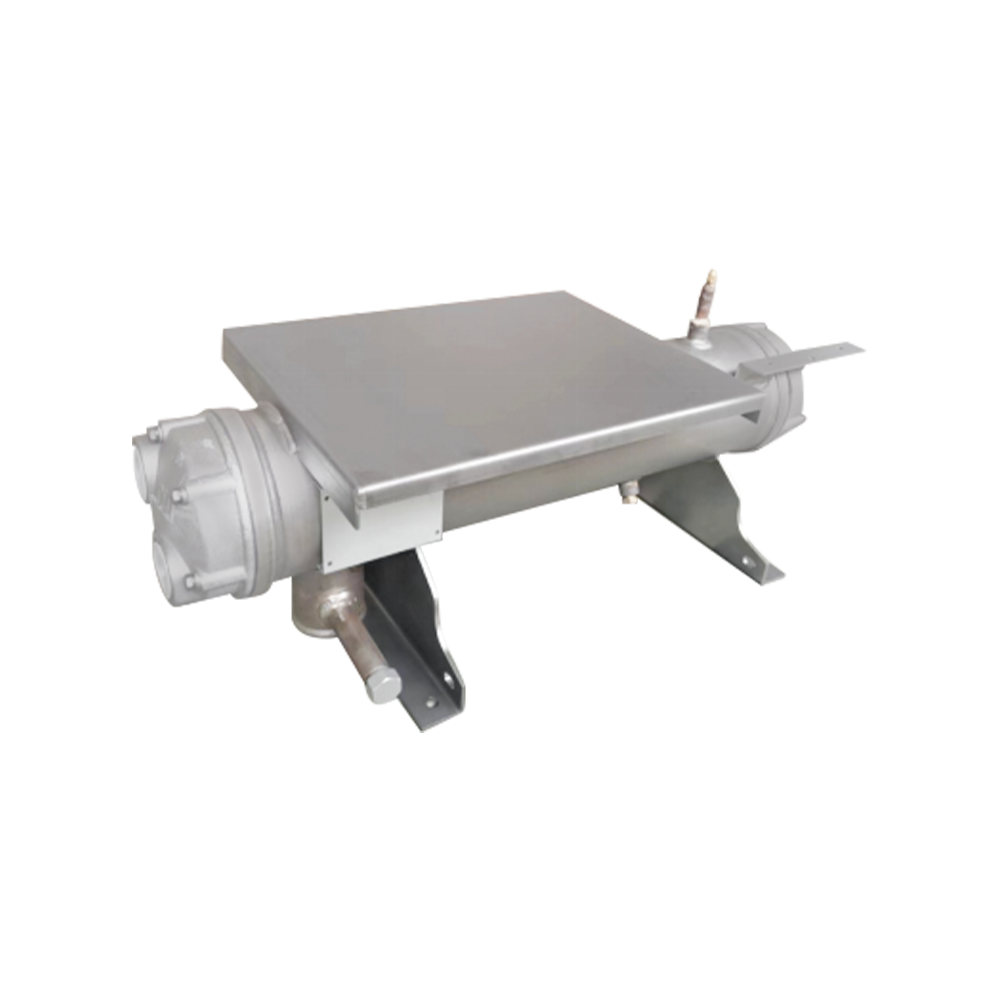
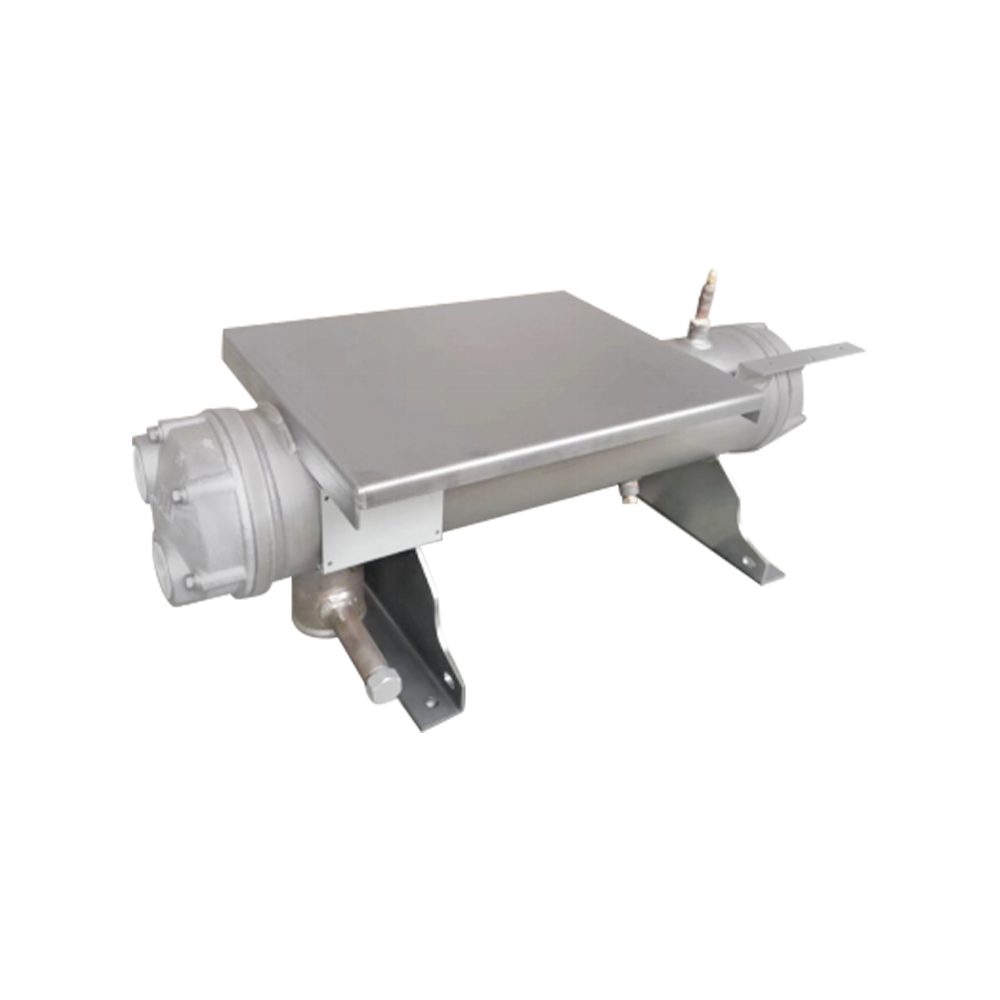
This is where the WSHP earns its name. Instead of a finned coil and an outdoor fan, the WSHP uses a brazed plate heat exchanger or a shell-and-tube heat exchanger. Water flows on one side of the heat transfer surface; refrigerant flows on the other. Because water has a far higher heat transfer coefficient than air, this exchanger can be physically smaller than an air coil while moving the same amount of heat. In larger systems the water side is often a shell-and-tube construction, essentially the same technology as the shell-and-tube water-cooled condenser used in industrial refrigeration plants. The choice of tube material matters: copper tubes are standard in many commercial units, while stainless steel tubes are preferred for aggressive or seawater applications.
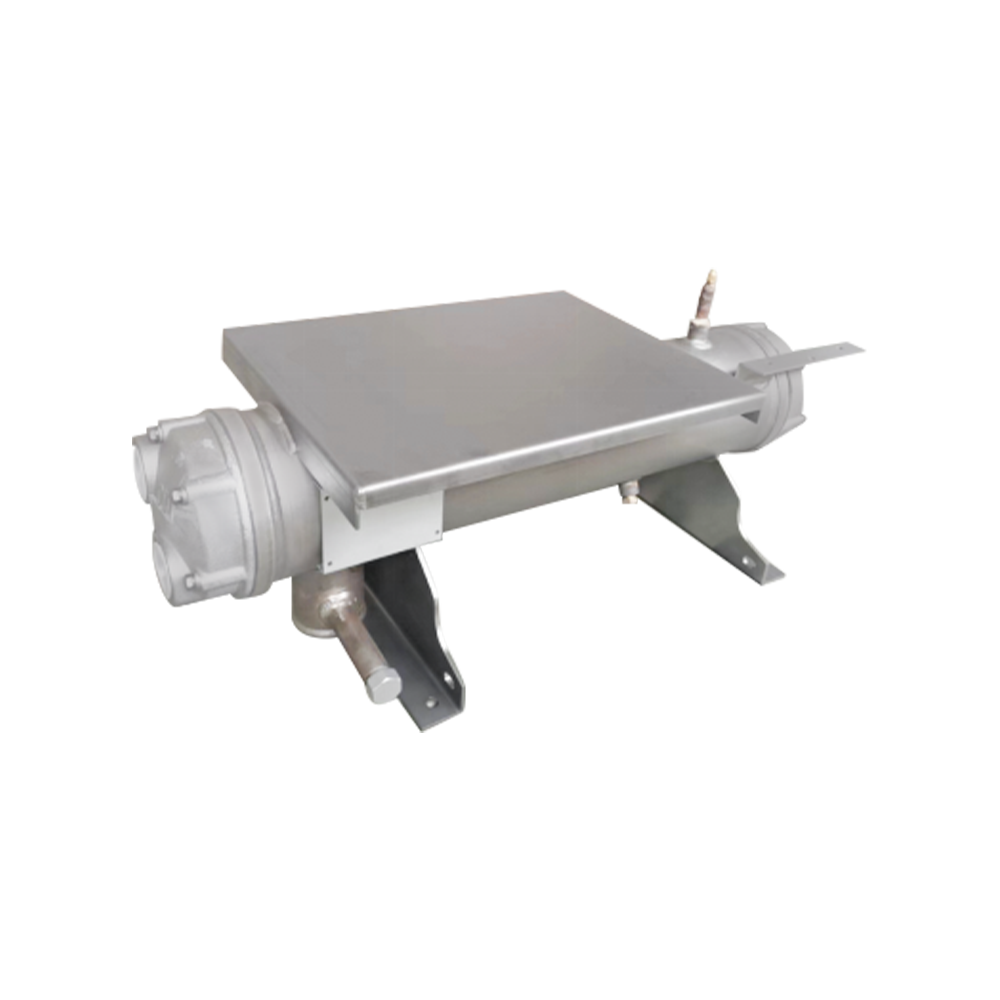 OEM/ODM KCWS Series Shell And Tube Water-Cooled Condenser Manufacturers, FactoryAs a China KCWS Series Shell And Tube Water-Cooled Condenser manufacturers and wholesale KCWS Series Shell And Tube Water-Cooled Condense...View Product →
The expansion device
Between the condenser and the evaporator, the expansion device — usually a thermostatic expansion valve (TXV) or an electronic expansion valve (EEV) — drops the refrigerant pressure and meters the correct flow into the evaporator. An EEV responds faster to load changes and keeps superheat tighter, which improves efficiency at partial load. That matters in a WSHP system because entering water temperatures shift through the year, so the expansion device has to adapt continuously.
Heating Mode and Cooling Mode: The Same Cycle in Reverse
Heating mode
In heating mode, the water loop is the heat source. For most commercial loop designs, water enters the unit at around 50°F to 68°F (10°C to 20°C). The refrigerant absorbs heat from that water and evaporates. The compressor then raises the gas to a temperature high enough for the indoor coil to deliver warm supply air — typically 90°F to 105°F (32°C to 40°C). As long as the loop stays above roughly 45°F (7°C), the unit can maintain useful heating without relying on electric backup heat.
Cooling mode
In cooling mode, the loop becomes a heat sink. Returning loop water typically sits between 70°F and 90°F (21°C to 32°C). The indoor coil absorbs heat from the room, the compressor raises the refrigerant temperature well above the water temperature, and the refrigerant-to-water heat exchanger transfers that heat into the loop. The warmer the loop water, the harder the compressor must work — which is why cooling tower control and water temperature reset are such important parts of a well-run WSHP plant.
Closed-Loop, Open-Loop and Building Loops: Where Does the Water Come From?
WSHPs work with several water sources. The choice affects both efficiency and installed cost.
| System type | Water source | Typical entering water temperature | Best suited for |
|---|---|---|---|
| Closed ground loop | Buried HDPE pipe with water-glycol mix | 32°F to 70°F (0°C to 21°C) by season | Homes and commercial buildings with land for boreholes |
| Open loop (well water) | Groundwater pumped through the heat exchanger | 45°F to 60°F (7°C to 16°C) | Properties with clean, reliable well water and approved reinjection or drainage |
| Building loop with boiler and cooling tower | Shared building water loop; boiler adds heat, tower rejects heat | 60°F to 90°F (16°C to 32°C) | Multi-tenant offices, hotels, mixed-use buildings |
| Lake or river loop | Submerged closed loop in open water | 35°F to 75°F (2°C to 24°C) | Buildings near deep water bodies |
Most large commercial WSHP installations use a shared building loop. Each indoor unit is small enough to fit in a ceiling void or a small plant room, and all units draw from the same two-pipe water circuit. When some zones need heat while others need cooling, the heat rejected by cooling zones is absorbed by heating zones — a feature called heat recovery. This can cut simultaneous heating and cooling energy by a wide margin, which is one of the main reasons building owners choose water-source systems.
Why Water Beats Air: WSHP vs Air-Source Heat Pump
Both systems use the same vapor-compression cycle. The difference is the medium on the outdoor side. Air changes temperature with the weather; water in a closed loop stays far more stable. That stability changes the whole performance picture.
| Aspect | WSHP | Air-source heat pump (ASHP) |
|---|---|---|
| Heat source/sink | Water loop, stable year-round | Outdoor air, swings with weather |
| Heating performance | Degrades slowly as loop temperature falls | COP drops sharply in freezing weather |
| Cooling performance | Stable even on very hot days | Falls at ambient temperatures above about 95°F (35°C) |
| Noise | Quiet; no outdoor fan | Outdoor condenser fan noise |
| Space | No rooftop unit; indoor plant room or ceiling void | Needs outdoor unit and clearance around it |
| Installation | More piping; water loop infrastructure required | Usually simpler in retrofit buildings |
| Maintenance | Water treatment, pump and exchanger care | Coil cleaning and refrigerant access outdoors |
Because water has more than 3,000 times the volumetric heat capacity of air, a water-to-refrigerant heat exchanger can be far smaller than an air coil with the same duty. For the compressor, the important number is the temperature lift. With entering water at 60°F in winter heating, the compressor raises the refrigerant from about 50°F to 100°F — a 50°F lift. An air-source unit in freezing weather may need to raise refrigerant from -10°F to 100°F — a 110°F lift. Roughly half the lift means roughly double the heating COP. That physical relationship is the real reason water-source systems deliver better seasonal efficiency. To see how far the same principle extends, look at the complete range of condensers and evaporators used in modern hydronic plants.
Efficiency in Numbers: COP, EER and What to Expect
COP (coefficient of performance) is the ratio of useful heating or cooling to the electrical input. A COP of 4.0 in heating means that for every 1 kW of electricity the compressor consumes, the unit delivers 4 kW of heat. EER (energy efficiency ratio) is the cooling equivalent, normally expressed in Btu per watt-hour.
What can a buyer realistically expect from a modern WSHP?
- Heating COP between 3.5 and 5.5 for most water-source systems, depending on entering water temperature.
- Cooling EER between 14 and 22 Btu/W-h in typical commercial loops.
- Better part-load performance, because the compressor modulates or cycles less under mild conditions.
- The U.S. Department of Energy reports that geothermal and water-to-air heat pumps can reduce energy consumption by about 25 to 50 percent compared with air-source heat pumps in similar buildings (source: U.S. Department of Energy, geothermal heat pump overview).
| Entering water temperature (heating mode) | Typical COP range |
|---|---|
| 50°F (10°C) | 4.2 to 5.5 |
| 60°F (16°C) | 4.0 to 5.0 |
| 70°F (21°C) | 3.5 to 4.2 |
Note the trend: colder loop water means a lower COP, which is why ground loops and well water — which stay warmer in winter than outdoor air — produce better winter efficiency than air-source equipment.
Five Design Considerations That Decide Real-World Performance
- Water flow rate. Each unit needs enough flow to carry heat without excessive pump energy. Commercial water-source units are commonly specified at 2.5 to 3 US gallons per minute per ton of cooling; larger systems use lower flows with higher temperature differences.
- Entering water temperature range. Maintain loop temperatures within manufacturer limits — typically 50°F to 95°F (10°C to 35°C) in cooling and 45°F to 75°F (7°C to 24°C) in heating — to protect the compressor and keep capacity ratings valid.
- Water quality and fouling. Plate heat exchangers have narrow channels; debris, scale or biological growth can quickly reduce heat transfer and raise condensing pressure. Use strainers, water treatment and — for aggressive water — stainless steel heat exchangers.
- Freeze protection. Ground loops need a water-glycol mix; building loops in unheated spaces need antifreeze, heat tracing or a reliable drain-down procedure.
- Loop temperature reset. Control the loop temperature based on outdoor conditions and zone demand. Raising the loop temperature in cooling, or lowering it slightly in heating, reduces compressor lift and cuts energy use across the whole plant.
Matching the Water Loop with the Right Refrigeration Equipment
A water source heat pump is one element of a larger hydronic refrigeration system. The same engineering principles — reliable compression, clean water-side heat exchange and stable refrigerant control — apply to the rest of the plant. For project teams assembling their own plant-room solution, the choice of condenser, chiller and condensing unit decides whether the loop will actually hit its design efficiency.
On the cooling side, a packaged water-cooled chiller is the standard way to remove heat from the loop when the building has a cooling tower. On the heat exchange side, the shell-and-tube water-cooled condenser transfers heat between refrigerant and water over a large, easy-to-clean surface. In plants with pump-fed evaporators, a barrel pump condensing unit provides the recirculation needed to keep refrigerant supply stable under varying loads.
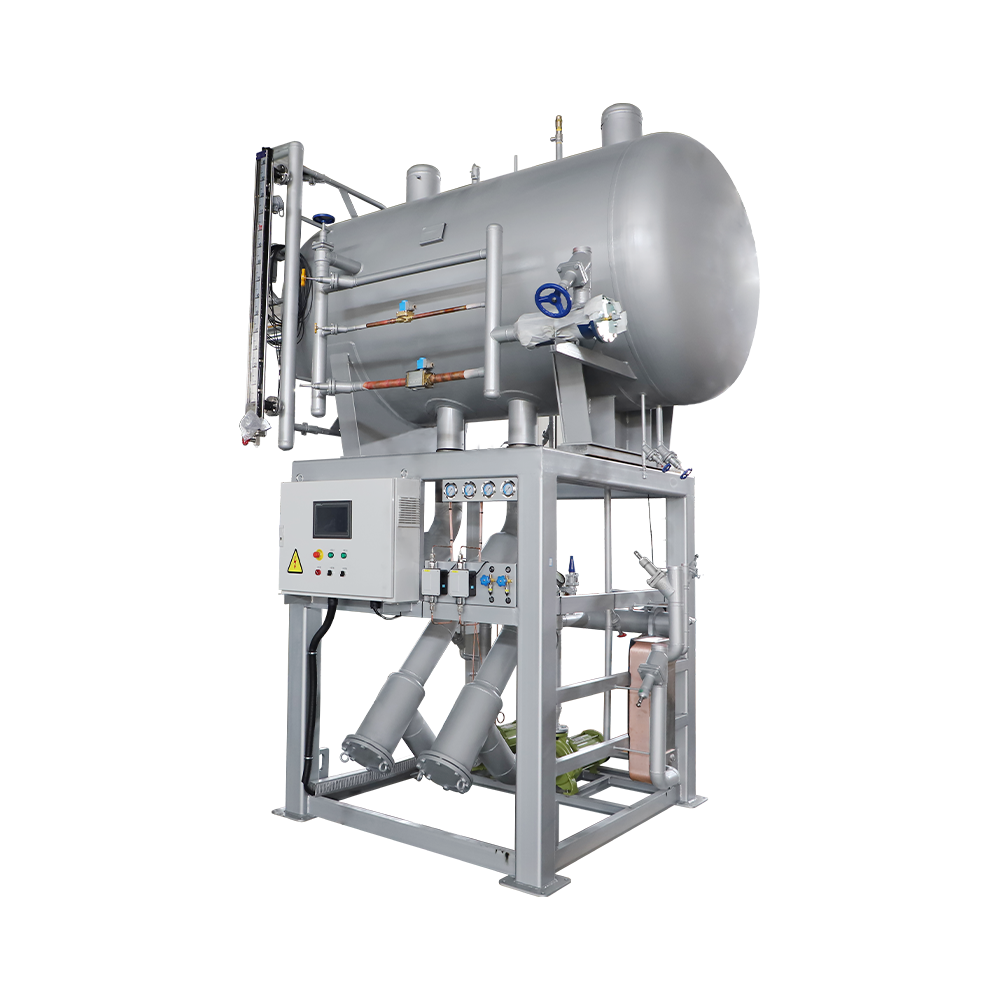
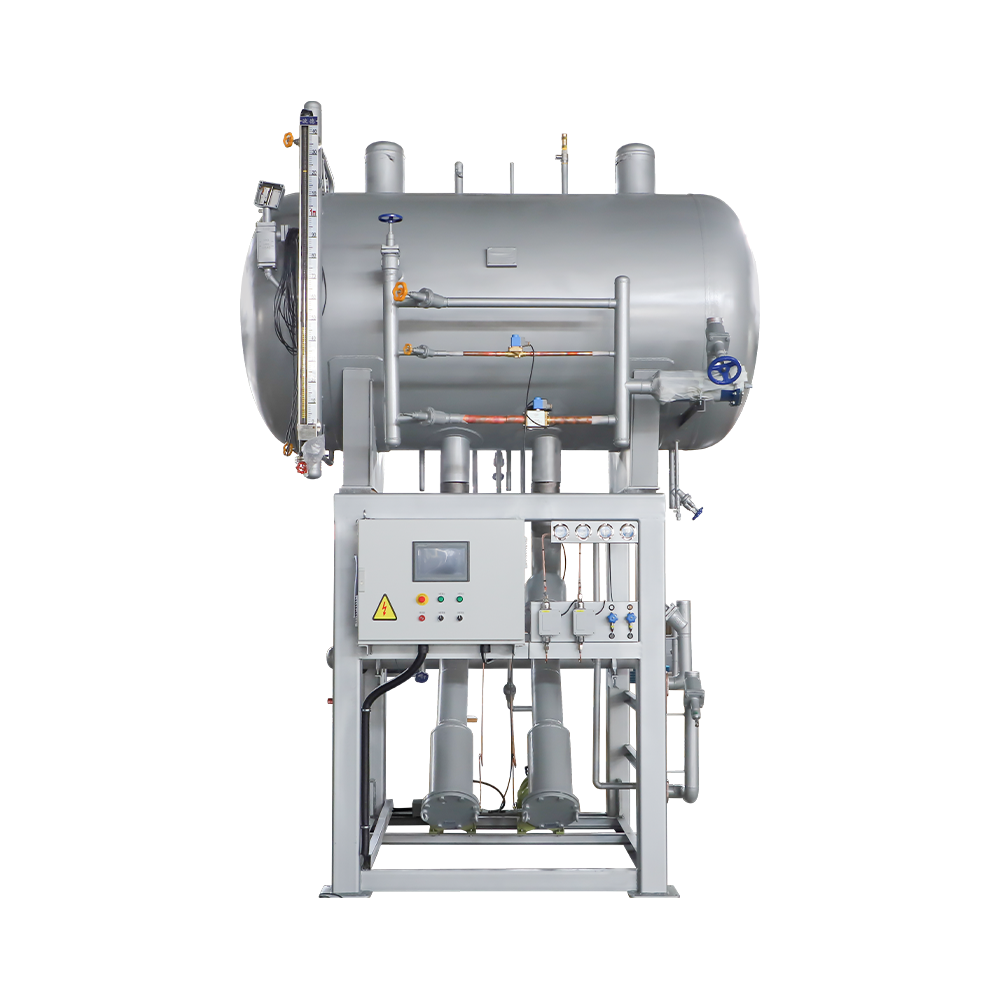 OEM/ODM KTB Barrel Pump Condensing Unit Manufacturers, Factory - Zhejiang Kaidi As a China KTB Barrel Pump Condensing Unit manufacturers and wholesale KTB Barrel Pump Condensing Unit oem/odm factory, Zhejiang Kaidi Re...View Product →
 Custom Water Cooled Chiller Supplier, CompanyZhejiang Kaidi Refrigeration Equipment Co., Ltd. is a China Water Cooled Chiller supplier and custom Water Cooled Chiller, offering solut...View Product →
If you are designing a cold storage or process cooling plant, the same selection logic applies when choosing a condensing unit for cold storage applications. You also need to match the equipment to loop temperature range, water quality and expected part-load profile — and it is worth discussing those parameters with an applications engineer before you finalize the package.
Practical takeaway: the WSHP is only as efficient as the rest of the hydronic plant. Oversized pumps, untreated water or an undersized cooling tower will erode the COP advantage quickly. Start with the loop design, then select the compressor and heat exchanger package around it.
Frequently Asked Questions About Water Source Heat Pumps
Do water source heat pumps work in cold climates?
Yes. In heating mode, a water-to-air unit can still deliver a COP of 3.0 or better with entering water at 40°F (4°C), which is far above the winter air temperatures in most cold regions. The reason it works in Harbin, Minneapolis or Oslo is simple: the loop is buried underground or drawn from groundwater, so winter air temperatures never touch the heat source.
Is a water source heat pump the same as a geothermal heat pump?
Not exactly. A geothermal or ground-source heat pump is one type of water-source system. It uses a closed ground loop or well water as its heat source and sink. But many WSHPs run on a building loop with a cooling tower and boiler — no ground connection at all. All geothermal heat pumps are water-source systems; not all water-source heat pumps are geothermal.
Can one water loop heat and cool different zones at the same time?
Yes, and that is one of the biggest advantages of a WSHP system. Each indoor unit decides independently whether to heat or cool. When one office needs cooling and another needs heating, the loop transfers heat from one to the other, and the boiler and cooling tower only make up the difference.
What maintenance does a water source heat pump need?
Three areas matter: water quality, refrigerant charge and air-side cleanliness. The loop needs regular filtration and water treatment to prevent fouling in plate or shell-and-tube heat exchangers; heat exchanger surfaces should be inspected annually; and indoor coils and filters need the same cleaning schedule as any fan-coil unit. Because there is no outdoor condenser fan, the usual corrosion and debris problems of outdoor units mostly disappear.
How long does a water source heat pump last?
With correct water treatment, a quality commercial WSHP typically serves 20 to 25 years, and the water loop itself can last 50 years or more. The refrigerant circuit is sealed and the compressor is protected by the stable loop temperature — unlike rooftop units that suffer extreme thermal cycles. Many owners find the indoor location of the equipment is the real lifetime advantage: it never sees snow, salt or summer sun.
How do I choose between water-to-water and water-to-air?
Water-to-air units are the most common in office buildings because they condition occupied spaces directly through ducts. Water-to-water units are used when the building has hydronic distribution — underfloor heating, chilled ceilings, or process cooling water — because they produce heated or chilled water instead of warm air. For industrial processes such as laser cooling or food processing, water-to-water is usually the correct architecture.
The Bottom Line
A water source heat pump is simply a refrigeration machine that uses a water loop as its heat source and sink. The components are conventional, the cycle is the standard vapor-compression cycle, and the efficiency advantage comes almost entirely from the stability of water temperature. Whether you are designing a 40-storey office tower, a cold storage warehouse or a process cooling system, the WSHP concept is the same — and the equipment choices on the water side, from plate heat exchangers to shell-and-tube condensers, decide how well that concept performs in real operation.