

 English
 中文简体
中文简体Content
- 1 Condensate Water vs. Cooling Water: Two Completely Different Circuits
- 2 How Much Water Should a Condenser Drain in Normal Operation?
- 3 Water In and Out of a Water-Cooled Condenser: What Should the Circuit Look Like?
- 4 Evaporative Condensers: Where Does the Water Actually Go?
- 5 Air-Cooled Condensers: Is the Water Around Them Normal?
- 6 Reading Water Symptoms: A Quick Troubleshooting Reference
- 7 Selection and Design Considerations That Prevent Water-Related Faults
- 8 Frequently Asked Questions About Water In and Out of Condensers
- 8.1 1. Is it normal to see water coming out of or around a condenser?
- 8.2 2. How much water should an air conditioner drain per day?
- 8.3 3. What is the normal water temperature entering and leaving a water-cooled condenser?
- 8.4 4. Why is my condenser leaking more water than usual?
- 8.5 5. Can I spray water on my air-cooled condenser to improve performance?
- 8.6 6. Why does my evaporative condenser use so much water?
Water in and out of a condenser is usually not a fault - but only when you can identify which water you are looking at. If the unit is air-cooled, the water you see is condensate removed from the air by the evaporator coil and drained outside. If the system uses a water-cooled or evaporative condenser, water entering and leaving the unit is the working fluid that carries heat away from the refrigerant.
Once you know which water path you are dealing with, the next questions become practical: How much condensate is normal per day? What should the inlet and outlet water temperatures be? How many litres per second should flow through the condenser? And when does water behaviour tell you to open the unit instead of ignoring it? This article answers those questions with typical figures, quick checks and troubleshooting steps used in everyday refrigeration service.
Condensate Water vs. Cooling Water: Two Completely Different Circuits
Mixing up those two water circuits is the most common source of confusion. Condensate water forms on the cold side of the system, at the evaporator coil, and normally flows toward a drain. Cooling water operates on the hot side of the system, inside or around the condenser, and is pumped through pipes or sprayed over the coil. In a healthy machine the two never meet.
| Item | Condensate water | Cooling water |
|---|---|---|
| Where it comes from | Moisture in the air condensing on the cold evaporator coil | Water circulated through the condenser or sprayed over its coil |
| Where it appears | Drain pan, drain line, near the evaporator or on the ground pad under the outdoor unit | Condenser inlet and outlet pipes, cooling tower circuit, evaporative condenser sump |
| Normal behaviour | Intermittent dripping while the compressor runs | Continuous flow whenever the compressor runs |
| Water quality | Nearly mineral-free, similar to distilled water | Hard or treated water; dissolved solids concentrate over time |
| When to worry | Continuous flow after shutdown, overflowing pan, sudden increase | High head pressure, low flow, water carryover, sump draining fast |
The rest of this article treats the two paths separately, because each has its own normal values and its own failure patterns.
How Much Water Should a Condenser Drain in Normal Operation?
A condenser itself does not produce water. The moisture comes from the air being cooled: the evaporator coil sits below the dew point, so airborne water vapour condenses on the fins and drips into a drain pan. The water you see near an outdoor unit is usually the indoor condensate drain routed outside. That water appears only while the compressor runs, because only then is the coil cold enough to dehumidify.
How much drains per day depends on humidity, air volume and compressor runtime. In residential air conditioning, a typical 3-ton unit in humid summer weather drains about 12 to 45 litres (3 to 12 US gallons) per day, and can reach 75 litres (20 gallons) when the outdoor dew point stays above 22°C for many hours. A simple check: full-load condensate production is roughly 0.8 to 1.3 kg of water per hour for each 3.5 kW (1 ton) of cooling capacity while the unit is actively dehumidifying.
- Check the air filter. A clogged filter lowers evaporator temperature, creates frost, and then produces a sudden burst of meltwater when the compressor cycles off.
- Look at the drain line. Dirt, algae or insects in the line make the pan overflow even though the production rate is normal.
- Check for open doors or damaged gaskets. Extra air humidity translates directly into extra condensate.
If you see many times the expected amount, the cause is almost always an installation fault - not the condenser. A blocked drain, a missing gasket or an undersized filter slot will generate far more visible water than any condenser problem ever could.
Water In and Out of a Water-Cooled Condenser: What Should the Circuit Look Like?
In a water-cooled condenser, water flows through tubes inside the shell while refrigerant condenses on the outside of the tubes. Heat moves from the refrigerant into the water, and the warmer water leaves the condenser on its way to a cooling tower or other heat sink. The condenser itself has only two water connections: the inlet header and the outlet header. If you can measure the temperature and flow at those two points, you can tell whether the condenser is doing its job.
Normal temperature range for the water circuit
For a shell-and-tube condenser rejecting heat from a refrigerant condensing at 35 to 42°C, typical entering water temperature is 25 to 30°C and leaving water temperature is 30 to 35°C. The temperature rise across the condenser should be 4 to 6°C at full load. The difference between the leaving water temperature and the condensing temperature - called the approach - should be 3 to 7°C. If the approach climbs above 8°C, the water side is fouled or the refrigerant charge is wrong.
Water flow rate and how to verify it
Water flow is set by the heat rejection load, not by compressor power. To reject 100 kW of heat with a 5°C water temperature rise, the condenser needs about 4.8 L/s of water. If the rise is only 3°C, flow must increase to roughly 8 L/s; if the rise is 7°C, flow can drop to 3.4 L/s. The table below gives practical flow values for common heat rejection loads.
| Heat rejection load | Flow at 4°C rise | Flow at 5°C rise | Flow at 6°C rise |
|---|---|---|---|
| 50 kW | 3.0 L/s | 2.4 L/s | 2.0 L/s |
| 100 kW | 6.0 L/s | 4.8 L/s | 4.0 L/s |
| 200 kW | 12.0 L/s | 9.6 L/s | 8.0 L/s |
Pressure drop across the water side of a clean shell-and-tube condenser is typically 30 to 70 kPa. A suddenly larger pressure drop at the same pump speed means fouling or scale inside the tubes. A smaller drop combined with high condensing pressure means flow is too low or water is short-circuiting through the tower basin.
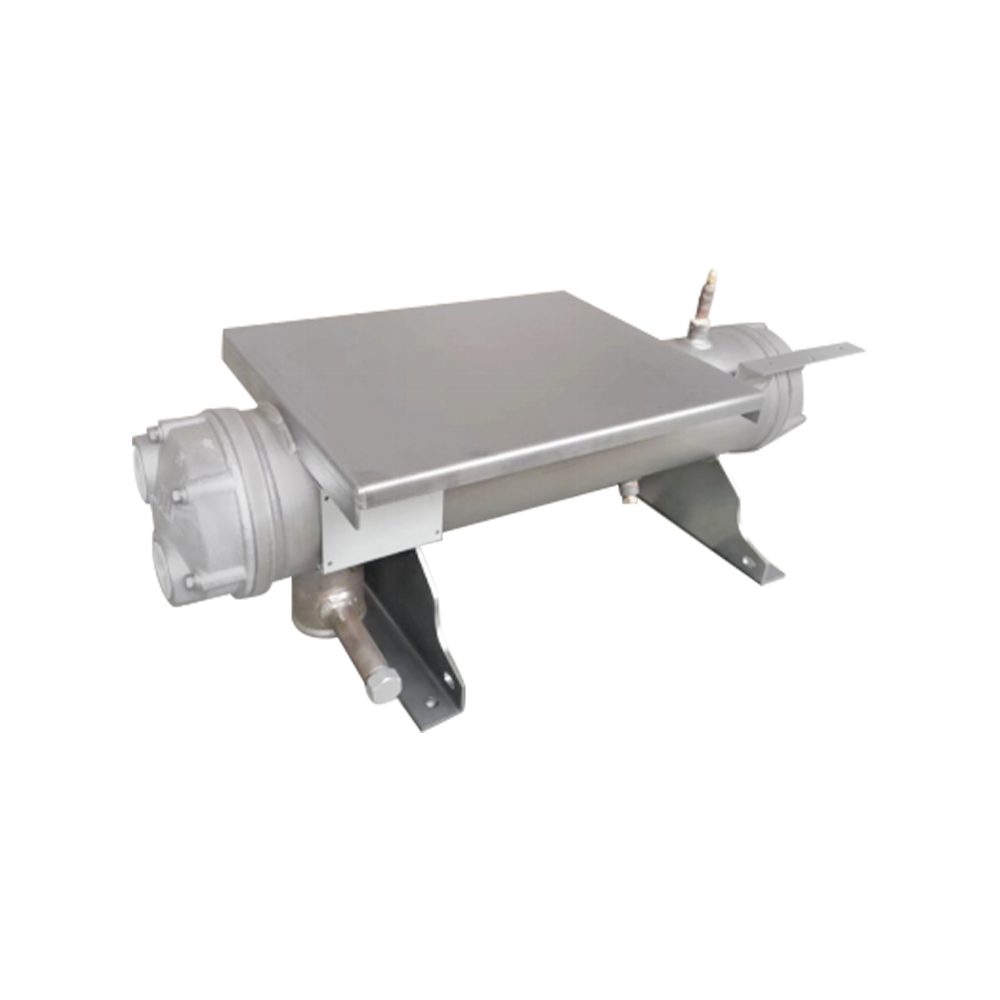
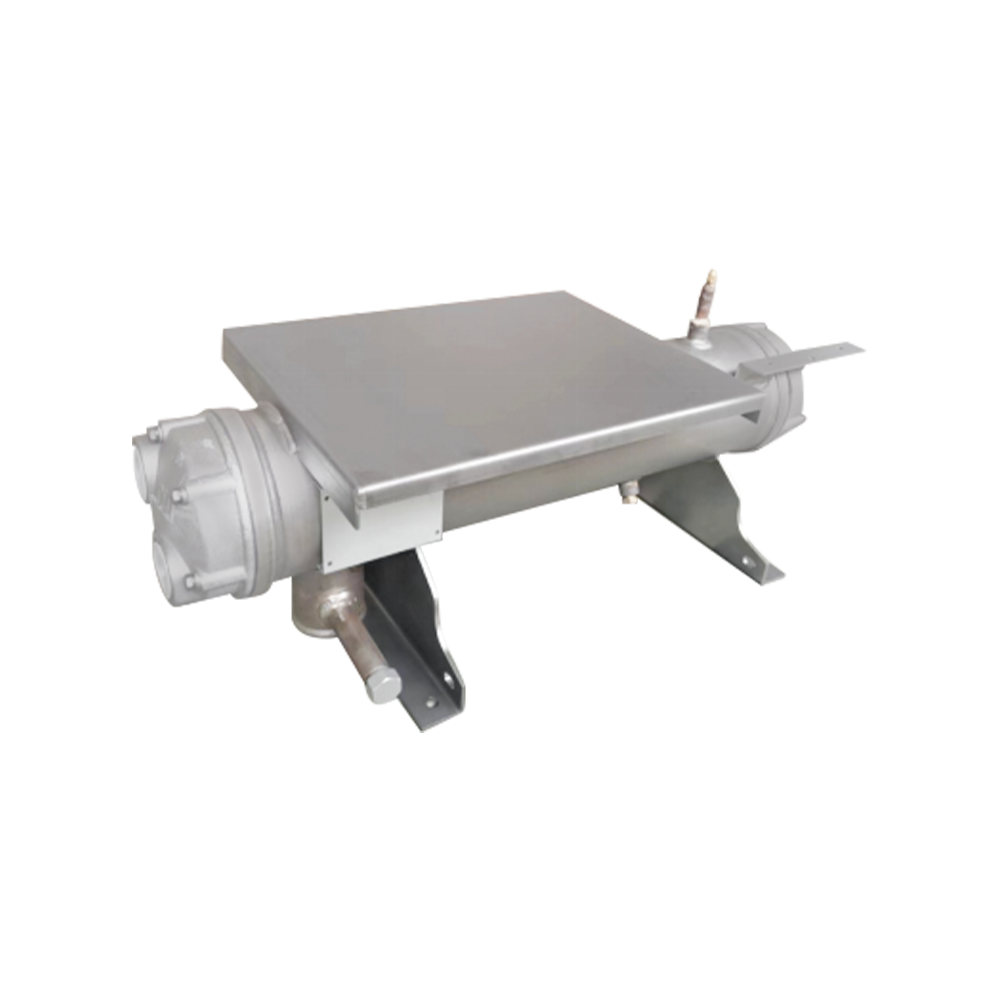
When the heat rejection load and available water temperature are already defined, a cleanable shell-and-tube design simplifies maintenance. The KCWS series shell-and-tube water-cooled condenser is rated for exactly these entering and leaving water conditions.
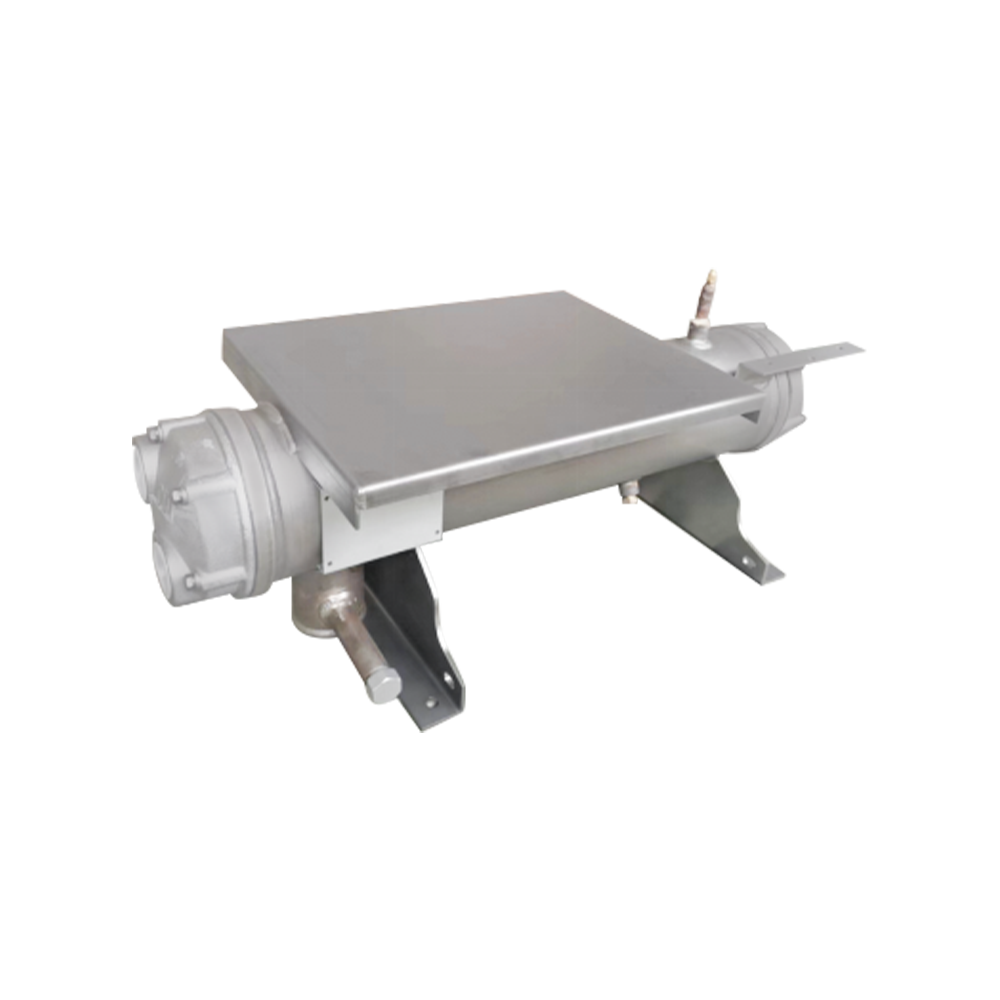 OEM/ODM KCWS Series Shell And Tube Water-Cooled Condenser Manufacturers, FactoryAs a China KCWS Series Shell And Tube Water-Cooled Condenser manufacturers and wholesale KCWS Series Shell And Tube Water-Cooled Condense...View Product →
Evaporative Condensers: Where Does the Water Actually Go?
In an evaporative condenser, water is pumped from a sump up to spray headers, distributed over the coil, and cooled as it evaporates. Only a small fraction of the recirculated water is actually lost as vapour. The rest falls back into the sump and is reused. This is why the water that enters the condenser is much more than the water that leaves as vapour.
Recirculation rate versus actual consumption
Typical spray recirculation is 0.05 to 0.07 L/s per kW of heat rejection. Actual water consumption is a different number: evaporation removes roughly 0.5 to 1.4 L/h per kW depending on the air wet-bulb temperature, and bleed-off adds 0.1 to 0.2 L/h per kW to control dissolved solids. A 100 kW evaporative condenser in a moderate climate therefore needs about 60 to 160 litres of make-up water per hour.
- Evaporation - the intended heat-rejection mechanism, proportional to load and inversely proportional to air humidity.
- Bleed-off - a controlled discharge that removes minerals concentrated by evaporation.
- Drift loss - fine water droplets carried away with the air stream; well-designed drift eliminators keep this below 0.1 to 0.2% of the recirculation flow.
Watching the water meter
If make-up water consumption is far above the evaporation plus bleed-off sum, look for a leaking sump, a stuck float valve, or nozzles washing water off the coil. If consumption is unusually low and discharge pressure climbs, suspect blocked nozzles or a worn pump impeller - the coil stops receiving water even though the pump is running.
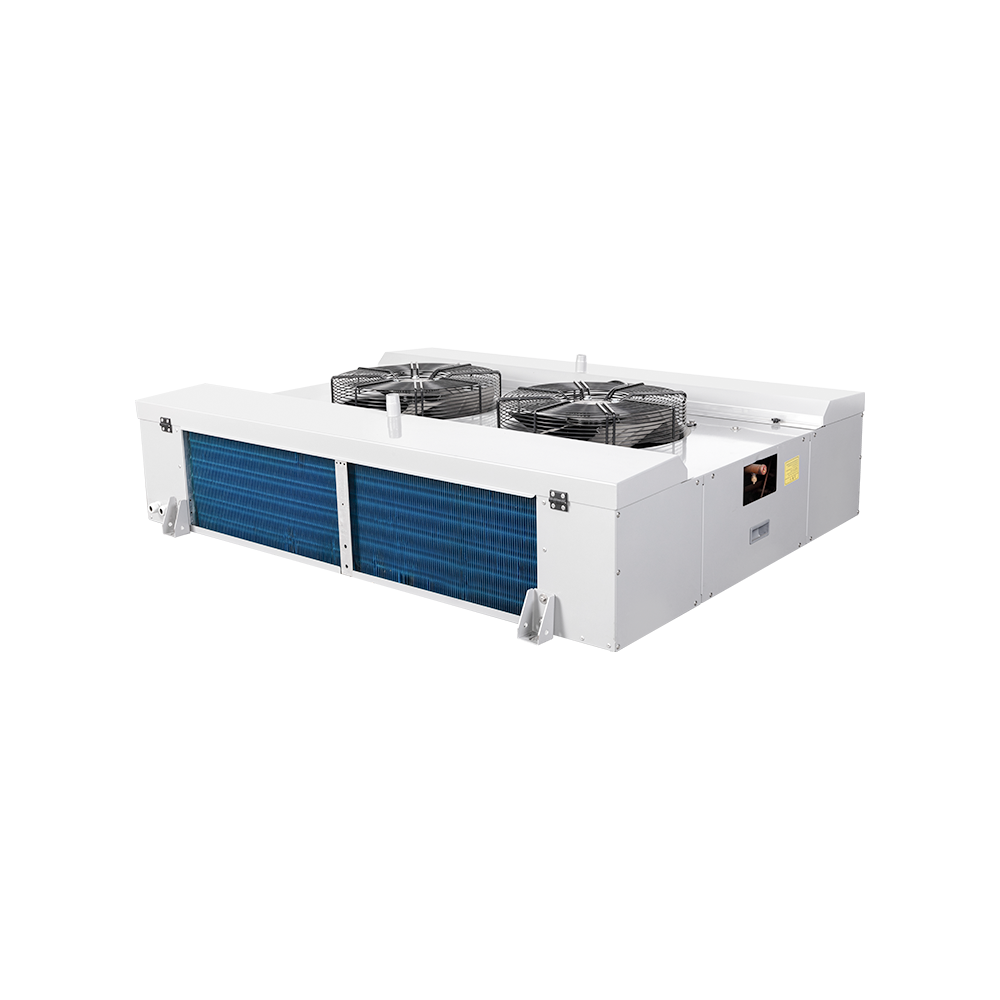
For plant engineers who need predictable water consumption and a reliable spray system, the KDLS series evaporative condenser matches the sump, nozzles and drift eliminators to the wet-bulb conditions of the site.
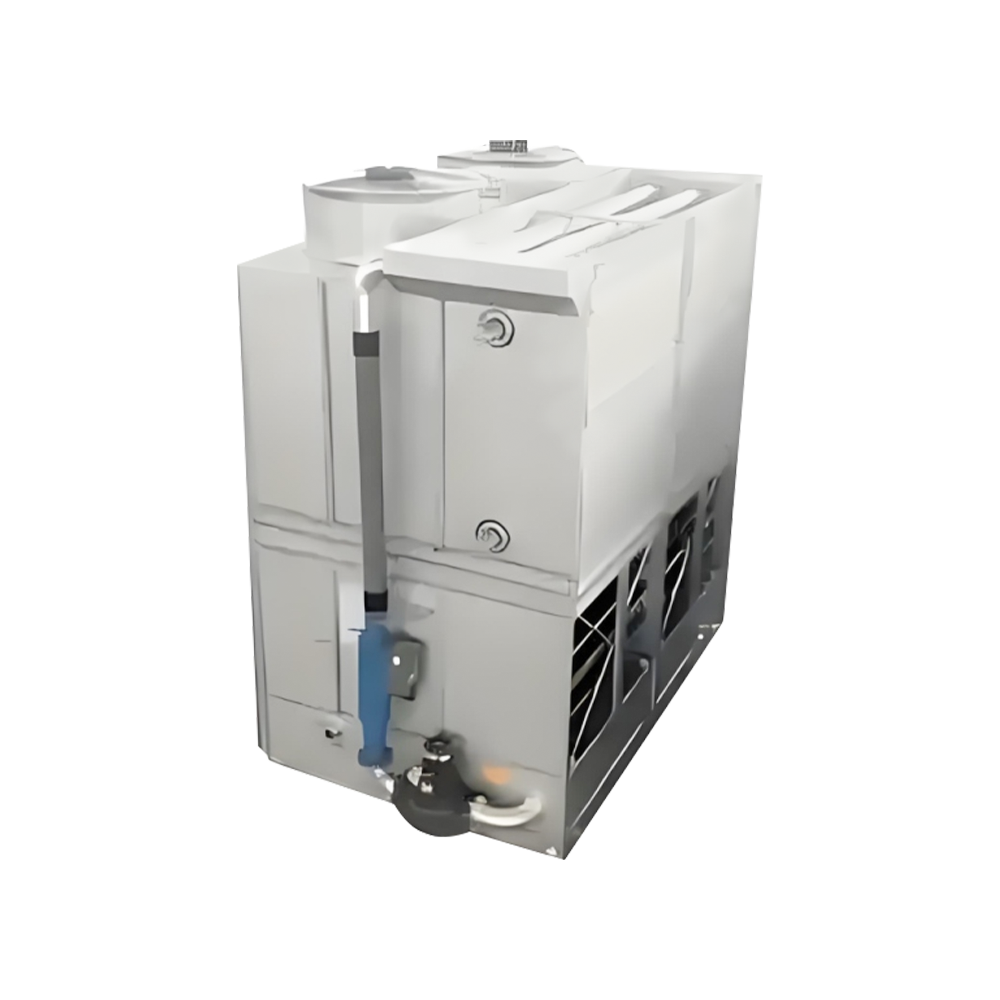 OEM/ODM KDLS Series Evaporative Condenser Manufacturers, Factory - Zhejiang KaiAs a China KDLS Series Evaporative Condenser manufacturers and wholesale KDLS Series Evaporative Condenser oem/odm factory, Zhejiang Ka...View Product →
Air-Cooled Condensers: Is the Water Around Them Normal?
An air-cooled condenser has no water connection, yet many service calls start because someone sees water under the outdoor unit. In almost every case that water is the indoor condensate drain routed through the wall and terminating near the condenser pad. The condenser coil itself is dry because it operates above the dew point of the surrounding air.
Why water appears only while the compressor runs
Condensate forms only when the evaporator is cold, which means only while the compressor runs. If dripping continues for a long time after the compressor stops, the coil may be covered in frost that is melting, or the drain line is installed at a slope that does not empty fully. Both are fixable without touching the condenser.
Should you spray water on an air-cooled condenser to help it in summer?
Direct answer: only as a temporary emergency measure, never as a design solution. Spraying water onto the fins of a running air-cooled condenser can drop the condensing temperature by 8 to 15°C and noticeably reduce compressor power, which is why the idea keeps coming back. But the water leaves scale on the fins, accelerates corrosion of aluminium and copper, blocks airflow when dirt binds to the wet surface, and can be pulled into electrical components. On a packaged unit this is a quick road to a longer shutdown. If peak-day capacity is missing, the proper fix is a larger coil area, a second condensing stage, or an evaporative condensing system.
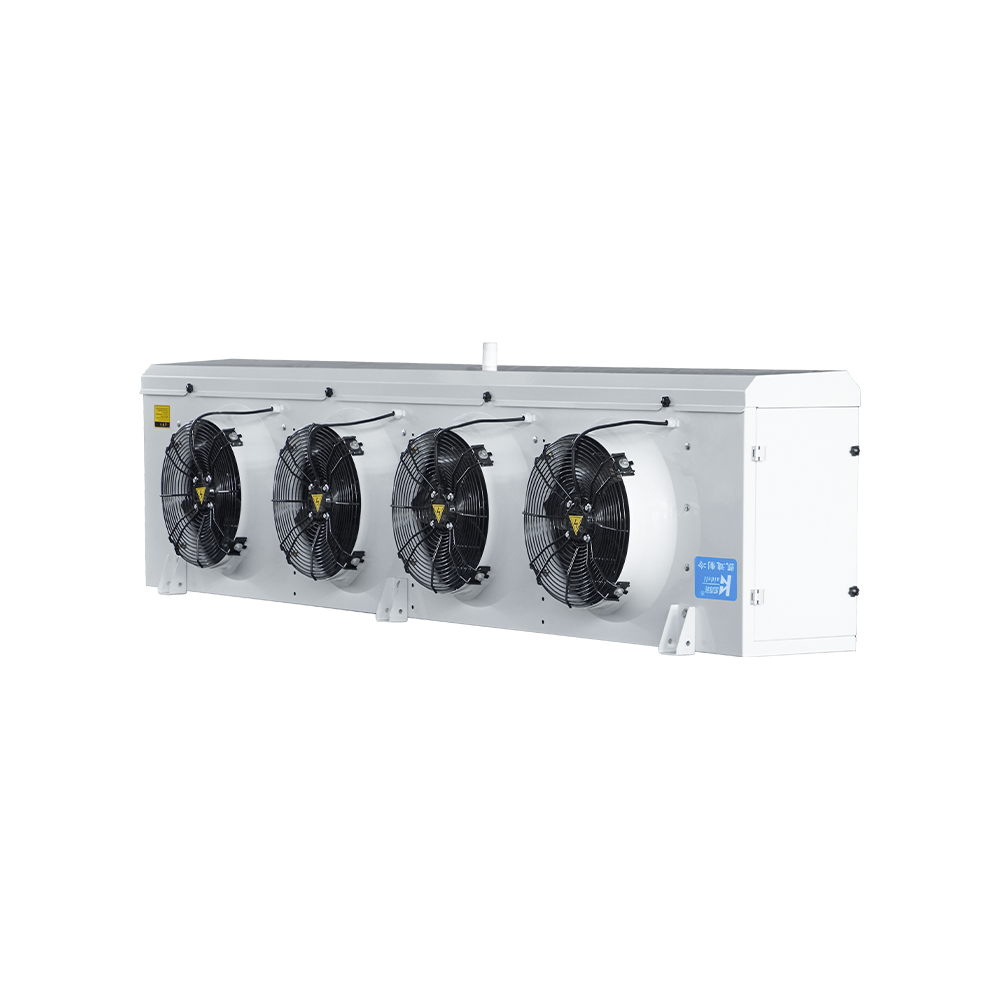
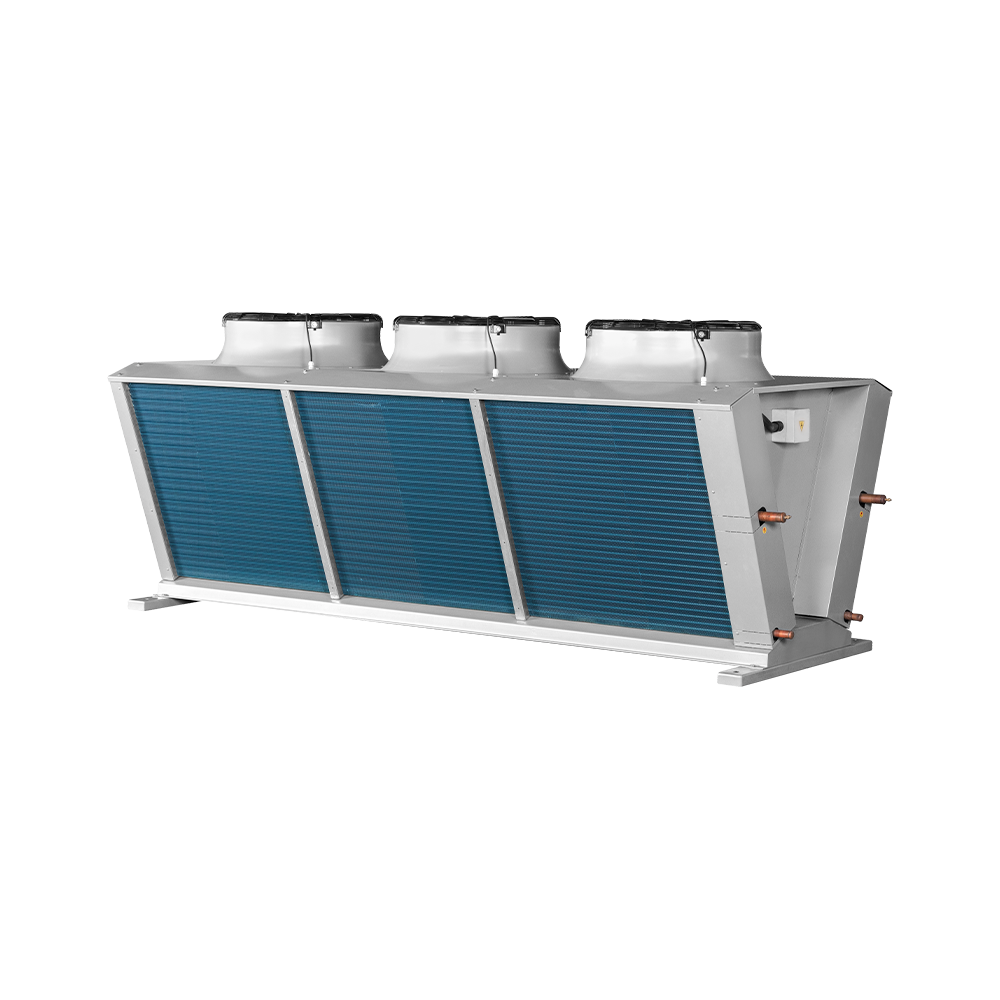
Where outdoor space is tight, a CL series vertical side-mounted air-cooled condenser keeps the airflow pattern predictable and the coil easy to clean, which is the real cure for peak-hour hot spots.
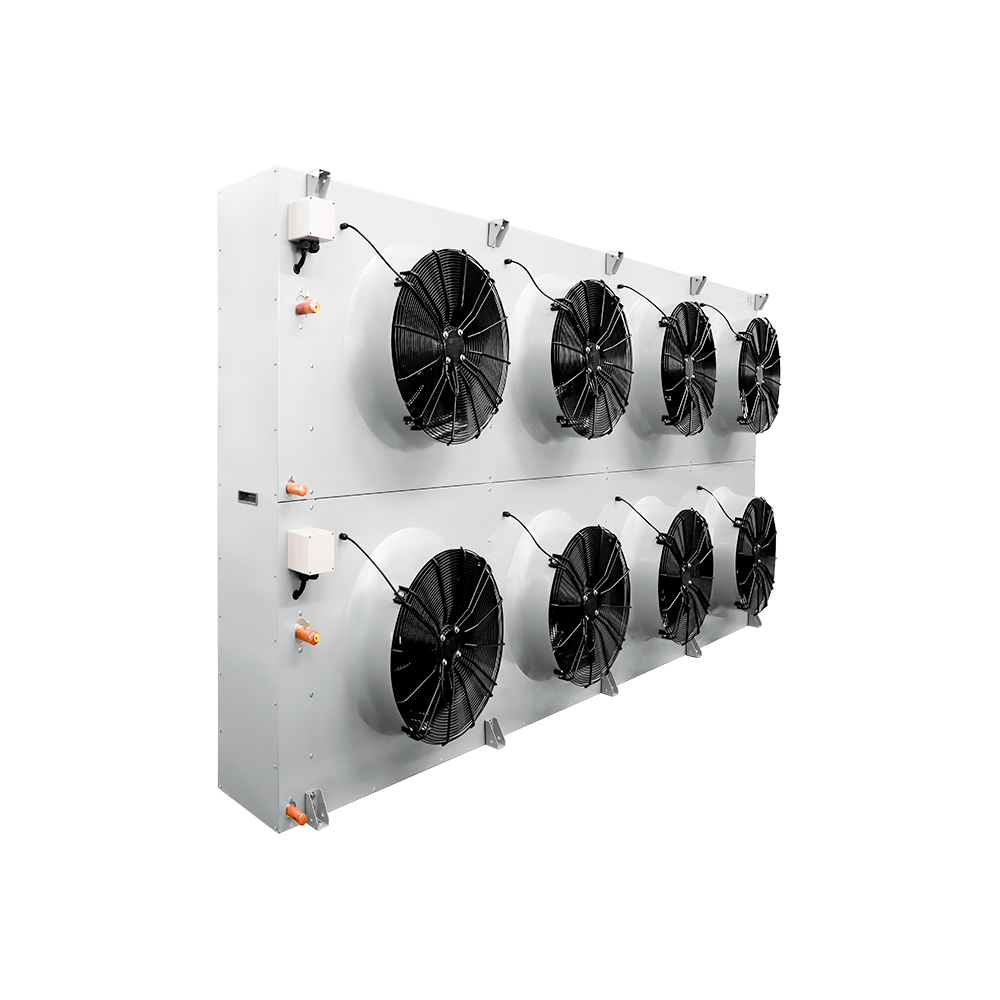 OEM/ODM CL Series Vertical Side Mounted Condenser Manufacturers, Factory - ZhejiAs a China CL Series Vertical Side Mounted Condenser manufacturers and wholesale CL Series Vertical Side Mounted Condenser oem/odm factor...View Product →
Reading Water Symptoms: A Quick Troubleshooting Reference
The fastest way to tell whether water behaviour is a symptom is to read it together with condensing pressure and water flow. The table below summarises the combinations seen most often in the field.
| Symptom | Most likely cause | First check |
|---|---|---|
| Water still dripping 30 minutes after shutdown | Frost melting from a dirty or iced evaporator | Air filter, fan speed, defrost timer |
| Very little or no water leaving the condenser | Inlet valve closed, air lock, failed water pump | Inlet and outlet pressure, strainer, pump impeller |
| High head pressure with normal water flow | Fouled or scaled tubes, non-condensable gas | Approach temperature, water-side cleaning, purge |
| High head pressure with low water flow | Plugged strainer or throttled valve | Clean strainer, verify valve position |
| Water carried out of the evaporative condenser with the air | Damaged or missing drift eliminator | Inspect eliminators, check fan speed |
| Sump loses water faster than the make-up valve refills | Stuck bleed valve, leaking sump, nozzle misalignment | Check bleed rate, sump level, spray pattern |
Use the combination of water flow, temperature and pressure to identify the faulty component. Replacing a pump or a condenser because the head pressure is high will not help if the real problem is a closed valve or a scaled water side.
Selection and Design Considerations That Prevent Water-Related Faults
Preventing water-related failures starts at the selection stage. Three decisions matter most: water quality, flow matching and the ambient conditions used for sizing.
Water quality decides the service interval
Hardness above 150 mg/L CaCO₃, chlorides above 250 mg/L, or suspended solids above 50 mg/L will shorten cleaning intervals on a water-cooled condenser. Do not compensate with extra capacity; compensate with water treatment and a cleanable water box. For evaporative condensers, the same water quality affects the bleed-off schedule and nozzle life.
Flow must be matched to the compressor's heat rejection
Every compressor model rejects a different amount of heat at the same condensing temperature. That is why condenser selection is based on heat rejection, not on compressor displacement. When the condenser and the open-type condensing unit are chosen from the same load data, you avoid the mismatch where the condenser looks correctly sized on paper but cannot hold condensing pressure on a hot day.
Size against the real ambient, not the annual average
For a water-cooled condenser the relevant value is the highest entering water temperature the cooling tower can deliver; for an evaporative condenser it is the design wet-bulb temperature; for an air-cooled condenser it is the summer dry-bulb peak. If those values are missing from the specification, water flow will look fine in spring and fail in summer. Our guide on choosing a condensing unit for cold storage applications covers the load side of the same calculation.
For a plant-specific review of water flow, entering temperatures or pressure drop limits, contact our engineering team with the operating data of your site and we will help you define the water inlet and outlet conditions before you buy any hardware.
Frequently Asked Questions About Water In and Out of Condensers
Short answers to the questions that come up most often on site.
1. Is it normal to see water coming out of or around a condenser?
Yes for condensate and for water-cooled circuits, no for air-cooled coils. If the outdoor unit is air-cooled and water appears, check whether the indoor drain line terminates nearby. If the system has a water-cooled or evaporative condenser, water entering and leaving is the normal heat-rejection path.
2. How much water should an air conditioner drain per day?
Between 12 and 45 litres (3 to 12 gallons) per day for a typical 3-ton residential unit in humid weather, and up to 75 litres (20 gallons) in extreme humidity. The rate follows compressor runtime and indoor wet-bulb temperature.
3. What is the normal water temperature entering and leaving a water-cooled condenser?
Typical design values are 25 to 30°C entering and 30 to 35°C leaving, with a 4 to 6°C rise at full load. If the rise is much smaller and head pressure stays high, the condenser is not transferring heat; if the rise is much larger, flow is too low.
4. Why is my condenser leaking more water than usual?
More condensate means the evaporator coil is removing more moisture, usually because humidity is high, the air filter is dirty, or air is leaking into the space. More water around a water-cooled condenser means a possible tube leak, a blocked drain, or excessive bleed on an evaporative unit.
5. Can I spray water on my air-cooled condenser to improve performance?
Only as an emergency measure during extreme ambient temperature. The temporary gain in condensing temperature of 8 to 15°C comes with scale, corrosion and airflow blockage over time. Use it a few days a year at most, and then fix the sizing problem.
6. Why does my evaporative condenser use so much water?
Evaporation is the main consumer - roughly 0.5 to 1.4 L/h per kW of heat rejection - plus bleed-off to limit dissolved solids. Track the make-up line with a meter for one operating day and compare it with the calculated evaporation plus bleed; an unexplained excess points to a leak or over-bleed.