

 English
 中文简体
中文简体Content
- 1 What Is Condenser Water? A Direct Answer
- 2 How Condenser Water Works Inside the Refrigeration Cycle
- 3 Condenser Water vs Chilled Water: Two Loops, Two Jobs
- 4 Typical Condenser Water Temperatures, Flow Rates, and Design Conditions
- 5 The Condenser Side: Types of Water-Cooled Condensers
- 6 Why Use Condenser Water at All? Air-Cooled vs Water-Cooled Trade-Offs
- 7 Condenser Water Quality, Treatment, and Maintenance That Actually Matter
- 8 Common Condenser Water Problems, Causes, and What to Check
- 9 Sizing and Design Considerations for a Reliable Condenser Water System
- 10 Frequently Asked Questions About Condenser Water
- 10.1 1. What is condenser water in simple terms?
- 10.2 2. Are condenser water and chilled water the same?
- 10.3 3. What temperature should condenser water be?
- 10.4 4. Why does condenser water need treatment?
- 10.5 5. What happens if condenser water flow is too low?
- 10.6 6. How much water does a condenser water system use?
- 11 The Bottom Line: What Matters Most with Condenser Water
What Is Condenser Water? A Direct Answer
Condenser water is the water stream that carries waste heat out of the condenser in a water-cooled refrigeration or chiller system and delivers it to a cooling tower, an evaporative condenser, or another heat rejection device. The chilled water loop cools the building or process; the condenser water loop does the opposite job. It takes heat away from the refrigerant in the condenser and rejects that heat to the outside air.
In one sentence: condenser water is the working medium on the hot side of a water-cooled cooling system, the water that absorbs heat from refrigerant in the condenser and releases it to the atmosphere through the cooling tower.
If you open a mechanical room that serves a water-cooled chiller, you normally see two separate water loops. The chilled water loop leaves the evaporator at about 44°F (6.7°C) and travels through air handlers or process heat exchangers. The condenser water loop leaves the condenser at roughly 95°F (35°C), flows to a cooling tower on the roof or beside the plant, and returns to the condenser at about 85°F (29.4°C) after being cooled by evaporation.
- It is a flow-through circuit: the same water is pumped around and around, but in an open tower it is exposed to air, so evaporation and drift constantly remove some water.
- At typical design conditions, condenser water flow is roughly 2.5 to 3 gallons per minute per ton of cooling (0.045 to 0.054 L/s per kW).
- Condenser water enters the condenser at about 85°F (29.4°C) and leaves at about 95°F (35°C) in a standard design.
- It is not the same as chilled water, and the two loops must never be mixed in a conventional chiller plant.
- Water quality, flow rate, and temperature directly control how much power the compressor consumes.
Getting these details right matters more than many plant owners expect. An undersized condenser water loop raises condensing pressure, increases compressor power, and shortens equipment life. The rest of this guide explains how the loop works, what design conditions to use, and what can go wrong in service.
How Condenser Water Works Inside the Refrigeration Cycle
Condenser water is only one part of a four-step refrigeration cycle. To understand its job, follow the refrigerant side first. The compressor raises the pressure and temperature of the refrigerant gas. The hot, high-pressure gas flows into the condenser. Condenser water passes through the condenser and absorbs heat from that gas. Removing heat condenses the gas back into a liquid. The liquid then passes through an expansion device, drops in pressure and temperature, and picks up heat in the evaporator, which is where the chilled water is produced.
The amount of heat the condenser water must absorb is always larger than the cooling load because compressor work adds heat to the refrigerant. A 100-ton chiller with a COP of 5.0 rejects roughly 120 tons of heat at the condenser: 100 tons from the cooling load plus 20 tons of compressor work. Designers size condenser water flow and cooling towers for this total, not for the chiller's nameplate cooling load.
- The condenser water pump draws water from the cooling tower basin at about 85°F (29.4°C).
- Water flows through the condenser tubes, absorbing heat from the refrigerant gas, and exits around 95°F (35°C).
- The warm water returns to the top of the cooling tower and is sprayed over the fill material.
- Air drawn through the tower evaporates a small portion of the water; evaporation removes heat and drops the water temperature.
- The cooled water collects in the basin and is pumped back to the condenser. The cycle repeats continuously.
In some designs, the condenser water loop is completely closed and is cooled by a plate heat exchanger connected to a second open-tower loop. This arrangement is common in district cooling plants and in buildings where the condenser circuit must use a special fluid to protect equipment. The working principle is identical: condenser water is the medium that moves rejected heat to the atmosphere.
Condenser Water vs Chilled Water: Two Loops, Two Jobs
The most common confusion in plant rooms is mixing up the chilled water loop and the condenser water loop. Both circuits are water systems around a chiller, but they operate at different temperatures, use different equipment, and must never be connected to each other.
| Feature | Chilled water loop | Condenser water loop |
|---|---|---|
| Purpose | Delivers cooling to zones or process | Rejects heat to the atmosphere |
| Typical supply / return | 44°F / 54°F (6.7°C / 12.2°C) | 85°F / 95°F (29.4°C / 35°C) |
| Connected to | Chiller evaporator, air handlers | Chiller condenser, cooling tower |
| Loop type | Closed loop | Usually open loop at the tower |
| Water loss | Minimal | Evaporation, drift, blowdown |
| Water treatment | Closed-system inhibitor | Biocide, scale and corrosion control |
The words "supply" and "return" are also used from opposite viewpoints in these loops. Chilled water supply is cold because it is leaving the evaporator to serve the building. Condenser water supply, from the chiller's perspective, is the water leaving the cooling tower and entering the condenser, which is around 85°F. Always define which point you are talking about before quoting temperatures in specifications or during troubleshooting.
Typical Condenser Water Temperatures, Flow Rates, and Design Conditions
A standard water-cooled plant in a temperate climate is designed with condenser water entering the condenser at 85°F (29.4°C) and leaving it at 95°F (35°C), a 10°F (5.6°C) range, at the local design wet-bulb temperature.
| Design parameter | Typical value | Notes |
|---|---|---|
| Condenser water entering temp (supply) | 85°F / 29.4°C | Set by cooling tower performance |
| Condenser water leaving temp (return) | 95°F / 35°C | 10°F range above supply |
| Cooling range (tower inlet minus outlet) | 10°F / 5.6°C | Common for 85/95 design |
| Approach (tower outlet minus wet-bulb) | 5 to 7°F / 2.8 to 3.9°C | Depends on tower fan power and fill |
| Design wet-bulb temp | 78°F / 25.6°C | Varies by climate; use local ASHRAE weather data |
| Flow rate | 2.5 to 3 gpm per ton | About 0.045 to 0.054 L/s per kW, depending on range and chiller efficiency |
Range, Approach, and Wet-Bulb: Three Terms That Control Everything
- Range is the temperature drop of the water across the cooling tower, which is the same value as the temperature rise across the condenser. In an 85/95 design, the range is 10°F.
- Approach is the difference between the cold water leaving the tower and the ambient wet-bulb temperature. A 5 to 7°F approach is typical; pushing for 3°F buys extra tower size and fan energy for very little chiller gain.
- Wet-bulb is the theoretical limit. A cooling tower cannot cool water below the ambient wet-bulb temperature, so local wet-bulb data set the floor for tower sizing.
Flow rate follows directly from the range. The heat rejected by the condenser equals 500 x GPM x range in US customary units, where 500 is the product of water density, specific heat, and conversion factors. A 300-ton chiller with a COP of 5.0 rejects about 360 tons of heat at the condenser; at a 10°F range, the condenser water flow works out to about 864 gpm (360 x 24 / 10). Check the chiller manufacturer's full-load COP when calculating real flow demand instead of assuming a fixed value.
The Condenser Side: Types of Water-Cooled Condensers
The condenser water loop only does its job if the condenser transfers heat efficiently from refrigerant to water. Four basic water-cooled condenser designs dominate the market, and each one suits a different capacity range and building type.
Shell-and-Tube Water-Cooled Condensers
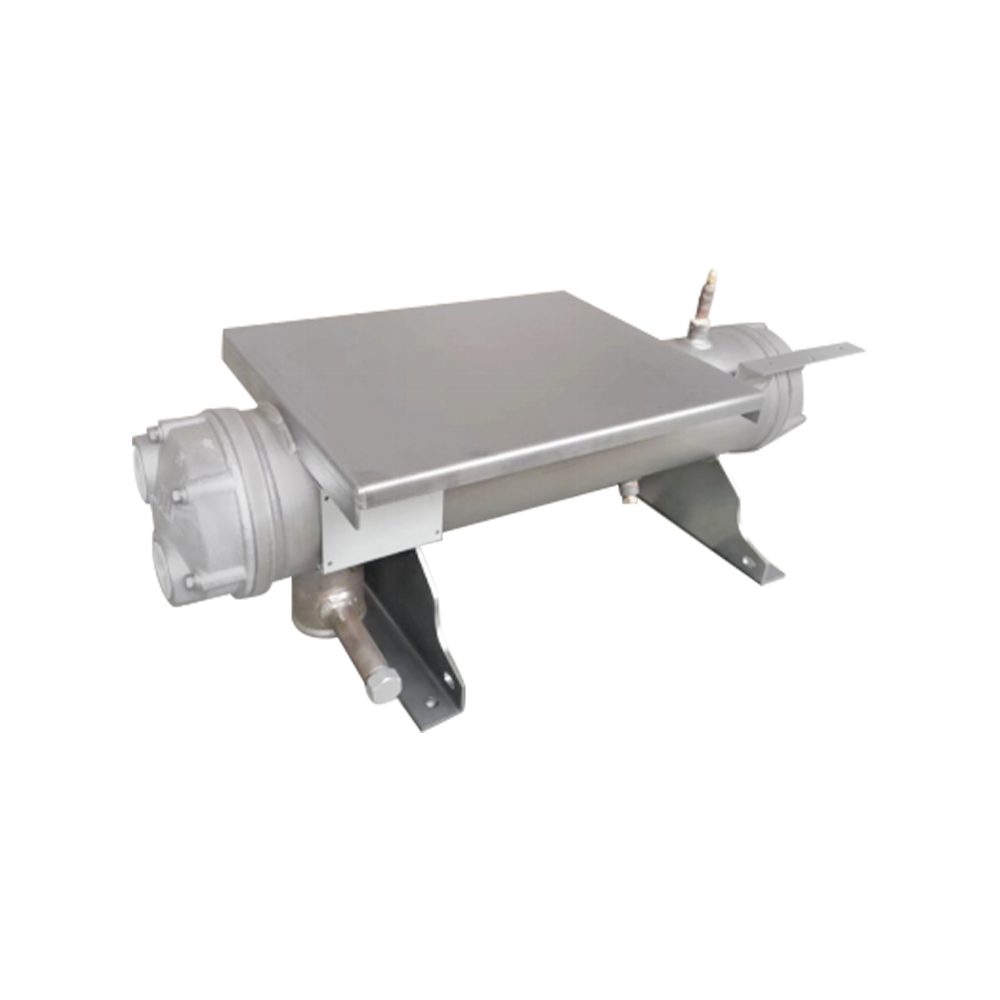
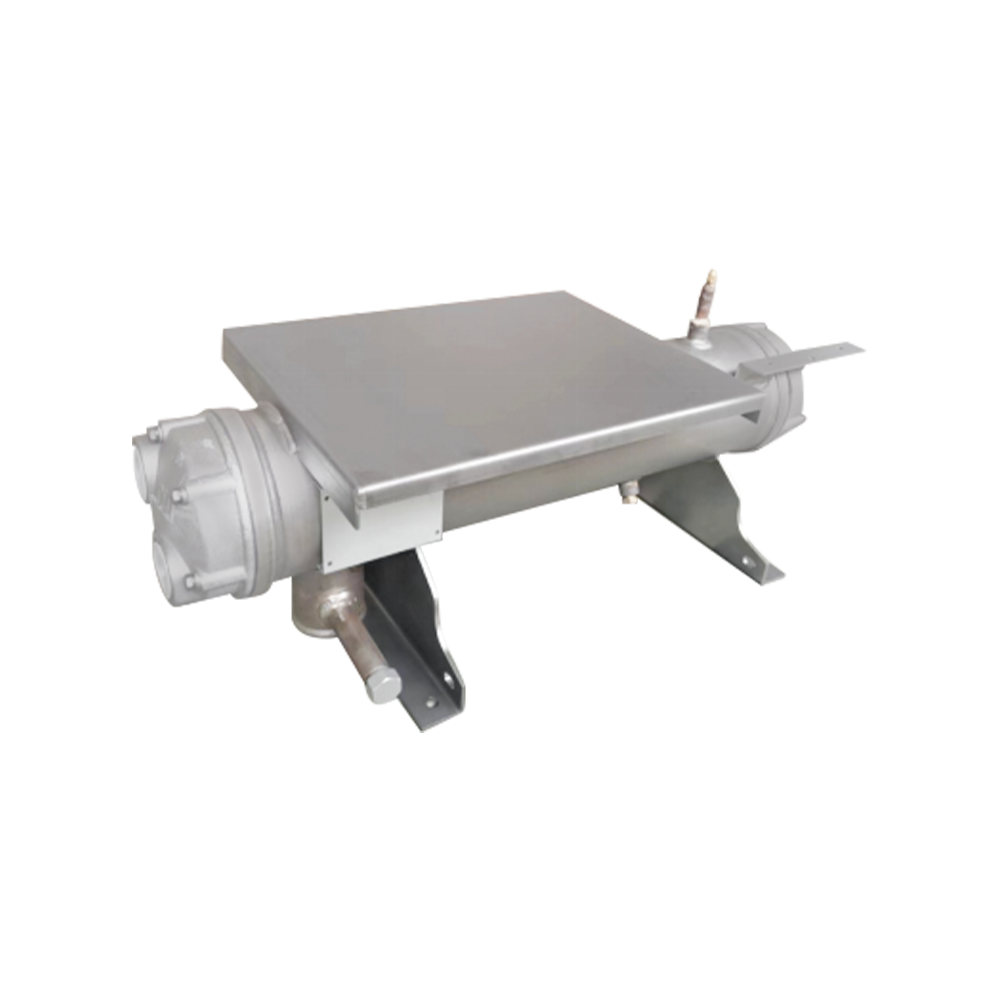
In a shell-and-tube condenser, water flows inside the tubes while hot refrigerant gas surrounds the tubes in the shell. The large surface area and the ability to clean the tubes make this design the standard for chillers above roughly 20 to 30 tons and for industrial refrigeration plants. Many packaged units use a serviceable design with removable end plates, so the tubes can be brushed when fouling appears. For a plant that will operate for 15 to 20 years, a KCWS series shell-and-tube water-cooled condenser with marine-grade water boxes and replaceable tubes is a practical, maintainable choice.
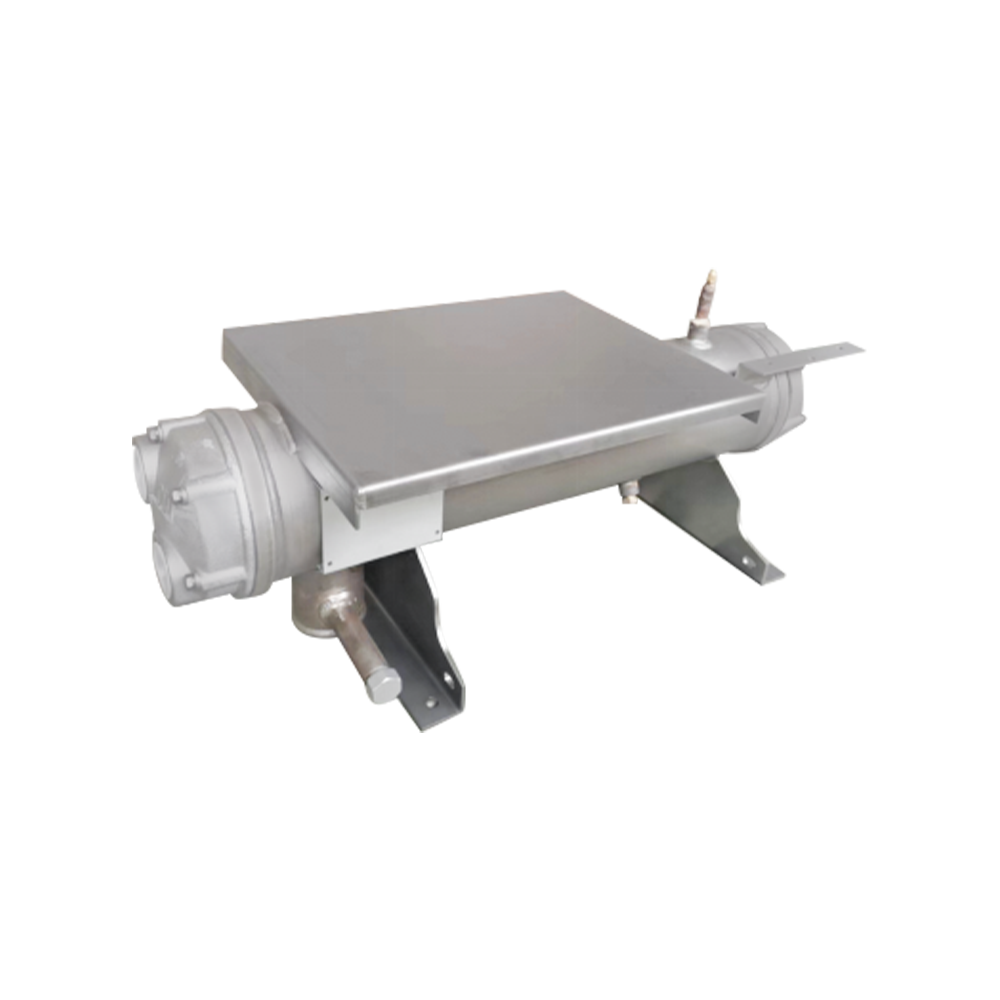 OEM/ODM KCWS Series Shell And Tube Water-Cooled Condenser Manufacturers, FactoryAs a China KCWS Series Shell And Tube Water-Cooled Condenser manufacturers and wholesale KCWS Series Shell And Tube Water-Cooled Condense...View Product →
Shell-and-Coil Condensers
A shell-and-coil condenser wraps a continuous welded coil inside the shell. There are no gasketed covers, which reduces leak paths, but the coil cannot be cleaned mechanically. These are mostly used in smaller packaged chillers where the tube surface is cleaned by chemical circulation only.
Tube-in-Tube (Coaxial) Condensers
Coaxial condensers place water in an inner tube and refrigerant in the annulus around it. They are compact, tolerate moderate fouling, and are widely used in small chillers, water-source heat pumps, and dedicated heat-recovery units. The counterflow arrangement gives good heat transfer in a small envelope.
Brazed Plate Condensers
Brazed plate heat exchangers use a stack of stainless-steel plates with narrow channels for refrigerant and water. They offer very high heat-transfer coefficients and a small footprint, which is why most modern screw and scroll chillers in the 50 to 500 ton range use them. The refrigerant-side volume is small, so charge is lower, but the water-side passages need good filtration because they can clog more easily than tubes.
| Type | Typical capacity | Water-side cleaning | Main advantage | Typical application |
|---|---|---|---|---|
| Shell-and-tube | 20 to 1000+ tons | Mechanical brushing possible | Durable, serviceable | Central chillers, industrial plants |
| Shell-and-coil | Below 30 tons | Only chemical cleaning | No gasket leaks | Small packaged chillers |
| Tube-in-tube (coaxial) | 1 to 100 tons | Limited | Compact, counterflow | Small chillers, heat pumps |
| Brazed plate | 30 to 500 tons | Chemical, no mechanical cleaning | High efficiency, compact | Modern screw and scroll chillers |
Why Use Condenser Water at All? Air-Cooled vs Water-Cooled Trade-Offs
Condenser water adds pumps, pipes, a tower, water treatment, and maintenance. The payoff is energy efficiency. Because water at 85°F rejects heat far more effectively than 95°F summertime air, a water-cooled chiller condenses refrigerant at a lower temperature and the compressor works less. Commercial water-cooled chillers have a full-load efficiency around 0.55 to 0.70 kW/ton at standard conditions, while comparably sized air-cooled units typically run 1.0 to 1.3 kW/ton. That gap, which is widely documented in chiller catalogs and ASHRAE reference data, produces strong part-load savings in plants that run many hours per year.
| Factor | Air-cooled | Water-cooled with cooling tower |
|---|---|---|
| Condensing temperature | Higher, driven by air temperature | Lower, driven by wet-bulb and tower |
| Chiller efficiency (full load) | 1.0 to 1.3 kW/ton typical | 0.55 to 0.70 kW/ton typical |
| Water use | None | Make-up water and blowdown losses |
| First cost | Lower for small sizes | Higher pump, tower, water treatment cost |
| Maintenance | Coil cleaning, refrigerant | Tower cleaning, water treatment, tube cleaning |
| Space | Roof condensers, no mechanical room | Tower space plus pump room required |
The water-cooled route usually wins when the plant is large, operates long hours, or sits in a hot climate where summer air temperatures cause air-cooled chillers to lose capacity. It loses when local water is expensive, water restrictions are severe, or the building has no room for a cooling tower. That is why some owners choose dry or hybrid alternatives.
When the decision is to go water-cooled, the condenser and the chiller must be matched carefully. Looking at a complete water-cooled chiller package that includes the condenser circuit will save you integration work and troubleshooting later, because the evaporator, condenser, and controls are already sized as one system.
 Custom Water Cooled Chiller Supplier, CompanyZhejiang Kaidi Refrigeration Equipment Co., Ltd. is a China Water Cooled Chiller supplier and custom Water Cooled Chiller, offering solut...View Product →
Condenser Water Quality, Treatment, and Maintenance That Actually Matter
Condenser water loops are the dirtiest water circuit in most buildings. Open cooling towers expose water to air, dust, insects, bird waste, and sunlight. Left untreated, that water will scale the condenser tubes, grow biofilm, and corrode the pipework within a season or two.
Scaling and Fouling
Hardness minerals dissolved in make-up water precipitate when water is heated and evaporated in the tower. Scale on condenser tubes acts as an insulator: hot refrigerant gas cannot release heat efficiently, so condensing pressure rises, the compressor draws more power, and chiller capacity drops. The ASHRAE Handbook recommends measuring pressure drop and approach temperature across the condenser, because an increase of a few degrees in approach is almost always the first symptom of fouling.
Corrosion and Erosion
Chloride, dissolved oxygen, and suspended solids attack condenser tubes and tower components. Copper tubes corrode rapidly in ammonia-rich environments; stainless steels can pit under high chlorides; and high water velocity erodes the inlet ends of tubes. Keeping design water velocity below 10 ft/s (3 m/s) in copper tubes, and applying reasonable chlorine and filtration control, avoids most of these cases.
Water Treatment and Monitoring
- Keep pH in the 7.5 to 9.0 range in most open tower systems, with conductivity and cycles of concentration managed by blowdown.
- Use scale inhibitors and a biocide program appropriate to the local make-up water chemistry.
- Monitor condenser approach temperature, water-side pressure drop, and flow weekly during the cooling season.
- Install basket strainers or side-stream filtration to remove suspended solids entering the basin.
- In hard water areas, check make-up water hardness before choosing a condenser material; cupronickel or coated tubes handle aggressive water better than plain copper.
Water-Conserving Alternatives
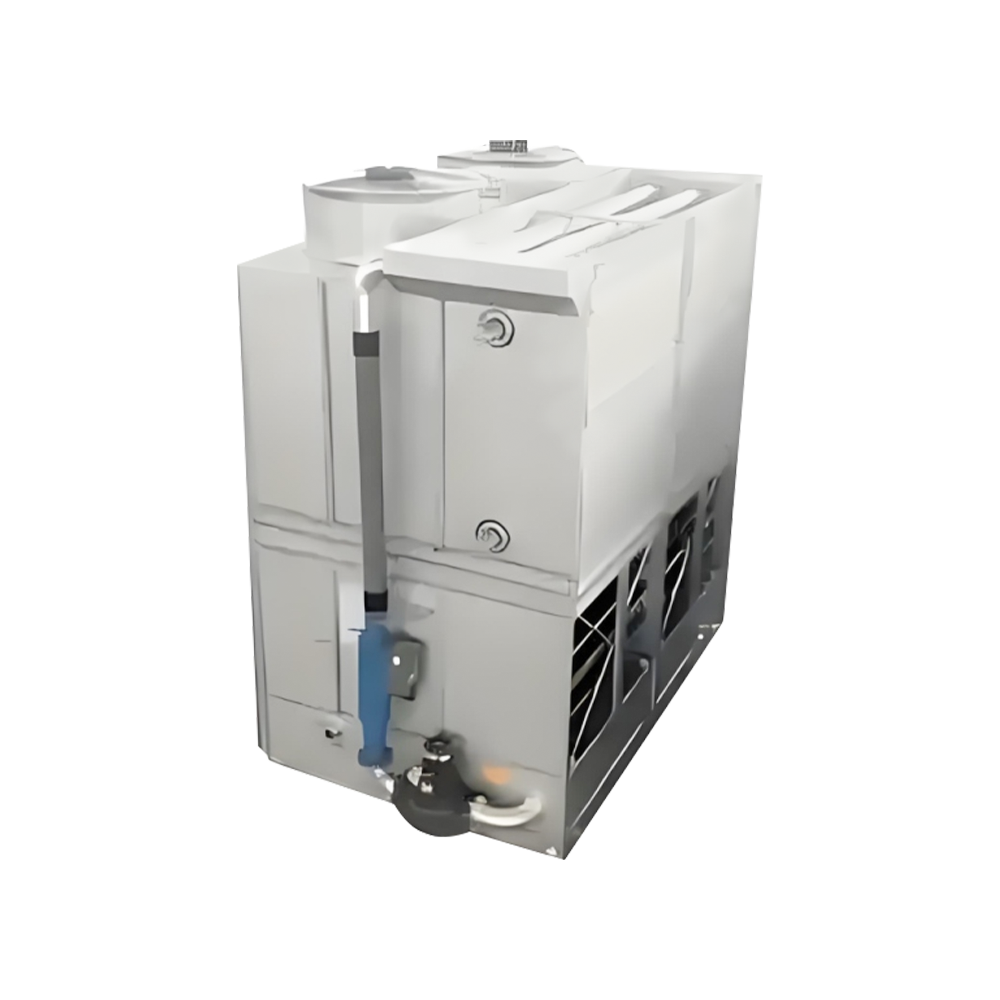
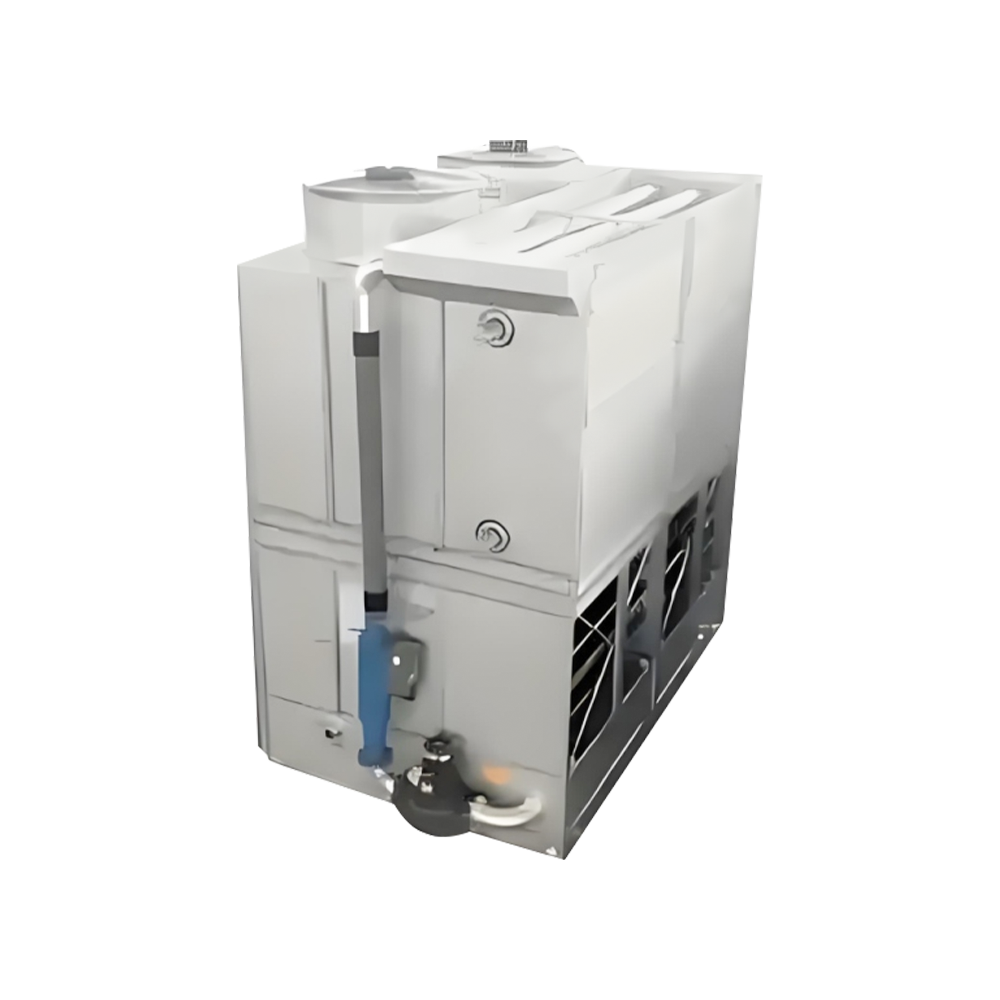
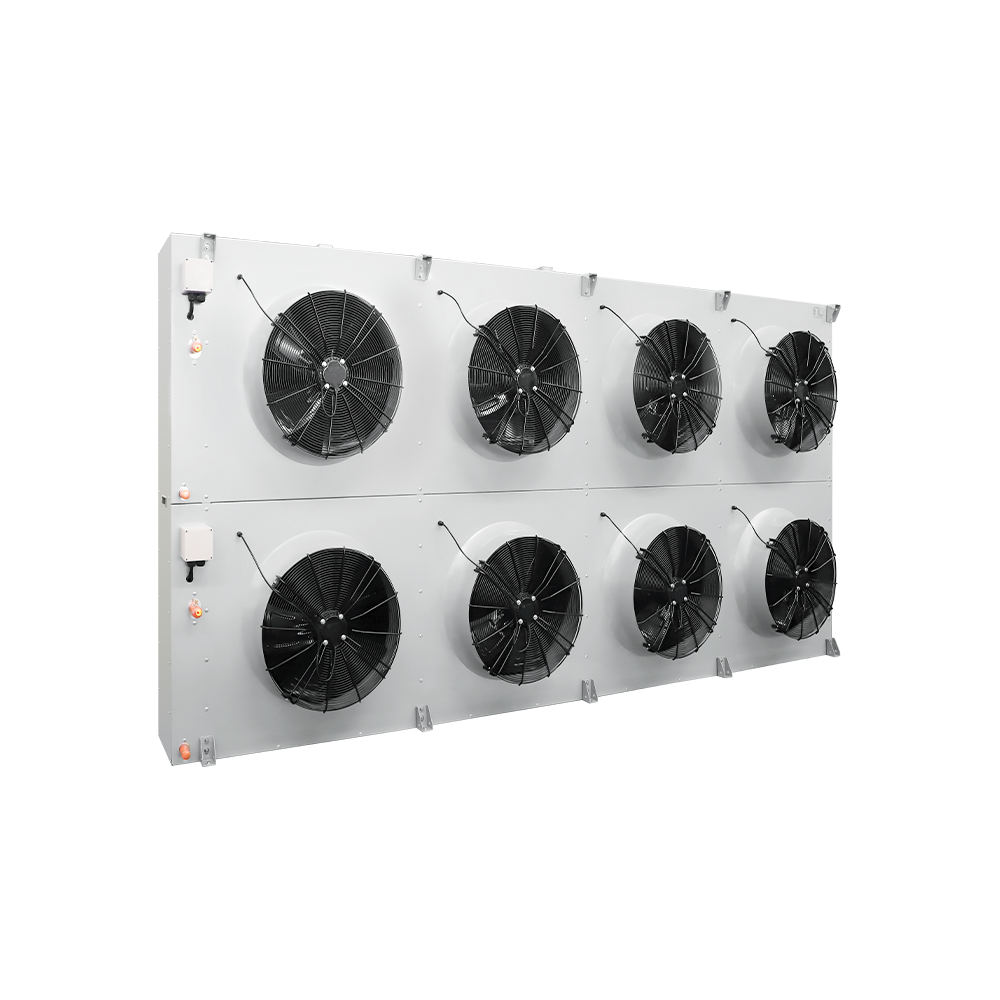
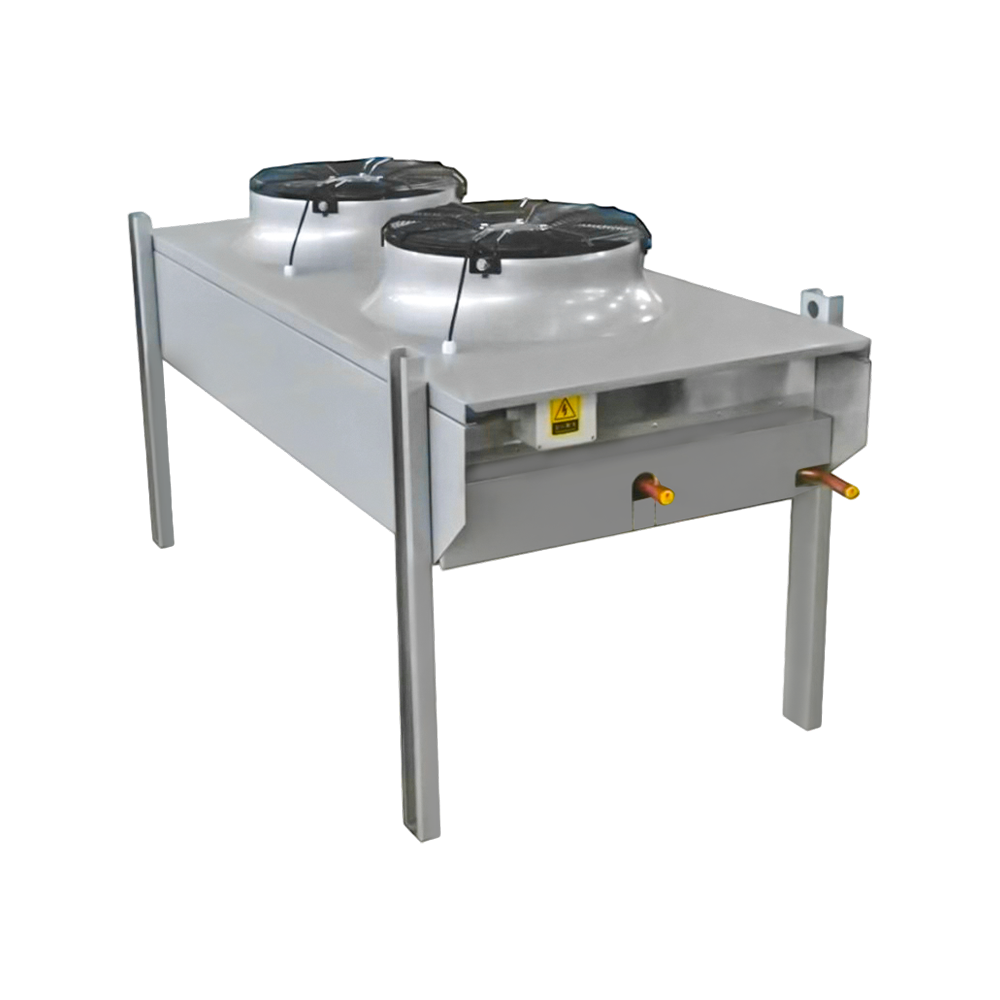
Open-tower systems evaporate significant water, typically about 1 percent of the circulation flow for every 10°F of cooling range. A 300-ton plant circulating about 860 gpm therefore loses roughly 8 to 9 gallons per minute to evaporation at design load, before counting blowdown and drift. In dry regions or water-stressed sites, many owners replace a separate cooling tower with an evaporative condenser, which combines the condenser and the cooling tower in a single factory-built machine and keeps the piping loop shorter. Units like the KD LN series evaporative condenser also reduce pump head and condenser water volume because they sit close to the compressors. Where water is even scarcer, closed-circuit towers and air-cooled hybrid systems become the practical answer.
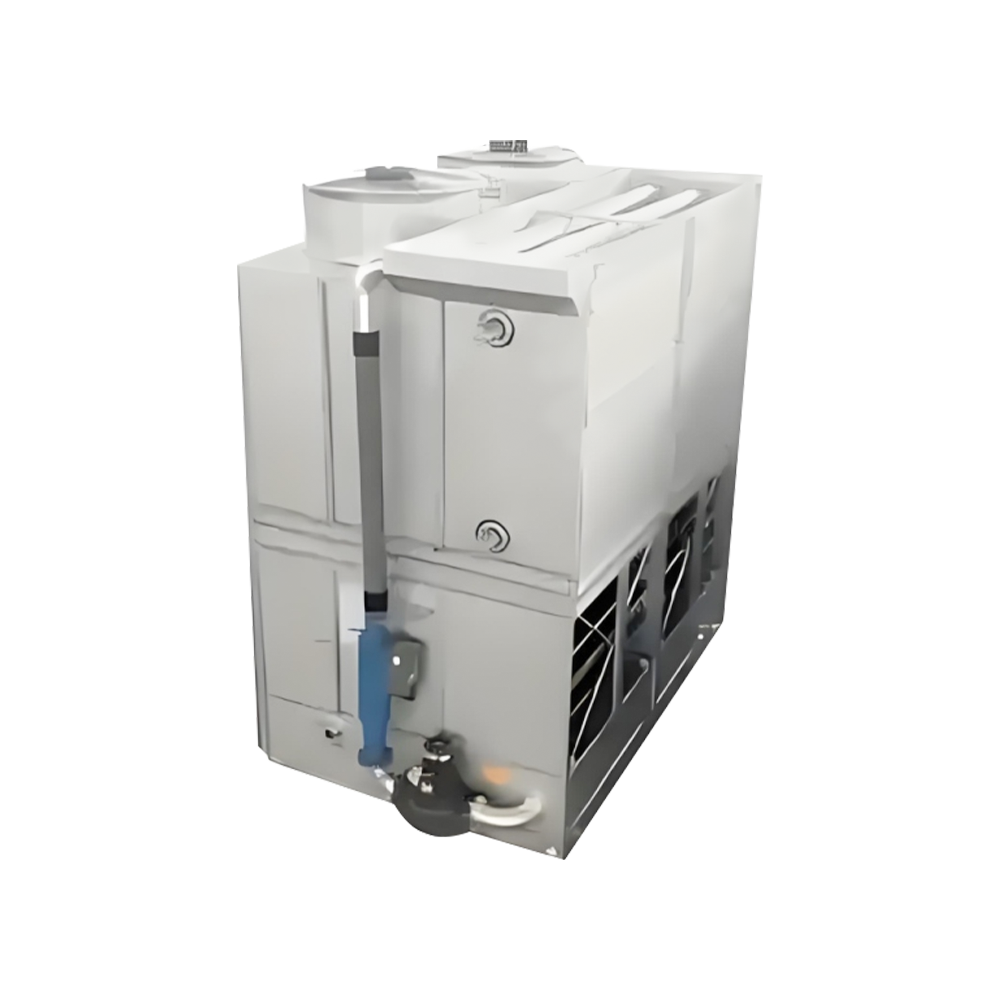 OEM/ODM KDLN Series Evaporative Condenser Manufacturers, Factory - Zhejiang KaidAs a China KDLN Series Evaporative Condenser manufacturers and wholesale KDLN Series Evaporative Condenser oem/odm factory, Zhejiang Kaid...View Product →
Common Condenser Water Problems, Causes, and What to Check
Most chiller breakdown complaints trace back to the condenser side. The table below lists the failures we see most often in service work, along with the quick checks that point to the root cause.
| Symptom | Most likely cause | First check |
|---|---|---|
| High condensing pressure and power | Fouled condenser tubes | Measure approach temperature and compare with baseline |
| Chiller trips on high head pressure | Low water flow or tower not rejecting heat | Verify pump head, strainer pressure drop, tower fan operation |
| Water leaving tower too warm | Tower undersized, water recirculation, or fan issue | Check wet-bulb approach, airflow, water distribution |
| Rapid tube fouling | Poor blowdown control, high make-up hardness | Test tower conductivity and make-up water quality |
| Pump noise or low flow | Air entrainment or blocked suction strainer | Check NPSH, strainer condition, pump gasket seals |
| Corrosion products in basin | pH out of range, chlorides too high | Test pH, conductivity, chloride, and review water report |
There is no substitute for a clean baseline. Record condenser water temperatures, approach, flow, and refrigerant pressures when the chiller is new or freshly cleaned. Future problems are much easier to detect when you have a known-good set of numbers to compare against. The same principle applies when you are matching a condenser to the rest of the refrigeration system, which is why we walk buyers through the full equipment selection before quoting a machine. If you are working through similar decisions, our guide to choosing the right condensing unit for cold-storage applications covers the selection logic in the context of low-temperature plants.
Sizing and Design Considerations for a Reliable Condenser Water System
Size the condenser water loop for the heat rejected by the compressor at design conditions, not for the chiller's nominal cooling load. That single decision controls tower size, pump flow, pipe size, and operating cost.
Condenser heat load equals the cooling load plus compressor heat. For a chiller at design conditions, estimate it as cooling load x (1 + 1/COP). A 200-ton chiller with a full-load COP of 5.0 rejects about 240 tons (200 x 1.2), and at a 10°F range this needs about 576 gpm of condenser water (240 x 24 / 10). Add pump motor heat if the pump sits in the loop, and add a small safety margin for tower performance during hot weather.
- Select the design wet-bulb from local climate data, typically the 1 percent design conditions, not from a hot summer afternoon you remember.
- Keep the approach in the 5 to 7°F range; a smaller approach costs more tower but can save compressor power, so evaluate the life-cycle cost.
- Provide at least N+1 redundancy on pumps and towers in plants that cannot tolerate shutdowns; matching pump curves to condenser pressure drop is critical.
- Design pipe velocities between 4 and 10 ft/s (1.2 to 3 m/s) to balance pump power, erosion, and air separation.
- Plan for water treatment from day one: a tap for chemical feed, a sample tap, conductivity control, and a blowdown drain.
- In cold climates, include freeze protection for tower basins, exposed pipework, and drain-down provisions.
For a wider view of the options, you can browse our condenser product range to compare air-cooled, water-cooled, and evaporative condenser configurations before you fix your design basis.
Frequently Asked Questions About Condenser Water
1. What is condenser water in simple terms?
Condenser water is the water that removes heat from the refrigerant in the condenser of a water-cooled cooling system. It absorbs heat in the condenser, carries it to a cooling tower, releases it to the air, and returns colder to repeat the loop.
2. Are condenser water and chilled water the same?
No. Chilled water is the cold water produced by the evaporator at about 44°F and sent to the spaces being cooled. Condenser water is the warm water at about 85 to 95°F that rejects heat in the cooling tower. The two loops are separate and must not be mixed.
3. What temperature should condenser water be?
For a typical design, condenser water should enter the condenser at about 85°F (29.4°C) and leave it at about 95°F (35°C). The exact values depend on the cooling tower approach and the local wet-bulb temperature.
4. Why does condenser water need treatment?
Because the cooling tower exposes the water to air, dirt, hardness minerals, algae, and microorganisms. Without treatment, scale and biofilm form in the condenser tubes, which raises condensing pressure and increases energy use. Corrosion of the tubes and tower can also shorten equipment life.
5. What happens if condenser water flow is too low?
Low flow raises the water temperature rise across the condenser and pushes condensing pressure up. The chiller draws more power, loses capacity, and the high-pressure safety can trip the machine. The usual causes are a clogged strainer, a worn pump impeller, or a closed balancing valve.
6. How much water does a condenser water system use?
An open cooling tower loses water through evaporation, drift, and blowdown. Evaporation alone is roughly 1 percent of the circulation rate for every 10°F of cooling range. A 300-ton plant circulating about 860 gpm can therefore evaporate about 8 to 9 gpm at design load, before counting bleed-off and drift.
The Bottom Line: What Matters Most with Condenser Water
Condenser water is not a side detail. It determines condensing pressure, compressor power, and chiller lifespan. The essentials: keep the supply near 85°F at design, hold the range at about 10°F, keep the flow matched to the rejected heat, treat the water, and monitor approach temperature.
The best condenser water loop is the one people think about only once: an adequately sized tower, cleanable condenser tubes, correct pump flow, simple water treatment, and a baseline test record. That combination delivers decades of service with predictable maintenance. Our factory has built water-cooled condensers, evaporative condensers, and packaged chillers for commercial and industrial plants since 1995, so we have seen most of the failure modes described above in the field.
If you are sizing a condenser water loop or selecting a water-cooled condenser for a new plant, you can contact our engineering team with your design wet-bulb, cooling load, and water quality data. They will help you match the condenser and the loop to the application before you commit to a layout.